Top 10 Sales Methodologies to Use in 2025
- Sales
- 10 min
- Updated: August 3, 2026
Every business out there is trying to sell something, whether it’s tangible products, services, knowledge, or software. But the real question is: are they keeping up with the changing trends in customer buying patterns?
Customers have gotten wiser, and their preferences and behavior have evolved with time. 67% of customers now prefer self-service over speaking to a company representative, and businesses have to tailor their sales approach to that shift. It’s not enough to just sell something anymore; it has to resonate with the customer and meet expectations they’ve already set for themselves elsewhere.
Businesses that try to do this without a structured, strategic approach tend to get poor sales results and low methodology adoption. The right sales methodology keeps a team on track and focused on the actual customer journey, but there are enough methodologies out there to genuinely confuse the decision. This guide covers the basics, and the ten worth considering for selling to today’s customer.
Get our latest insights into your inbox

What Is a Sales Methodology?
A sales methodology is a systematic, strategic approach to selling: a set of principles and practices that guide how a sales team interacts with customers, aimed at understanding customer needs, building trust, and closing more deals.
Sales methodology has a real history. Early 20th-century sales technique focused almost entirely on personal persuasion and hard-selling. Consultative selling emerged in the 1950s, prioritizing relationship-building and genuine understanding of customer needs, and the approach became widely known through Neil Rackham’s SPIN Selling in the late 1980s. Since then, many methodologies have emerged, each with distinct features: Challenger Sale, Solution Selling, MEDDIC, SPIN Selling, and Value Selling among the most established.
Sales Methodology vs. Sales Process
A sales methodology is the framework guiding how a rep approaches selling, understanding needs, building trust, closing deals, and includes principles for how to approach customers, position a product, and handle objections. A sales process, by contrast, is the actual series of steps a team follows to move a prospect from first contact to close: prospecting, qualification, needs assessment, presentation, negotiation, closing, something you can map out as a flowchart.
Put simply: methodology is the overarching philosophy; process is the specific sequence of steps that carries that philosophy out in practice.
Advantages of Sales Methodologies
A defined methodology genuinely fuels sales effort in several distinct ways:
- Increased efficiency. A structured approach helps reps stay organized rather than improvising every interaction from scratch.
- Improved customer satisfaction. Focusing on genuinely understanding a customer’s needs and pain points builds real trust.
- Personalized sales. Reps can tailor their approach to different customers based on actual buying motivation and preference, not a single generic script.
- Better collaboration. A team following the same methodology works together more effectively, since everyone’s speaking the same language about the deal.
- Measurable sales efforts. Each step is clearly defined, which makes progress and success genuinely trackable.
- Sales optimization. Businesses can analyze which parts of the methodology are working and adjust the parts that aren’t.
- Better sales results. Reps equipped with a proven approach that’s worked in similar situations before tend to close more reliably.
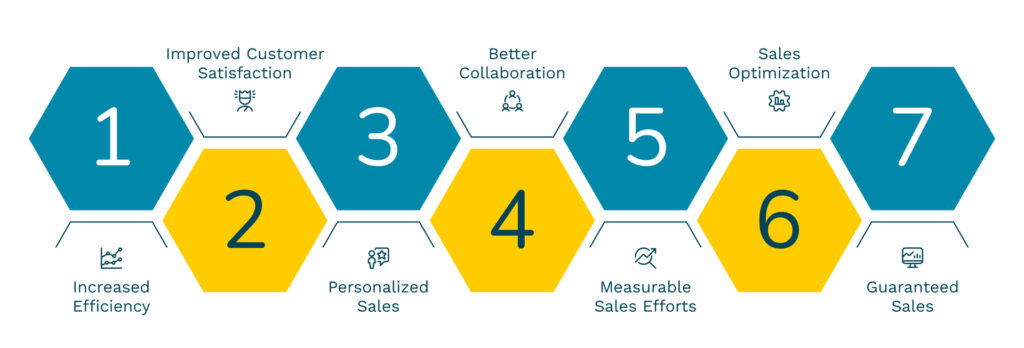
A well-defined methodology functions like a map through unpredictable terrain, keeping a team oriented toward its actual goals rather than reinventing the approach deal by deal.
How to Choose the Best Sales Methodology for Your Business


Dr. Leff Bonney
Marketing Professor
As an industry, we cling to this incorrect notion that there's a single best way to sell. We select a sales process or methodology that we believe is a "best practice," and we tell our sellers to repeat that same sales approach with every customer in every circumstance. It's a fundamentally flawed strategy.
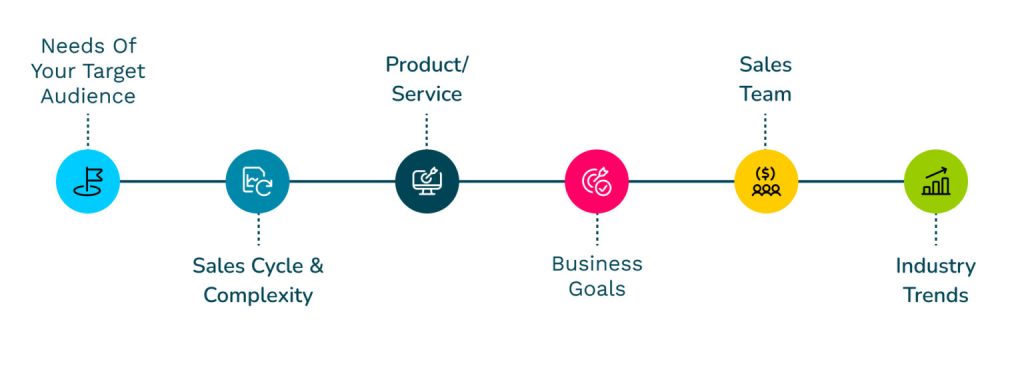
A few factors are worth genuinely considering before choosing, rather than defaulting to whatever methodology is currently trending.
- Needs of your target audience. Customer needs, preferences, and buying habits should sit at the center of the decision. Independent-research-driven customers might fit a self-service approach like the Value Selling Framework; customers who prefer a more interactive process might fit a hands-on technique like SPIN Selling better.
- Sales cycle and complexity. Duration and complexity vary by what’s being sold, how the decision gets made, and how many people are involved. A long, multi-touchpoint cycle might fit NEAT Selling or the Challenger Sale better than a shorter one.
- Product or service. A complex offering needing significant explanation might fit Conceptual Selling; a straightforward offering with a short cycle might fit SNAP Selling instead.
- Business goals. Market-share growth and new-customer acquisition might point toward Target Account Selling or the Challenger Sale; building loyalty with existing clients might point toward the Value Selling Framework.
- Sales team. A team of strong relationship-builders might fit Inbound Selling well; a team of deep subject-matter experts might fit MEDDIC better.
- Industry trends. A shift toward inbound marketing and sales across your industry might make Inbound Selling the right call; a wave of new competitive entrants might make the Challenger Sale’s differentiation focus more relevant.
Top 10 Sales Methodologies to Use in 2026
1. SPIN Selling
Developed by Neil Rackham in 1988, SPIN Selling diagnoses a customer’s problem before attempting to sell anything, using targeted questions rather than a rigid script. The acronym maps to four question types: Situation (a prospect’s processes and objectives), Problem (their current challenges), Implication (what happens if the problem stays unsolved), and Need-payoff (how a solution benefits the organization, framed for the specific stakeholders who’ll evaluate it).
Best used when: sales cycles are long and involve multiple touchpoints with decision-makers.
2. N.E.A.T Selling
NEAT Selling starts with identifying which leads are actually likely to convert, so reps focus effort on the right audience from the start. The four pillars: Need (the pain point requiring a solution), Economic impact (the financial benefit of solving it), Access to Authority (identifying and reaching the actual decision-makers), and Timeline (a realistic path to sale and implementation). Need and budget are consistently the two biggest factors in whether a prospect actually engages with a rep.
Best used when: the sales process is complex, multiple stakeholders are involved, and the product or service carries real value.
3. SNAP Selling
Developed by sales strategist Jill Konrath, SNAP Selling is built for selling to busy, easily overwhelmed prospects with limited attention. SNAP stands for keeping the message Simple, becoming an iNvaluable resource, Aligning the solution to the prospect’s actual needs, and Prioritizing effort on the most promising prospects.
Best used when: selling complex solutions in a competitive field with a longer sales cycle and real need for customization.
4. The Challenger Sale
The Challenger Sale challenges a customer’s status quo, pushing them to think about new solutions rather than confirming what they already believe. Gartner’s research found roughly 40% of top sales performers use this methodology. The three Ts: Teaching (educating customers on better ways to address their challenges), Tailoring (customizing the message to the specific customer), and Taking control (actively leading the sales conversation rather than following the buyer’s lead passively).
Best used when: selling complex solutions, replacing an obsolete incumbent solution, or trying to differentiate clearly from competitors.
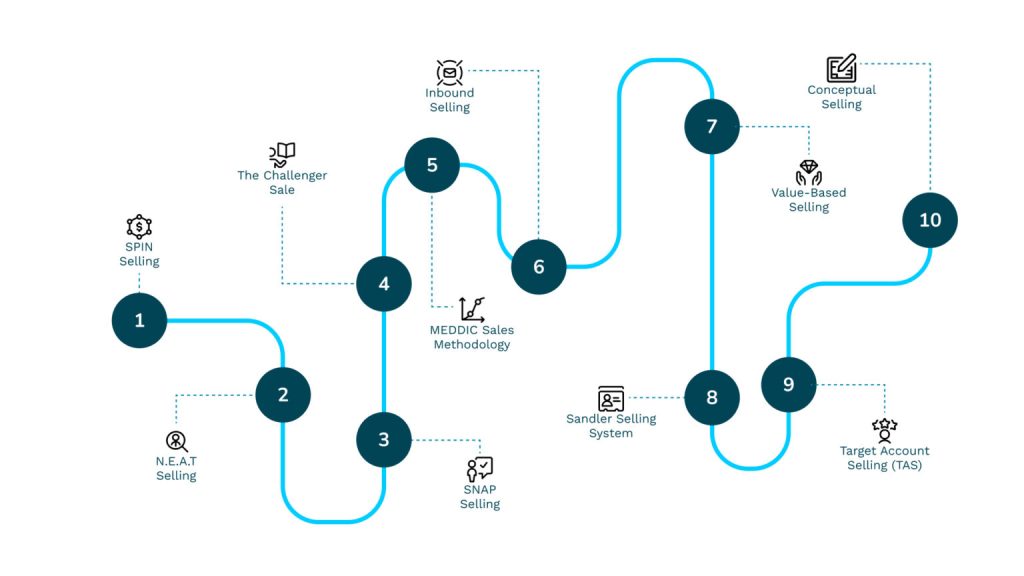
5. MEDDIC
MEDDIC emerged in the 1990s, emphasizing precise measurement and control over where a sales team actually invests time. The acronym: Metrics (the prospect’s primary goal), Economic buyer (the real decision-maker), Decision criteria (what factors actually drive the decision), Decision process (sign-offs and timeline), Identify pain (the problem your product solves and the cost of not solving it), and Champion (the internal advocate who benefits most from your offering). PTC, the company that created the methodology, reportedly grew from $300 million to $1 billion in revenue over four years using it.
Best used when: the sales cycle is long, multiple stakeholders are involved, and the price point is high.
6. Inbound Selling
B2B buyers now engage with a substantial amount of marketing content and independent research before ever reaching out to a sales team. Inbound Selling meets prospects where they already are, on social media, on a pricing page, wherever they’re actually looking, personalizing the experience based on page views, conversions, and social interaction, following a flywheel model rather than a traditional linear funnel.
Best used when: the company has a strong online presence and marketing engine, a diverse prospect base, and a product or service that benefits from personalized attention during the buying process.
7. Value-Based Selling
Value-Based Selling centers on the specific value a product or service delivers to a customer, identifying unique needs, demonstrating how the offering addresses them, and quantifying that value in terms the prospect actually cares about. A 2021 GlobeNewswire-published study found 87% of high-growth sales organizations take a value-based approach, a figure worth treating as directional given its age rather than a freshly measured current number.
Seven core principles: research customer needs first, build the relationship before pitching, ask and genuinely listen, communicate value and ROI clearly, teach rather than pitch, focus on the buyer’s process rather than your own sales process, and stay genuine to build real trust.
Best used when: the sales cycle is complex with multiple stakeholders, or the business operates in a genuinely saturated market.
8. Sandler Selling System
Developed by David Sandler in the late 1960s, the Sandler Selling System is a consultative, low-pressure approach emphasizing the salesperson’s control over the discovery process itself. Its seven steps: build rapport, agree on a contract before starting the sales process, identify pain points, uncover budget constraints, determine who actually makes the final decision, present the solution as a direct fulfillment of the prospect’s stated needs, and confirm the post-sale process to protect satisfaction after close.
Best used when: the sales cycle is long, the process complex, and the offering high-ticket.
9. Target Account Selling (TAS)
TAS focuses on identifying and pursuing high-value whale accounts specifically, aiming for larger deals and more concentrated revenue impact. Four stages: Identify (target accounts by revenue potential and fit), Discover (gather real intelligence on those accounts), Engage (a tailored plan addressing their specific needs), and Close (demonstrate the unique value proposition clearly enough to win). Real data and intelligence sit at the center of any account-based methodology, since none of the four stages work well without it.
Best used when: the product or service is high-value, the sales cycle long, multiple decision-makers are involved, and the target market is well understood.
10. Conceptual Selling
Conceptual Selling starts from the idea that customers aren’t buying a product, they’re buying the concept of a solution the product represents. Rather than opening with a pitch, reps explore the prospect’s own understanding of their problem and decision-making process first, using five question categories: Confirmation (reaffirming known information), New information (clarifying the prospect’s actual concept), Attitude (understanding the prospect personally), Commitment (gauging investment level), and Basic issue (surfacing potential blockers).
Best used when: the product or service is complex, the sales cycle long, and multiple stakeholders are involved, particularly common in SaaS and subscription businesses.
How Can You Implement Sales Methodologies?
Roughly 60% of respondents to a B2B SaaS sales methodology survey reported ROI exceeding the cost of implementation. Choosing the right methodology clearly pays off, but it’s not a random guess, it takes real evaluation against the factors covered above.
Once you’ve chosen, here’s how to actually implement it:
- Understand your target audience. Study your market’s actual needs, pain points, and what genuinely drives their purchasing decisions.
- Evaluate your team’s strengths and weaknesses. Identify where reps already win and where they need real improvement, and choose a methodology that plays to existing strength rather than fighting it.
- Consider your industry. Different industries have different cycles, behaviors, and buying patterns; choose a methodology proven to work in yours specifically.
- Align with your business model. A SaaS business, for instance, likely needs a methodology prioritizing long-term relationships over a single transactional close.
- Talk to experts. Sales consultants or experienced practitioners in your specific industry can sharpen the decision considerably.
- Test and iterate. Monitor effectiveness once implemented, and refine based on what the results actually show, not what the methodology promised on paper.

Why Data Matters More Than Ever for Any Methodology
No matter which methodology a team adopts, it only works as well as the data behind it. MEDDIC’s economic buyer and champion criteria, NEAT’s access-to-authority pillar, TAS’s account intelligence, all depend on actually knowing who’s involved in a deal and how engaged they are, not a rep’s best guess. Increasingly, that same data feeds AI agents acting on it directly, which raises the cost of getting it wrong: a poorly tracked champion or an unidentified economic buyer used to just weaken a rep’s next conversation. Feed the same gap into an agent prioritizing outreach or flagging deal risk, and the same gap becomes a wrong automated decision.
Frequently Asked Questions
Q. What’s the difference between a sales methodology and a sales process?
A methodology is the overarching philosophy guiding how a rep approaches selling, understanding needs, building trust, handling objections. A process is the specific sequence of steps (prospecting, qualification, negotiation, closing) that carries that philosophy out. Methodology informs how you move through the process, not the other way around.
Q. Can a business use more than one sales methodology?
Yes, and many do, particularly when selling different products or serving different segments with genuinely different buying behavior. The key is intentional selection per segment rather than an unstructured mix reps default to individually.
Q. Which sales methodology is best for SaaS companies specifically?
Value-Based Selling and Conceptual Selling both fit SaaS well, given the emphasis on long-term relationships, ROI framing, and multi-stakeholder decision-making common in subscription businesses. MEDDIC is also widely used in enterprise SaaS specifically for its rigor around economic buyer and champion identification.
Q. Why does data quality matter for sales methodology specifically?
Because most methodologies depend on accurately identifying real stakeholders (economic buyers, champions, decision-makers) and their actual engagement level. A methodology executed on incomplete or inaccurate CRM data produces the same guesswork the methodology was designed to eliminate.
Arm Your Sales Methodology With Real Data
No matter which sales methodology you use, it only works if your team has accurate data and intelligence behind it. That’s where Nektar’s Data Foundation comes in, automatically capturing the email, meeting, and call activity that determines whether a champion, economic buyer, or decision-maker is actually engaged, with zero rep effort required. Daisy AI then surfaces that context directly on the Opportunity, wherever your team’s chosen methodology needs it most.
Enjoyed our content? Follow Nektar on LinkedIn