







Please use Desktop for best viewing experience
Top revenue teams ❤️ Nektar
Clari captures activity at the account level. Groove logs only what happens inside its workflow. Contact roles, opportunity mapping, and engagement detail still land on the rep. Nektar fills the gap & writes all of it, automatically.
Nektar vs Clari Autocapture & Groove
Clari captures. Nektar structures.
Trusted by leading B2B revenue teams for Salesforce-ready data, not just call recordings


Features
Core differentiator
Opportunity Accuracy
Opportunity-level matching
ML matching ties every contact and activity to the right open opportunity, across renewals and upsells in the same account. 80%+ match rate.
Account-level fallback
Matching works cleanly only when one opportunity is open. With multiple opps on an account, it falls back to account-level and leaves cleanup to the rep.
Contact Roles & Personas
Automated role tagging
Smart-tags buyer roles and personas on every opportunity using title, engagement, and meeting attendance, so MEDDPICC and buying-group reports actually populate.
Manual in Salesforce
Opportunity Contact Roles are not assigned automatically. Reps add Champion and Economic Buyer manually in Salesforce, per Clari's own documentation.
Team Coverage
Entire Revenue team
Captures CSMs, SEs, SDRs, and non-Salesforce users who touch deals. Priced on data captured, not per seat.
Rep-centric & per-seat
Built around the sales rep's mailbox. Extending to CSMs, SEs, or renewal specialists requires additional licenses.
Partner & Channel Deals
Partner aware
Routes partner contacts to the partner account and customer contacts to the customer account, with emails & meetings correctly mapped.
Filtered out
Conversations that include a partner are dropped. Channel-influenced pipeline goes dark in the CRM.
Core differentiator
Data Course Correction
Self Healing
When a rep creates a contact manually, Nektar detects the overlap, removes its own duplicate, and transfers activities to the surviving record.
Duplicates & Drift
Cannot reconcile after a manual action. Duplicate records persist and new activities attach to either one unpredictably.
Core differentiator
Historical Context
Backfill before the account exists
Stores conversations that predate a CRM record and syncs the full history the moment the account is created.
Account-first only
Requires the account to exist in Salesforce before syncing. Engagement before account creation is lost.
Engagement Scoring
Custom, on any object
Build scoring logic across account, opportunity, lead, contact, and user; tuned to how your team evaluates health.
Opportunity score only
A single score, computed at the account level, not customizable. Multiple open opps on the same account can return the same score.
Sync Reliability
Real-time sync monitoring
A live health dashboard shows what synced, what errored, and why, at the record level, in real time.
No self-serve diagnostics
Errors surface as counts without record-level visibility. Customers have reported sync interruptions at quarter-end.
Time to Value
~3 to 4 Weeks
Clean, role-tagged, opportunity-level data with historical backfill included.
4 to 6 Months
Complex, admin-heavy implementations that defer value well into the engagement.
Adoption
No Adoption Friction
Runs invisibly in the background. Zero rep behavior change, and the captured data is usable by any GTM tool downstream.
Change Management required
Value depends on rep adoption, process compliance, and ongoing settings upkeep by RevOps.
Product Focus
Capture is the core
The trusted data layer is the entire product, crafted, not cobbled, on a flexible architecture built to keep improving.
Capture is a feature
Capture is a feature alongside forecasting and conversation intelligence. Roadmap energy goes to integrating Groove and Wingman.
AI Readiness
Built for AI execution
Opportunity-level, role-tagged, deduplicated records give AI agents a trustworthy foundation to act on.
Approximate by design
Account-level capture means any AI agent reading the data inherits the gaps and acts on them at machine speed.
Why Nektar.ai Wins?
The "Account-Level Blur"
Clari pools activity and scores at the account when multiple opportunities are open. Nektar writes to the correct opportunity, so deal inspection, CRM scores, and forecasts reflect what's actually happening on each deal.
The "Partner Blind Spot"
Channel-involved conversations vanish in Clari. Nektar keeps partner and customer contacts straight across both accounts, so influence in your most strategic deals is never lost.
The "Manual Role Tax"
AutoCapture leaves Champion and Economic Buyer tagging to reps, so contact roles stay empty. Nektar assigns roles automatically, and MEDDPICC, buying-group, and attribution reporting populate themselves.
The "Consolidation Bridge"
Consolidating on Clari for forecasting? Nektar isn't a competitor to that; it's the layer underneath. We feed Clari clean, opportunity-level data, enriched and ready before your rollout even goes live.
Why Revenue Teams Left Clari Autocapture
Frequently Asked Questions
What is the difference between Nektar and Clari AutoCapture?
Clari AutoCapture is a data-capture feature inside Clari’s forecasting platform. It connects a sales rep’s email and calendar and writes activity to Salesforce, but its matching resolves cleanly only when an account has one open opportunity, and it does not automatically assign Opportunity Contact Roles. Nektar is a dedicated capture and contact-data layer: it associates contacts and activities to the correct open opportunity using ML affinity scoring, automatically tags contact roles and personas, captures the entire revenue team, and writes native records to Salesforce.
Does Clari AutoCapture automatically create Opportunity Contact Roles?
No. According to Clari’s own documentation, Opportunity Contact Roles such as Champion and Economic Buyer must be added manually by reps in Salesforce for them to appear in Clari. Nektar assigns contact roles and personas automatically using signals like title, engagement, and meeting attendance, so MEDDPICC and buying-group reporting populate without rep effort.
Can Clari match activity to the right opportunity when an account has multiple open opps?
Clari AutoCapture’s matching is reliable when an account has a single open opportunity. When multiple opportunities are open at once, for example a renewal and an upsell, it typically writes activity at the account level rather than the opportunity, requiring manual cleanup. Nektar uses relationship inference across participants, timing, recency, and content to attach activity to the correct opportunity, with an opportunity-level match rate above 80%.
Is Nektar a replacement for Clari, or does it work alongside it?
Nektar does not replace Clari’s forecasting or conversation intelligence, it sits underneath them as the data layer. Teams consolidating on Clari for forecasting use Nektar to feed it clean, opportunity-level, role-tagged data, so the forecast is built on accurate inputs rather than account-level approximations.
How does Nektar handle partner and channel deals compared to Clari?
Clari AutoCapture filters out conversations that include a partner, so channel-influenced pipeline is not captured. Nektar routes partner contacts to the partner account and customer contacts to the customer account, and associates emails and meetings to the correct record, keeping partner influence visible in the CRM.
How long does Nektar take to implement compared to Clari AutoCapture?
Nektar typically delivers clean, role-tagged, opportunity-level data in about 3 to 4 weeks, including historical backfill. Clari capture implementations are commonly longer, often 4 to 6 months, before value is realized. Nektar is also adoption-less and runs in the background with no rep behavior change.
Does Nektar capture activity for the whole revenue team, including CSMs and SEs?
Yes. Nektar captures activity across the entire revenue team, including CSMs, solutions engineers, SDRs, and non-Salesforce users who have customer conversations, and is priced on data captured rather than per seat. Extending Clari capture to these roles requires additional per-seat licenses, which becomes cost-prohibitive at scale.
Is Nektar a good alternative to Clari Groove for activity capture?
Groove is a sales engagement product now part of Clari, and its activity capture reflects what reps do inside Groove. For complete CRM data, discovering the full buying committee, assigning contact roles, and matching activity to the right opportunity, Nektar is a dedicated capture layer that covers gaps Groove and AutoCapture leave open, while writing native, reportable records to Salesforce.
How does Nektar handle data privacy and security?
Nektar is SOC 2, ISO27001 and CASA compliant, built with enterprise-grade security. You can review the full trust posture at Nektar’s trust page.
Hear from our Customers
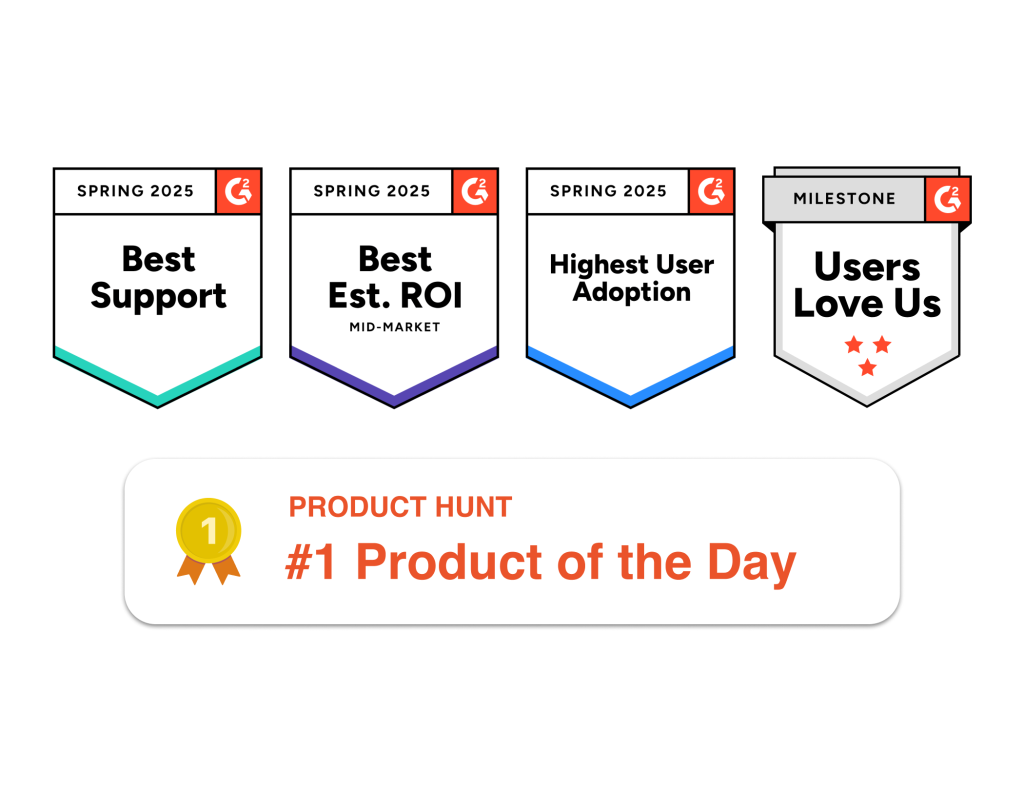
A Sweet Milestone: Nektar Earned G2 and Product Hunt Badges!
Thanks to our wonderful users, Nektar has earned the G2 and Product Hunt Badges! Your support keeps us improving every day. Thank you for being part of the journey!
Stop Forecasting on Approximations
See your real opportunity-level data in Salesforce, in weeks, not quarters.