
A 30-60-90 Day Guide for First-Time Directors of Revenue Operations
- RevOps
- 10 min
- Updated: July 17, 2026
Starting a new job as a Director of Revenue Operations is an exciting opportunity to make a significant impact on a company’s revenue growth. To ensure success in this role, it’s essential to have a strategic plan that guides your actions during the crucial first three months.
Here’s a 30-60-90 day plan that will help you strategically manage revenue operations and drive sustainable growth.
We recently spoke to Hassan Irshad, Director of RevOps at FEVTutor. He shared his approach to this powerful framework, demonstrating how each phase (30, 60, and 90 days) builds strategically upon the last to deliver alignment, trust, and sustained improvement. By breaking down complex goals into achievable milestones, the 30-60-90 day approach empowers RevOps leaders to initiate meaningful change without overwhelming teams.
For all the RevOps leaders, it’s a way to approach change with purpose, driving measurable impact and laying the groundwork for long-term success.
The 30-60–90 day framework must be an indispensable tool and here is how you can implement progressive, sustainable growth strategies from day one.
Get our latest insights into your inbox

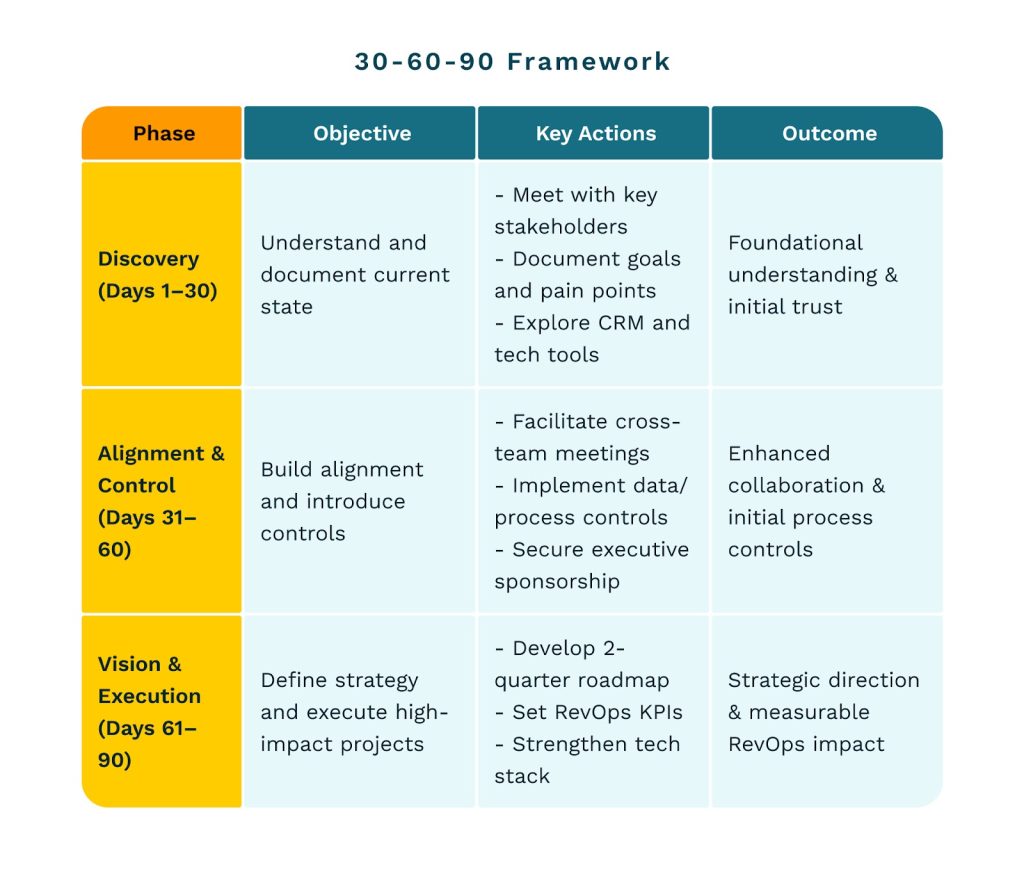
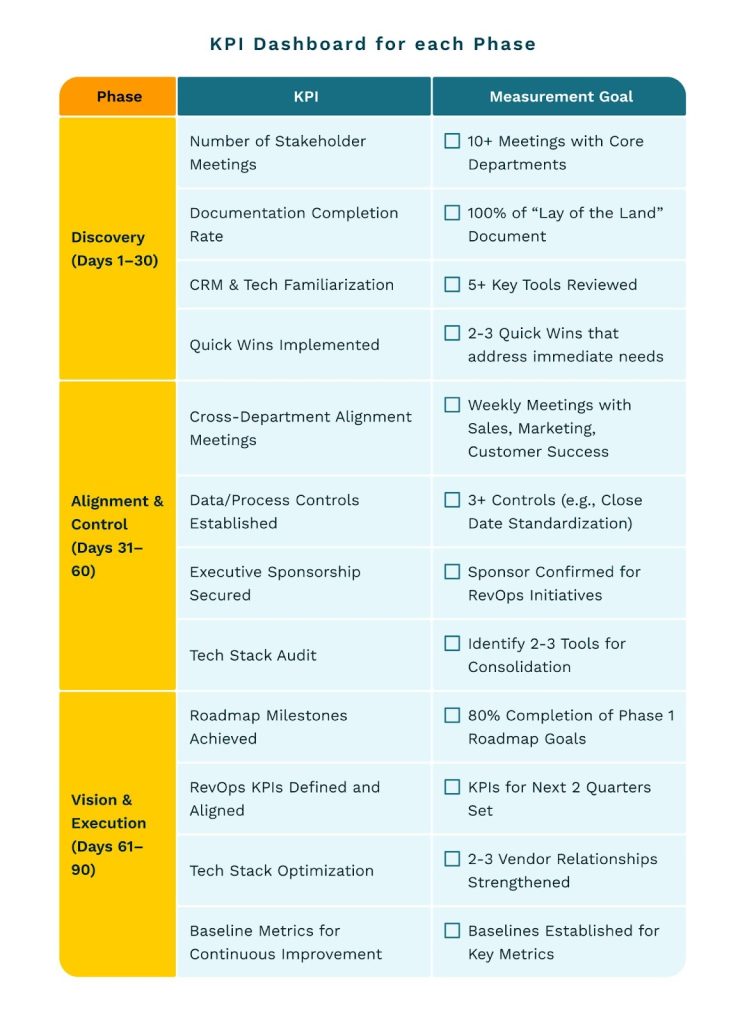
First 30 days for a Director of Revenue Operations
The purpose should be to gather insights and understand the organization, especially the needs and challenges of different teams.
1. Goals for first 30 days:
- Meet Key Stakeholders
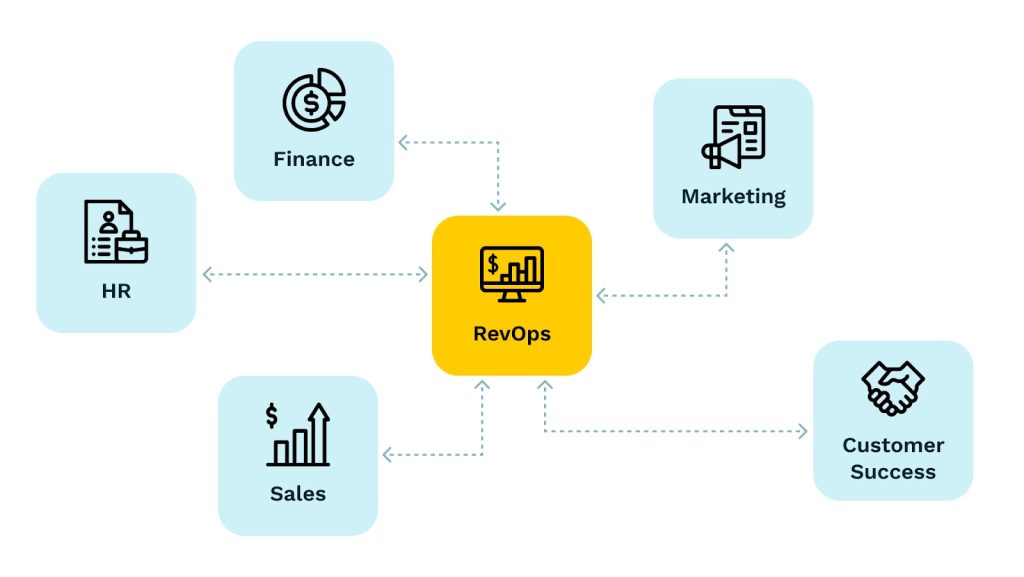
Meet with cross departmental teams like Finance, HR, and Sales to understand their goals, challenges, and priorities.
- Document Everything
Create a “lay of the land” document summarizing findings on different team goals, challenges, and processes.


Hassan Irshad
Head of Revenue Operations, Unify
Whoever you work with, like finance, HR, not only your standard stakeholders, you want to understand where they are, what drives them, what their priorities are. What are they looking for as short-term and long-term goals? Understand their pain points, which is going to dictate how your next 60 to 90 days' work will be. So a lot of the discovery work happens then. Create a document, something I call "lay off the land" document.
- Understand the Product
Take product demos, listen to sales calls, and use tools that show how the product is sold. This helps in understanding the customer needs better.
- Dive into Your CRM
Understand your CRM (whether Salesforce or HubSpot) to assess how the data is organized. This is to check whether it’s easy to use, and identify immediate improvements. The CRM should be the central source of truth, with other tools supporting it. The data should be unified with easier adoption for the teams.
- Build Trust Internally
Establish trust within your teams by listening carefully, asking questions about how RevOps can help, and addressing quick fixes to show you’re there to help. Having this trust shows them that you’re here to support their success. Quick wins, such as small fixes that make people’s jobs easier, helps in establishing credibility early.
2. Establish Clear KPIs:
- Understanding Team KPIs
It is important to ask you stakeholders about the KPIs that matter to understand their goals and what their expectations are.
- Aligning KPIs Across Teams
Different departments oftentimes work in silos. RevOps should strive to align these departments and check if these KPIs match the overall business objectives. Gaps must be closed if their KPIs don’t align.
- Setting RevOps KPIs
As you approach the end of the first 30 days, start establishing RevOps-specific KPIs that match company goals, which may involve metrics like revenue increase, conversion rates, or improvements in overall efficiency.
3. Tech Stack Audit
Deep dive into the existing tools that your company is using. Identify all redundancies, and find opportunities to streamline the entire tech stack.
- Map Out Tools
Compile a list of all tools used by teams, noting their purpose and how they work with the CRM.
- Evaluate Use and Cost
Determine if tools are actively used or if there are duplicates. Look for cost-saving opportunities by consolidating tools when possible.
Next 30 days – Alignment and Control
The next 30 days marks a shift from discovery to alignment. The goals should be to create cohesion between departments (e.g., Sales, Marketing) and laying down effective controls.
The improvements need to be implemented without overwhelming the teams. This phase combines further exploration with actionable improvements with the primary task being bringing the teams into sync.
Hassan Irshad
Head of Revenue Operations, Unify
One of the core things that I feel like revenue operations need is that trust between the go-to-market teams and saying, yes, you are here and you're going to help us achieve our goals. That requires trust. No one's going to come in and say, yeah, all of your system is bad; let me just remove it, create something new. That doesn't really create the trust building part. So what I try to do is listen.
1. Ways to bring your teams together
- Encouraging cross-team collaboration by addressing silos and ensuring all teams work toward shared quarterly or company-wide goals.
- By creating alignment, you help teams see RevOps as a support system rather than an enforcer. This keeps communication channels open and creates buy-in.
- Based on your findings, introduce controls wherever needed to improve workflow.
Example: If close dates aren’t being recorded properly, this could skew reports. Meet with sales, identify the root cause (e.g., manual data entry that is taking too much of a reps’ time), and provide solutions or tools to make their tasks easier.
Ensure that controls are practical and developed with the trust built in the first 30 days. Foster internal consensus within teams so that these improvements are adopted seamlessly.
2. Navigate Organizational Politics
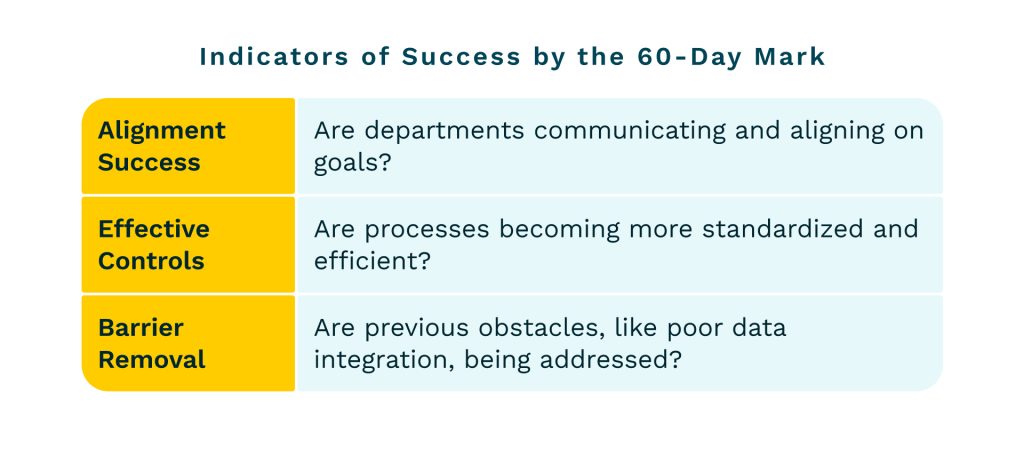
- Barrier Removal
Larger organizations may have internal politics or ingrained processes that resist change. Find an internal “sponsor” who trusts and supports RevOps initiatives and can authorize actions to navigate any resistance.
- Trust and Consistency
As you implement changes, make sure your efforts consistently demonstrate how RevOps can make work easier and more efficient for everyone.
3. Evolving the Tech Stack
- Assessing Tech Needs
If tools aren’t fully integrated (e.g., a tool not writing data back to the CRM), identify their gaps and consider evolving the tech stack. - Holistic View
Use insights from the discovery and alignment phases to start envisioning necessary tech improvements that align with company goals.
Beginning of the 90-Day Phase: Vision and Execution
This phase, described as “Vision and Execution,” involves shaping and executing a strategy based on insights gathered from the discovery and alignment phases.
1. Roadmap Creation
Create a roadmap covering the next two quarters, focusing on long-term, high-impact changes that align with business goals. Use learnings based on stakeholder needs, organizational goals, and the findings from the first 60 days.
- Set Priorities
Collaborate with end users (Sales, Marketing, Customer Success) to understand their pressing needs and align the roadmap with these needs.
- Strategic Execution
Prioritize initiatives that will have immediate revenue impact or that will provide valuable data over the next two quarters.
Example: Adding a field to track data can generate insights that provide actionable trends down the line.
- Tech Stack Refinement
Revisit the tech stack based on priorities identified during alignment.
- Leveraging Vendor Partnerships
Meet the vendors to assess the available resources and how they can be leveraged for current RevOps’ needs. Explore how additional features can help optimize the workflows
2. Demonstrating Success and Change Management
- Celebrating Wins
As you implement improvements, be sure to measure against initial baselines and showcase these wins to teams internally. Sharing these successes reinforces RevOps’ role and impact, boosting morale and validating RevOps’ contributions.
- Overcoming Resistance
- Change Management
Changing the status quo can be difficult, especially if it involves established leaders or stakeholders. Approach this by framing improvements as solutions to existing issues rather than imposing direct changes.
- Build Buy-In
Think of change management as similar to selling a product: use your understanding of stakeholders’ pain points from the discovery phase to tailor improvements that directly address these issues.
- Stay Involved in Team Meetings
Regularly attend meetings with sales, customer success, and other teams to stay connected with day-to-day challenges. Present solutions based on their expressed needs and create an open dialogue to reduce resistance.
3. Executive Sponsorship for Long Term Success
- Role of Executive Sponsors
Securing a high-level sponsor is critical for pushing through necessary changes and overcoming resistance within the organization.
- Internal Champion
Identify a champion within the executive team, such as the head of sales or GTM (Go-To-Market) president, who will support RevOps efforts. This executive sponsor helps reinforce RevOps initiatives by advocating at a strategic level.
- Listening to Pain Points
Listening to the challenges and goals of each team during discovery is essential for effective change. Teams are more receptive to improvements if they feel their input was genuinely considered.
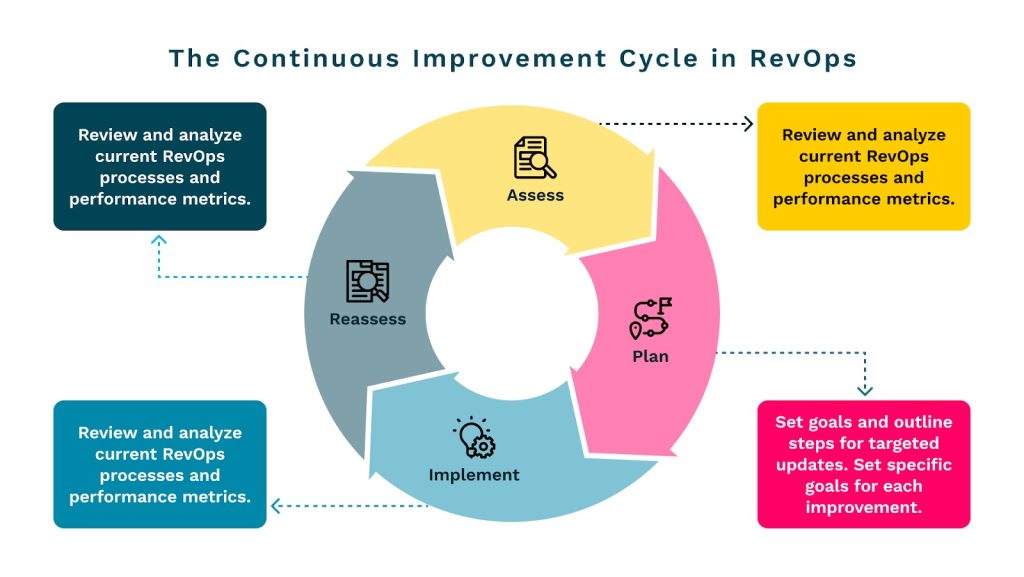
4. Continuous Improvement After the First 90 Days
- Proactive Approach
Instead of being reactive, RevOps should take a proactive stance. A proactive approach helps in anticipating and addressing evolving business needs instead of constantly reacting only when they arise.
- Process Versioning
Every tool or process introduced should be subject to ongoing versioning or “creative destruction,” an economics concept that refers to the continuous evolution of systems. This means that even established processes should be periodically reviewed, improved, or replaced to stay aligned with changing business needs.
- Prioritizing Based on Impact
When planning updates, prioritize changes that deliver the highest immediate revenue impact or solve the most pressing user challenges.
5. Incorporate an Optimal Reporting structure
Hassan suggests that in order to avoid conflict of interests, RevOps should not report to a single department (e.g., only Sales) since it serves multiple teams (Sales, Marketing, Customer Success). Reporting to one department risks biased decision-making.
Ideal Reporting Options:
- Reporting directly to Finance can allow RevOps to maintain neutrality and accountability across departments.
- Another effective structure is to make RevOps a distinct GTM unit with equal standing alongside Sales, Marketing, and Customer Success. This structure allows RevOps to participate in high-level strategy without bias, maximizing its positive impact.
Beginning of the 90-Day Phase: Vision and Execution
Harnessing accurate and comprehensive data can significantly boost efficiency, streamline workflows, and power revenue growth. Yet, many teams struggle with outdated or incomplete CRM data, missed buyer touchpoints, and inefficiencies that slow down their sales process. This is where Nektar can help you by delivering actionable insights that RevOps teams can rely on for high-impact decisions.
Here’s how Nektar can help you scale through each phase of your 30-60-90 framework:
Build Trust and Insight with Clean CRM Data
In the Discovery phase, understanding stakeholder needs and gathering a complete picture of your GTM landscape is critical. Nektar automatically syncs every buyer engagement—emails, meetings, and more—into Salesforce with precise data mapping.
Drive Alignment with Intelligent Opportunity Matching
Consistent data standards are needed to foster collaboration and drive alignment & control across teams. Nektar’s AI-powered opportunity matching enhances CRM data accuracy by capturing conversation context, keywords, and participant metadata, ensuring that every opportunity has the full context needed for better cross-team alignment and informed decision-making.
Execute Strategy with Automated Contact Roles and GTM Activity Insights
Nektar’s automation capabilities streamline contact role creation, adding key contacts to opportunities without manual input. Additionally, Nektar provides insights on how AMs, SEs, CSMs, and GTM teams engage with accounts and opportunities, giving you a complete picture of resource allocation and engagement quality.
Accelerate your Revenue Success with Nektar
Nektar.ai is your partner in driving revenue operations excellence. With tools designed to streamline data integration, automate insights, and foster seamless collaboration across teams, Nektar.ai empowers RevOps leaders to unlock the full potential of their 30-60-90 day strategy and beyond.
Book a demo today and see how you can elevate your RevOps strategy to a new level of efficiency and effectiveness.
Enjoyed our content? Follow Nektar on LinkedIn