

Tech Stack Consolidation for Revenue Teams: Streamlining Efficiency and Productivity in 2025
- Sales
- Sales Tech Stack
The entire customer journey, from lead to opportunity to revenue to retention is riddled with complexities.
- Buyers are well-informed about a product and its competitors way before they even book a demo.
- Sales cycles are longer with multiple stakeholders influencing the buying decisions at each stage of the customer journey.
- Customer churn is at an all time high.
To successfully close deals and generate revenue, GTM teams today need to be hyper fluent with customer pain points. And be able to offer tailored solutions to them at their time of need.
This is why revenue teams need technologies at their disposal. Which can help them act on insights that can enhance the customer experience. And lock in more revenue every quarter.
While investing in these tools is table stakes to achieve revenue targets, the concept of “the more the merrier ” does not work here.
While it might be tempting to solve a problem with the shiniest new software out there, organizations are realizing that this can actually drain the productivity of their teams and lead to a myriad of inefficiencies.
Bloated tech stacks can create many problems in disguise and add to a lot of hidden costs such as cost of integrating, tool fatigue, cost of siloed data and much more.
Which is why 2024 is the year of tech stack consolidation. 62% of businesses are trying to cut down the number of tools they use and trim the excess fat from their tech stacks.
In this blog, we will explore what revenue tech stack consolidation means. And how you can go about approaching it.
Before we get into what tech stack consolidation means, let’s take a quick look at what led us here.
More Tools Don’t Mean More Revenue
A whopping number of tools are being added to the modern revenue technology stack. SaaS organizations use an average of 130 applications!
But only 53% of users say their technology aids productivity and positively impacts results. According to another survey, 57% of marketing leaders, who had over 20 tools in their tech stack, strongly doubted if they’d reach their ROI goals.
It’s clear that the promise of efficiency gains and higher productivity that these tools claim for GTM teams are often not met. Instead, it leads to enormous amounts of tech debt for businesses.
And an ever increasing stack of tools only adds to the complexity of daily operations, causing revenue to leak across various points along the customer journey.
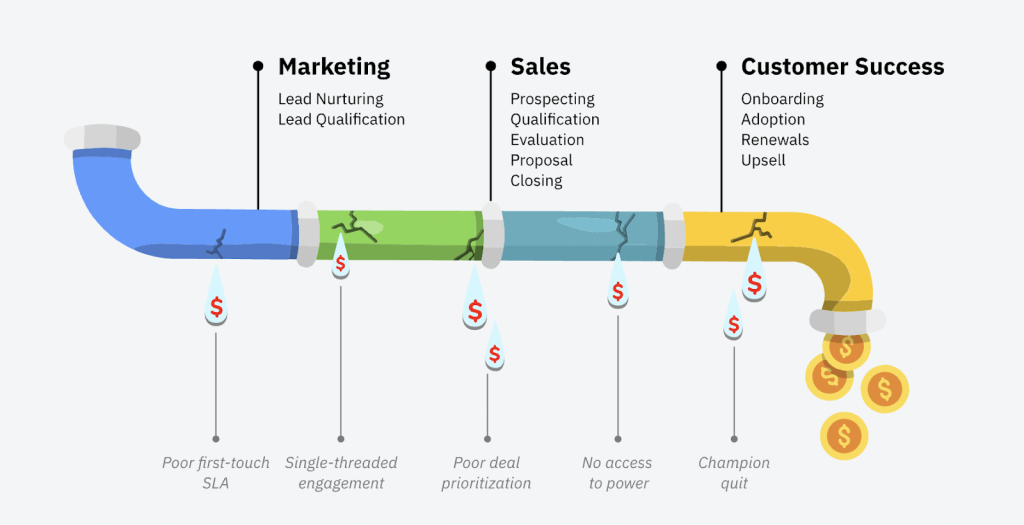
Here are some of the ways too many tools lead to loss of revenue opportunities:
- A web of fragmented tools adds to complexity in day to day operations.
- Tools are siloed in multiple systems which makes it difficult to track data, draw insights from it or keep it consistent and secure.
- No unified view of data leading to misalignment among GTM teams
- Overwhelmed employees who spend nearly 70% of their time on painstaking administrative tasks such as updating spreadsheets, adding prospects to CRM and augmenting data.
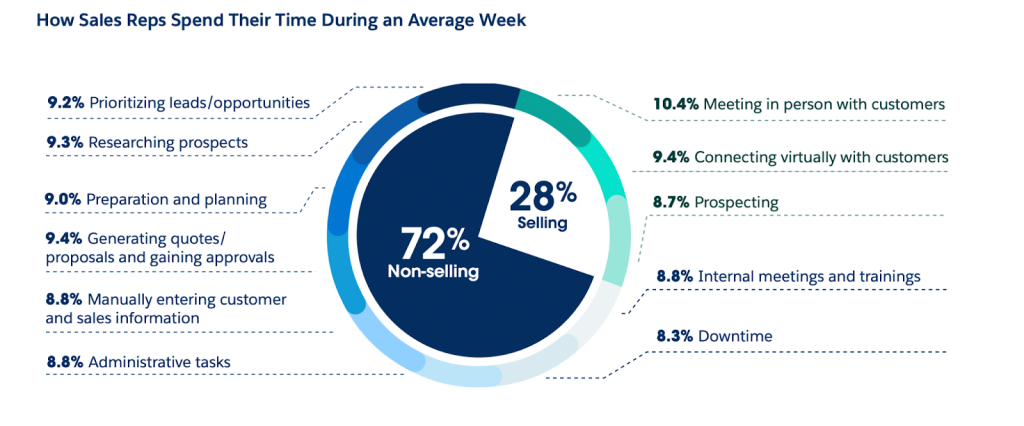
These damaging effects of too many tools have increased the need for a leaner tech stack. Revenue leaders are taking a critical look at their existing tech stacks. And figuring out how to trim the fat without losing out on any core functionality.
This is what we call tech stack consolidation.
What is Tech Stack Consolidation?
Tech stack consolidation is the process of reducing the number of tools in a company’s tech stack by merging functionalities into lesser and more exhaustive platforms.
The goal of consolidation is not to knock down all of the investments in point solutions that already exist. It demands a structured approach in analyzing which tools offer real value for GTM teams. And eliminate tools that don’t add any merit to their day to day workflows.
More tools in the tech stack add the burden of deployment, management and adoption. The goal for revenue leaders is to evaluate what they have, consolidate wherever they can and optimize their tech stacks to improve productivity and execution across every role.
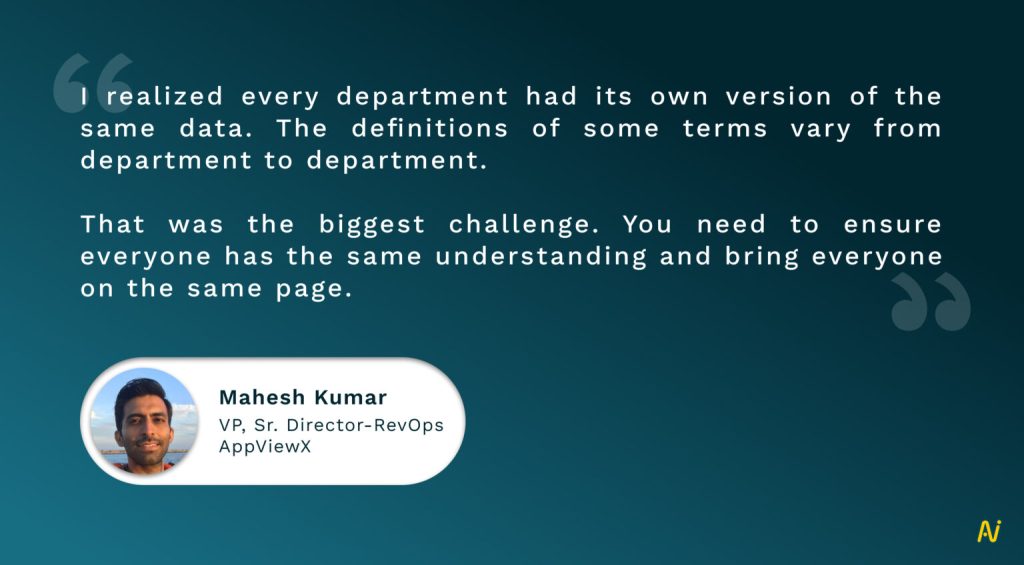
Consolidated technology seems to be the recipe for winning teams as per this survey by Sales Hacker. Teams that use tech stack that enable the full sales motion, from creating pipeline to closing deals are more likely to meet their revenue goals.
A lean and fully capable sales tech stack is a reality as companies look to consolidate vendors while retaining the features and capability of their previous array of point solutions.
With the need for efficiency and productivity rising, let’s discuss an evaluation framework that can help you consolidate your tech stack.
Evaluation Framework for Tech Stack Consolidation
Too many tools add a lot of costs to a business. These costs go beyond the price on the invoice.
Poorly implemented and managed tech can lead to a lot of soft costs which arise from frustration in using the tools, poor adoption, implementation and maintenance and other issues that eat up the precious time of revenue teams.
Making changes to a tech stack is a delicate affair and needs to be handled with caution. It’s important to have all the necessary information at the very beginning to make informed decisions.
Here is a step by step evaluation framework to consider for a tech stack consolidation.
Step 1 – Identify your biggest challenges along the customer journey
As a first step, inspect where your problems lie.
Ask yourself:
- How can you boost productivity and efficiency at every stage of the customer journey with your existing tech stack?
- Are your marketing, sales and customer success teams meeting their targets? Do they have the right tools at their disposal? If not, what can make them more productive?
- Do you have clear visibility into the deals in your pipeline? If not, why?
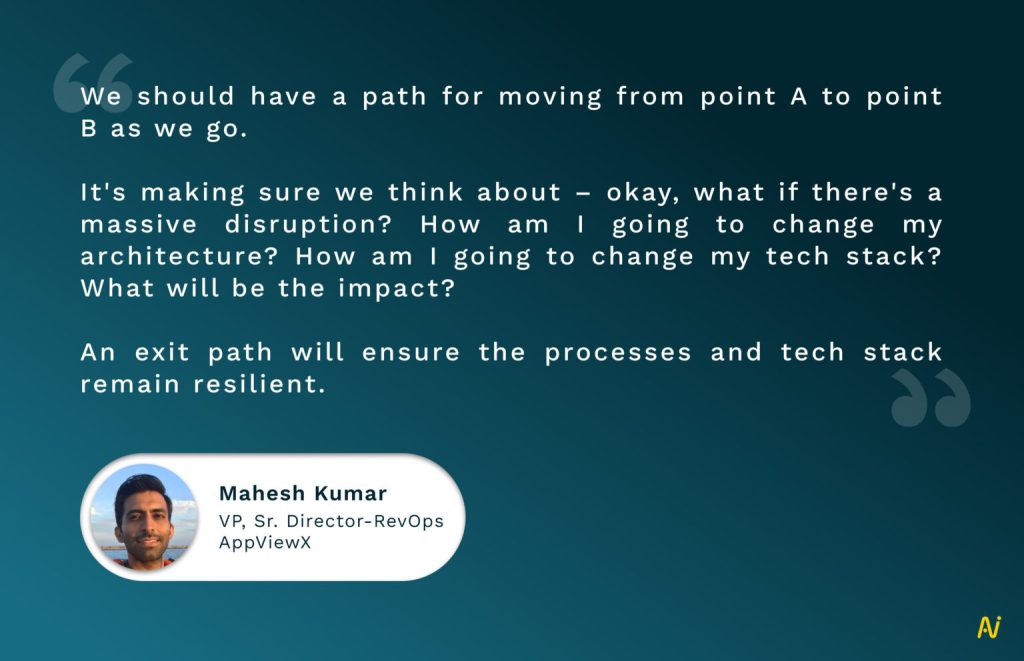
Identify where frictions exist in your customer journey.
Is it at the very beginning of the funnel when a lead enters your CRM?
Is it when an opportunity needs to be handed over to customer success from sales?
Is it an inability to prioritize deals the right way?
Is it a need to identify the various stakeholders in a buying or renewal committee?
Determine what your most important problems to solve are when it comes to managing a seamless customer journey.
Step 2 – Audit your current tools and map it against your top use cases
Once you have a clear understanding of what are your burning problems to solve along the customer journey, the next step is to audit the current tools in your tech stack. And map these tools against your top use cases.
What are the tools that support the customer journey and make it seamless? What are the tools that impede the flow? Eliminate the latter.
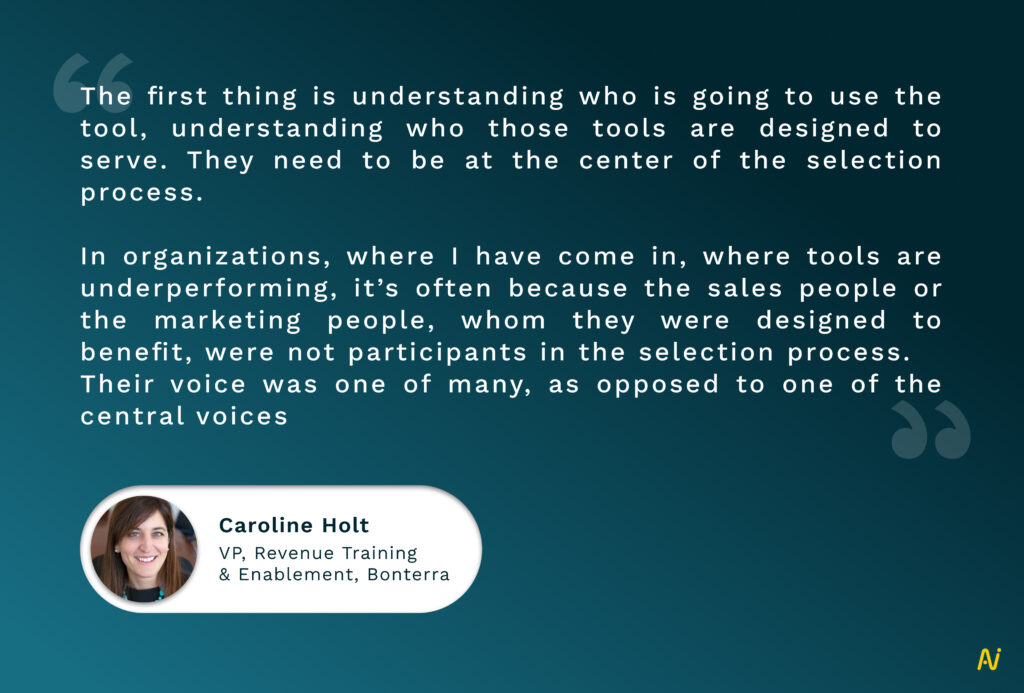
Understand what solutions your revenue teams are using at every stage of the customer journey. And if these tools are helping you solve the problems you listed in step 1.
While evaluating your existing revenue tech stack, list down:
- The number of tools you currently have
- Their key features and how they map against your top use cases
- Their usage in terms of how your teams are currently using the tool. Is it adding any value to their workflow?
- Determine adoption by checking activity data instead of just login information. How many actions is an average user committing each day?
- How much time is going in maintenance and implementation? Is it worth the time?
Step 3 – Look for tool overlaps
Now that you have a list of tools mapped out against the biggest business challenges you need to solve, look for tools that have overlapping functionalities.
For example, if one point solution helps your sales team prospect, but a larger platform also has the same capability, you can opt for the latter. In this stage, look for tools that can solve multiple use cases, instead of going for point solutions for each challenge along the customer journey.
As long as the usage and adoption rate of the second tool is positive. You will have this data from the audit. Speak to your users (reps here in this case) if they actually use the tool and find value in it.
This exercise can be repeated for all the tools that you have in your stack to eliminate redundancies. This leaves you with a leaner tech stack that has all the functionalities you require, without creating any additional burden on the users.
The questions to ask here for each tool would be:
- What additional steps can be eliminated from the workflow if one technology can do the work of multiple point solutions?
- If reps love a point solution but only use it for one feature, can it be replaced with a comprehensive platform that they already use extensively?
- How many screens do your reps toggle between on a daily basis? Which solution can deliver the best insights in a single user interface that serves as a rep’s point of decision and point of action?
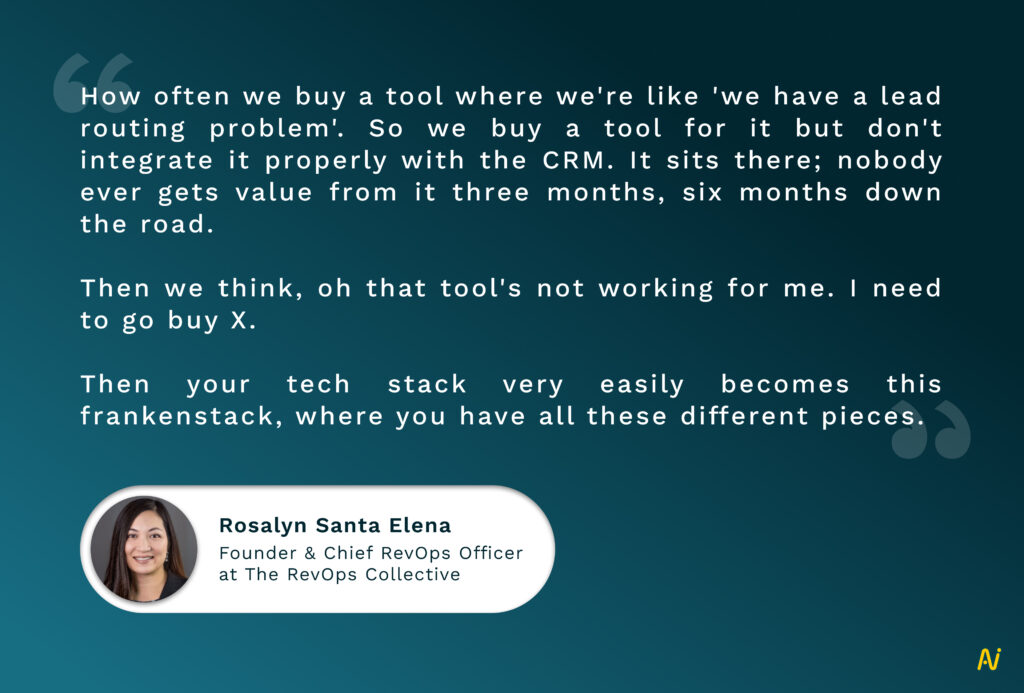
For the tools that you choose to keep, ask the following questions:
- Is the tool helping you solve your specific problems?
- Is the tool just reporting process gaps or helping you fill them out too?
- Can the ROI be measured?
- Does the tool easily integrate with the rest of your systems?
- How much change management is required?
- How easy is it to maintain?
- How good is the after-sale experience?
- Does it provide a single source of truth?
- Does it reduce manual load?
- Is it scalable?
Step 4 – Consolidate based on unified data
Consolidation should help your business rid itself of disparate systems, where users spend more time moving between tools searching for critical information. Instead, consolidation should give them one place where all important information can be collated automatically.
Choose tools that can help drive a unified visibility across the customer journey and align teams with clean and complete data. The consolidated tech stack should unlock the data present in core systems like CRM and expose patterns that have been long trapped in databases and applications.
The tool should also be intelligent enough to know how to make use of data that is continuously streaming into systems and has the ability to provide insights at the time of need. It should also continuously evolve and adapt to keep itself updated.
It is the battle for a system of action that will win the consolidated revenue tech stack game. The tool you choose should have the ability to marry historical context with the continuous oncoming of data about accounts, opportunities and prospects. And offer predictive signals into what can add value to the customer journey at any given point in time.
Ask yourself:
Which solution can deliver the best insights in a single user interface that serves as a rep’s point of decision and point of action?
Whether it’s deciding who to reach out to, which deal to go after this week, or which deal to revive, tools should share a predictive list of actions that pushes your teams towards deal closure.
These insights are highly valuable as it produces signals to ensure customer-facing teams are always focused on the highest-value and most-likely-to-convert accounts at all times.
Your revenue tech stack should offer a single source of truth powered by unified data with minimal requirement of movement to find data at the time of need. All team members must get access to a central location that houses your information and insights, updates it automatically and puts all customer-facing teams on the same page.
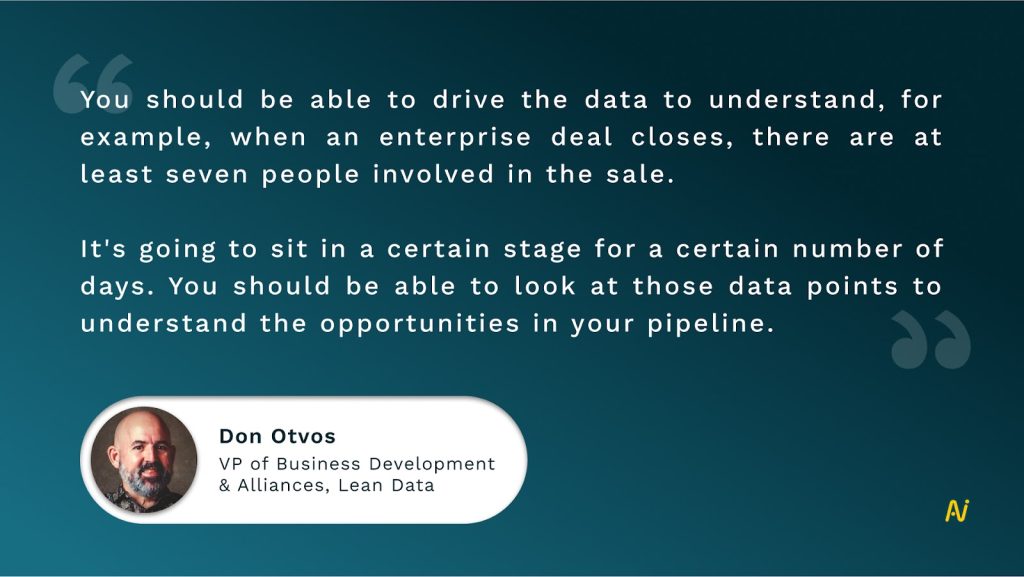
Word of caution: Any tool with generative AI capabilities will only work if the data being fed into it is clean and complete. Because AI requires meaningful data to recommend improvements that help improve revenue outcomes. Otherwise even the best of breed cannot undo the effects that bad data has on revenue.
Partner With Nektar to Make your Revenue Tech Stack Deliver
Nektar is the world’s first AI for Revenue Operations that gives unmatched visibility into your entire customer journey.
Nektar’s AI platform for revenue teams is designed to answer questions for marketing, sales, customer success and revenue operations. It fits into the GTM organization as an end to end system of action. And delivers the best insights into a single user interface for all customer-facing teams.
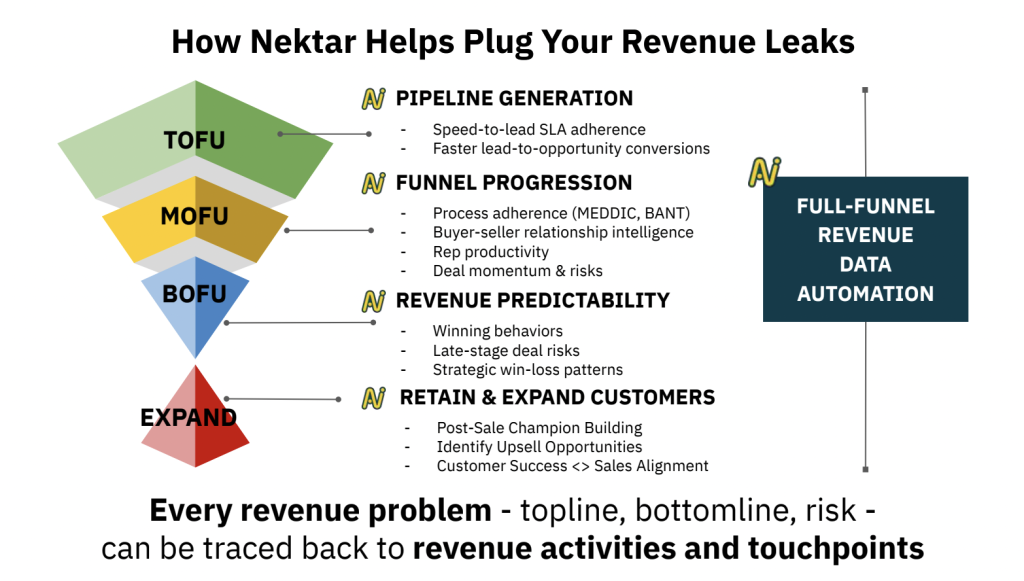
With full-funnel revenue data automation across the customer lifecycle, you can have a single system of action that helps you optimize every party of the funnel.
Top of the funnel:
- Maximize buying group intelligence to opportunity conversion.
- Increase speed-to-lead ratio
- Identify your high intent leads
- Provide actionable visibility to sales and marketing teams into account based execution
- Access to lost contacts and relationships
- Automatic capture of partner activities
Middle of the funnel:
- Have confidence in your pipeline numbers
- Know which deals to prioritize in the pipeline
- Have data about your buying group and their engagement
- Empower reps able to multithread with the right accounts
- Get real-time visibility and insights into stagnating deals
- Guide reps on the next best action in real time
- Get insights into how a deal is performing relative to similar closed-won deals in your CRM
Bottom of the funnel:
- Spot risks before they impact your revenue
- Decode winning behaviors, and replicate them across your customer-facing teams
- Spot coaching moments and empower reps to hit their quotas
- Make accurate forecasts
- Be confident of a deal closing beyond reps’ intuition
Renewal and expansion:
- Get correct post-sale or customer success manager activity insights
- Capture partner activities
- Track engagement with executives and key stakeholders with your customer data
- Capture account contacts, activities and relationships
- Spot champions and remove churn when champions quit
Play the Long Game
Consolidating your revenue tech stack is critical to achieve efficiency and productivity gains in 2024. But your tech stack will only deliver results if chosen with careful intent.
Focus on long term goals when you make choices on what to add and what to eliminate. Be mindful as you consolidate your tech stack. Get all the information you need to make decisions that set the foundation of your future success.
Ready to get the most ROI from a consolidated tech stack?