

CASE STUDY
How Nektar Powered Mimecast’s Agentic GTM AI with Complete Customer Signals
As enterprise AI evolves, one thing is becoming clear: models are getting easier to access, and agent frameworks are becoming easier to build. The real advantage comes from something harder to replicate — proprietary data.
Mimecast recognized this early in its AI journey.
The company was investing in internal generative AI capabilities to surface better customers and prospect insights across the go-to-market lifecycle. The vision was ambitious: build AI applications that could support teams across acquisition, expansion, retention, renewal, and prospecting.
But like many enterprises, Mimecast ran into a familiar challenge. The data needed to power those applications was spread across disconnected systems, inconsistent workflows, and siloed teams. Valuable engagement signals existed, but they were difficult to access, difficult to standardize, and hard to use at the level of granularity required for meaningful AI outcomes.
That challenge made one thing clear: if Mimecast wanted AI to create real business value, it first needed a stronger data foundation.
The Challenge: AI is only as strong as the
data behind it
Mimecast had already built its own internal generative AI engine to identify customer and prospect insights. But success depended on capturing and organizing the right GTM data inside its own data model.
That was easier said than done.
Critical information about customer engagement, buying committee members, and deal influence was spread across multiple processes and systems. Some GTM tools did not provide access to the data Mimecast needed. In other cases, the data was available, but not in a form detailed enough to support the outcomes the team was after.
As Tim Seamans, VP of AI Acceleration at Mimecast, explained:
He added:
“It’s really difficult to access data across disparate processes and systems so that we can get the right data, in the right place, at the right time.”
Mimecast’s challenge was not a lack of AI ambition. It was the difficulty of bringing together the underlying data required to make AI applications accurate, useful, and scalable.
Why proprietary data became central to Mimecast’s AI strategy
Mimecast’s approach was rooted in a clear belief: while models and agents continue to improve, proprietary data is what ultimately creates a durable advantage.
That thinking shaped the company’s AI roadmap.
Mimecast began building 8–10 specialized AI applications and agents across the customer lifecycle, including applications for:
- Acquisition
- Expansion
- Retention
- Renewal management
- Prospecting
These applications were designed to help teams act on customer and prospect signals more intelligently. But for them to work well, Mimecast needed better access to engagement data and customer context across the business.
The priority was not simply generating more output. It was making sure AI systems had the right inputs to produce accurate, trustworthy, and business-relevant outcomes.
The solution: Unlocking the GTM data layer with Nektar
Nektar helped Mimecast access the data and metadata it needed to strengthen the foundation behind its AI strategy.
By capturing GTM engagement data that had previously been fragmented or unavailable, Nektar helped Mimecast unify important customer signals and make them available downstream. Just as importantly, that data could be delivered into the systems where Mimecast needed it most — including its CRM and data lake.
That meant Mimecast could use Nektar not as another destination system, but as a data layer that supported its existing architecture and internal AI applications.
In Tim’s words:
This was a meaningful shift. Instead of relying on incomplete signals or inaccessible information, Mimecast could work with a richer and more structured view of customer engagement.
Nektar helped Mimecast turn fragmented GTM data into an AI-ready signal layer
Mimecast’s AI strategy depended on one thing: having complete, usable customer and prospect data inside its own systems. Nektar helped make that possible by unlocking and structuring engagement data that had previously been siloed, incomplete, or inaccessible.
With Nektar, Mimecast was able to add meaningful scale and depth to the data powering its internal AI applications, including:
- 24,000+ net-new contacts added
- 200,000+ historical and ongoing emails captured and enriched
- 1,000+ hours of manual rep work saved annually
That data foundation gave Mimecast a much richer signal layer for customer insights, prospect intelligence, feature engineering, and AI-driven workflows. Instead of working from partial records and missing context, the team could feed its AI applications with complete interaction history across the customer lifecycle.


Building for accuracy, not just automation
For Mimecast, the goal was never to deploy AI for its own sake. The goal was to make AI outputs reliable enough to drive action.
That required more than models. It required structured data, stronger context, and the ability to capture the signals that shape real customer outcomes.
With Nektar helping fill those gaps, Mimecast was able to improve the quality of inputs behind its AI applications. That, in turn, supported more accurate insights across critical GTM workflows and spending more time acting on actionable signals and less time finding and structuring the data.
This was especially important for a company building specialized applications across the customer lifecycle. Better data meant better context, better context meant better output, and better output made it easier to tie AI efforts to tangible business value.
The impact: $2M in expansion revenue and $80M+ in additional pipeline in 80 days
The business results came quickly.
In the first 80 days after launching just one of Mimecast’s Proprietary AI tools, Expansion AI, the company achieved:
$2M in directly attributed expansion revenue
Mimecast drove $2 million in directly attributed expansion revenue through its AI applications.
$80M+ in additional pipeline identified
By bringing together previously siloed signals and engagement data, Mimecast identified more than $80 million in additional pipeline.
As Tim Seamans shared:
These outcomes underscored an important point: AI applications create more value when they are powered by complete, connected, and usable GTM data.
The Broader Takeaway
Mimecast’s story reflects a challenge many enterprises are facing right now.
The race to adopt AI often starts with models and tools. But long-term success depends on the quality of the data underneath them.
Mimecast understood that early. By strengthening the data layer behind its AI strategy, the company was able to build more useful applications, improve insight quality, and generate measurable revenue and pipeline impact.
Nektar helped make that possible by unlocking engagement data that had previously been fragmented, siloed, or inaccessible — and making it available where Mimecast could put it to work. The result was not just better data capture. It was a stronger AI foundation and faster business impact.
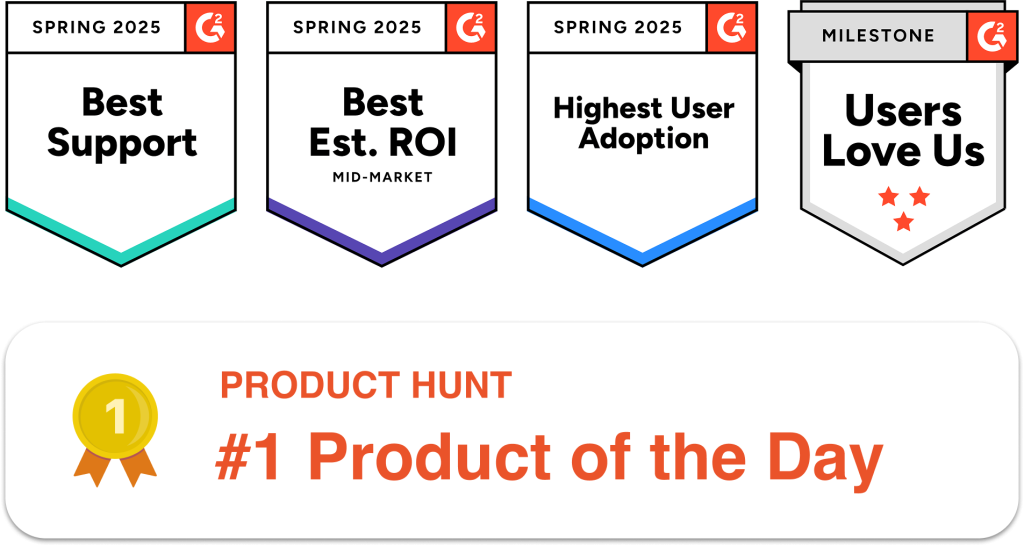
Trusted by Top Performing Revenue Teams
Recognized by customers and consistently rated on G2, Nektar powers the data foundation behind high performing, AI-ready revenue teams.