
10 Best Sales Intelligence Tools for 2026
- Sales Tech Stack
- 12 min
- Updated: July 30, 2026
Sales intelligence tools and CRMs play different roles in supporting sales. A CRM nurtures customer relationships and tracks interactions; sales intelligence tools give sales teams and leaders the data insight to actually improve performance, how buyers make decisions, how prospects behave at each stage, which tech stack a target account runs, and how to build a forecast and pipeline you can actually trust.
The category has consolidated meaningfully since this list was first written. Several tools that used to be independent are now subsidiaries of larger platforms, and the AI layer on top of sales intelligence has moved from a novelty to table stakes. This guide covers what a sales intelligence tool actually is, the current state of 11 major players, and how AI has changed what “good” sales intelligence needs to mean.
Get our latest insights into your inbox

What Is a Sales Intelligence Tool?
A sales intelligence tool gives you the data and insight to make smarter sales decisions: generating high-quality leads, defining your ideal customer profile, and keeping that data accurate and current. The best ones don’t operate as a standalone island, they integrate with your existing CRM and sales stack, so the intelligence they surface actually reaches the workflow a rep is already using rather than sitting in a separate dashboard nobody checks.
10 Best Sales Intelligence Tools for 2026
- Nektar, GTM data foundation and AI signal layer
- LinkedIn Sales Navigator, social and professional relationship intelligence
- HubSpot Sales Hub, CRM-native sales intelligence and automation
- ZoomInfo Chorus, conversation intelligence backed by B2B data
- Traq.ai, AI-powered call recording and coaching
- Winmo, media and advertising sales intelligence
- Apollo.io, prospecting, engagement, and sales intelligence in one platform
- Demandbase One, account-based intelligence and orchestration
- 6sense, predictive account intelligence and journey orchestration
- Cognism, compliant contact data and intent signals
Overview of the 10 Best Sales Intelligence Tools
1. Nektar
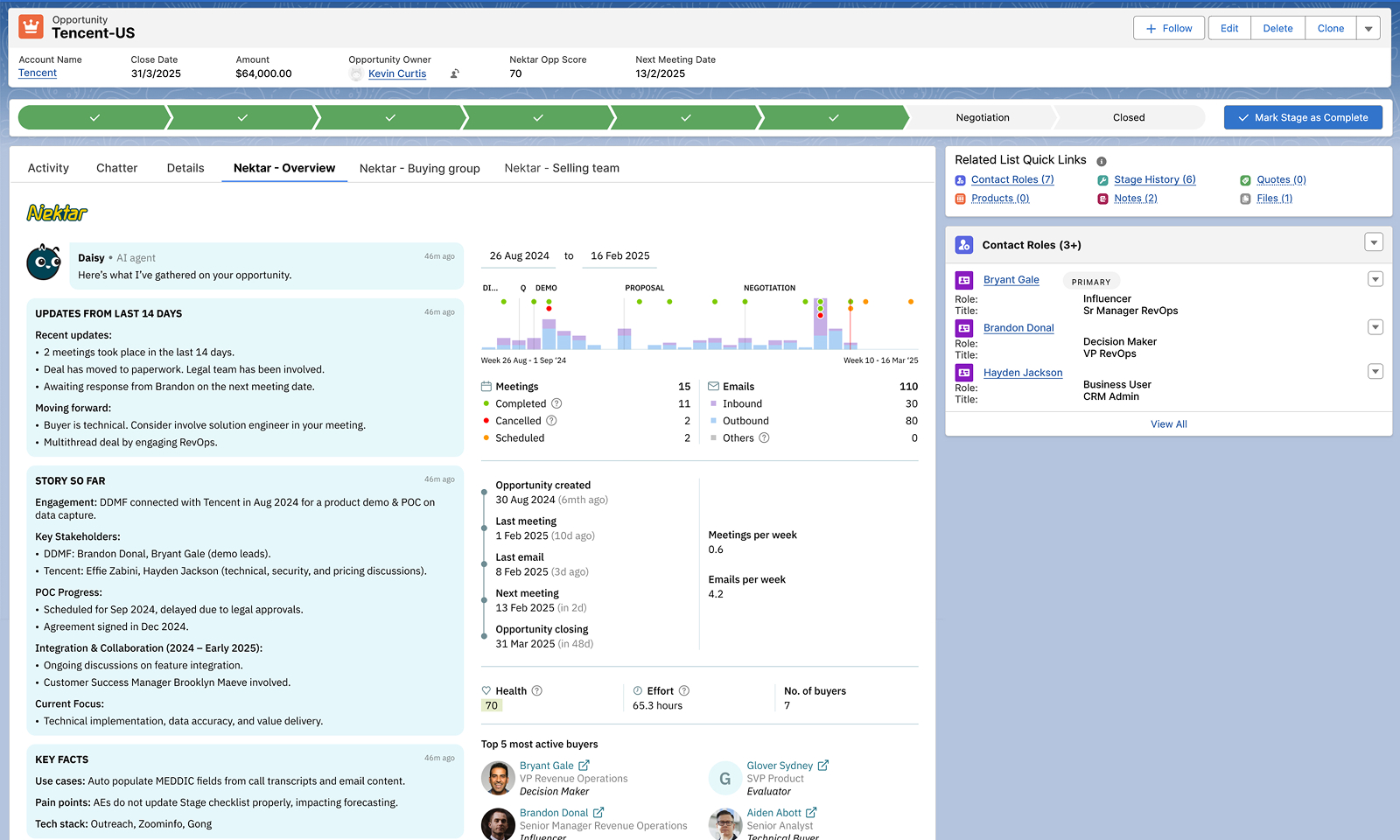
Nektar’s role in sales intelligence is upstream of most tools on this list: every platform is only as good as the underlying CRM data it’s reasoning over, and most CRMs are missing a large share of what’s actually happening in a deal. Data Foundation automatically captures every email, meeting, call, and calendar event across a team and writes it natively into Salesforce, HubSpot, or Dynamics, with zero rep effort required. Time Travel™ retroactively corrects historical records as new context arrives, something no other tool on this list does. Daisy AI then surfaces 39 signals across categories including buyer visibility, deal risk, and rep performance, directly on the Salesforce Opportunity tab rather than a separate interface.
Key features: zero-rep-effort activity capture across email, calendar, meetings, and calls; automatic buying-group mapping with persona and role enrichment; Time Travel retroactive correction of historical CRM records; Daisy AI signal library spanning deal risk, buyer engagement, and rep performance; vendor-neutral integration alongside your existing sales stack.
Pricing: Custom, based on team size and scope. A free CRM scan shows how much of your own pipeline activity is currently missing before you commit to anything.
Best for: Salesforce-first revenue teams that need the underlying deal data reliable enough for both reps and any AI layered on top of it.
2. LinkedIn Sales Navigator
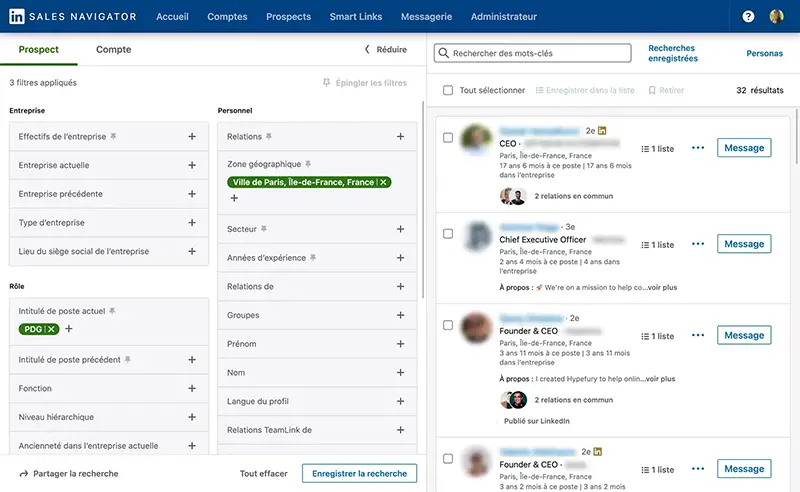
LinkedIn Sales Navigator helps you find and connect with the people who matter most to your business on LinkedIn specifically, using advanced search and lead recommendations to surface prospects based on criteria you actually care about.
Key features: personalized lead recommendations, advanced search filters across LinkedIn’s full network, InMail messaging to reach prospects outside your existing connections, real-time alerts on saved leads and accounts, CRM sync for Salesforce and Dynamics.
Pricing: Three tiers (Core, Advanced, Advanced Plus), plus a free trial. Current pricing is best confirmed directly with LinkedIn, since tiers and included seats have shifted more than once in recent years.
Best for: Prospecting and warm-path discovery through LinkedIn’s own network graph, best paired with a CRM-native tool rather than used as a standalone system of record.
3. HubSpot Sales Hub
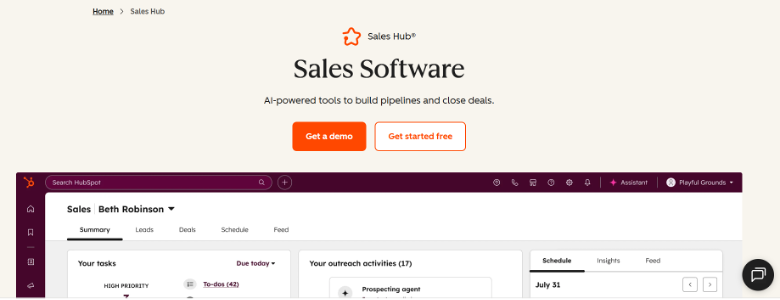
HubSpot Sales Hub is a full sales platform combining CRM, sales analytics, email tracking, and automation in one place, with an increasingly broad AI toolset layered on top for outreach drafting, prospect research, and deal scoring.
Key features: sales analytics and forecasting, contact and deal management, email tracking and sequencing, sales automation for repetitive tasks, AI-assisted lead and deal scoring.
Pricing: Free CRM tier available; paid tiers (Starter, Professional, Enterprise) scale with seats and automation depth. Confirm current tiers directly with HubSpot, since per-seat pricing and included features have changed structurally since 2023 and a fixed table here would likely be stale again quickly.
Best for: Teams already running HubSpot as their CRM who want sales intelligence and automation bundled into the same platform rather than a separate tool.
4. ZoomInfo Chorus
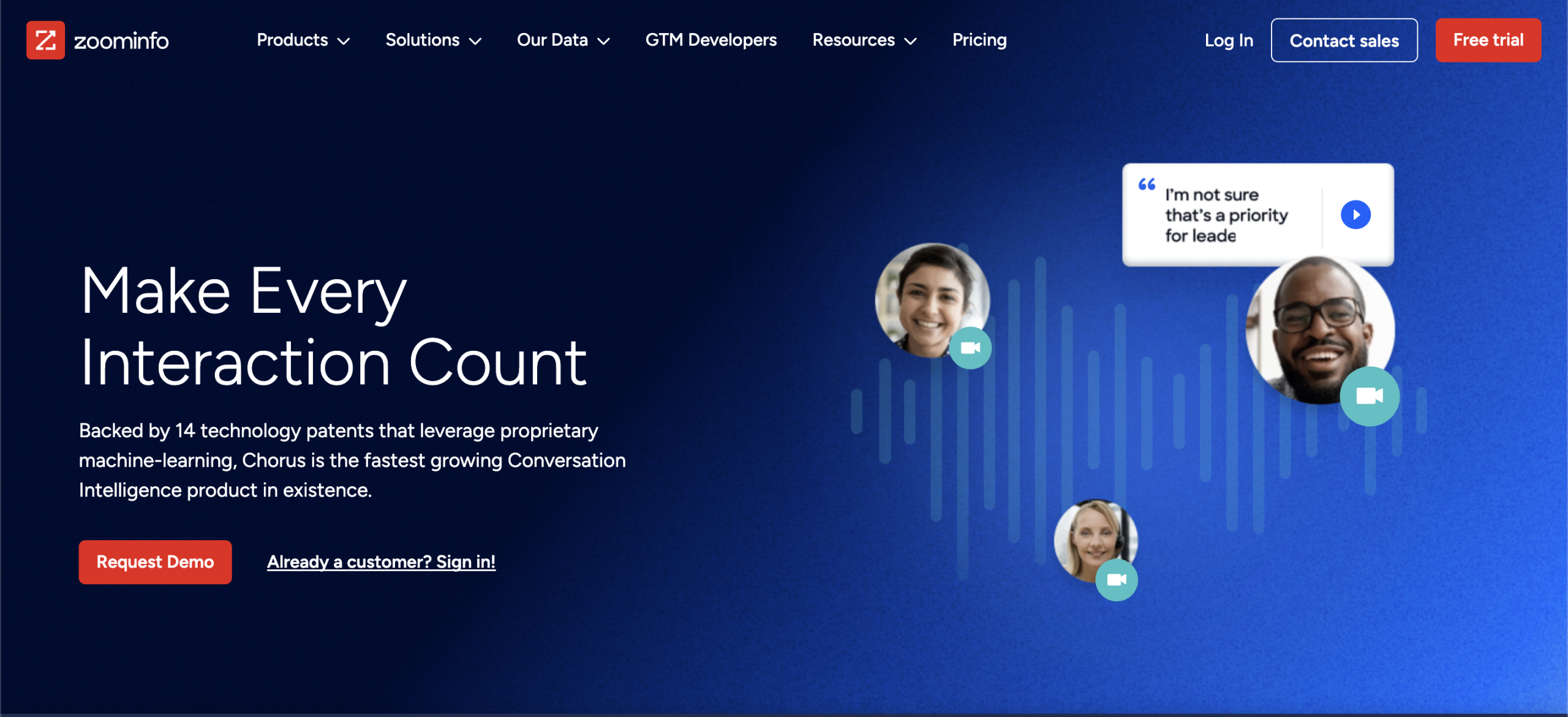
Chorus has been part of ZoomInfo since 2021 (not Zoom, a common mix-up) and now runs on ZoomInfo’s broader B2B data layer, the GTM Context Graph. It records and transcribes sales calls, using AI to detect sentiment, keywords, and key moments in a conversation, giving managers real-time coaching visibility into calls as they happen.
Key features: call recording and transcription, real-time sales coaching during live calls, AI-detected sentiment and keyword analysis, conversation analytics backed by ZoomInfo’s B2B data layer.
Pricing: Custom, quote-based.
Best for: Teams wanting conversation intelligence with the added weight of ZoomInfo’s data behind it, particularly if you’re already on ZoomInfo for prospecting.
5. Traq.ai
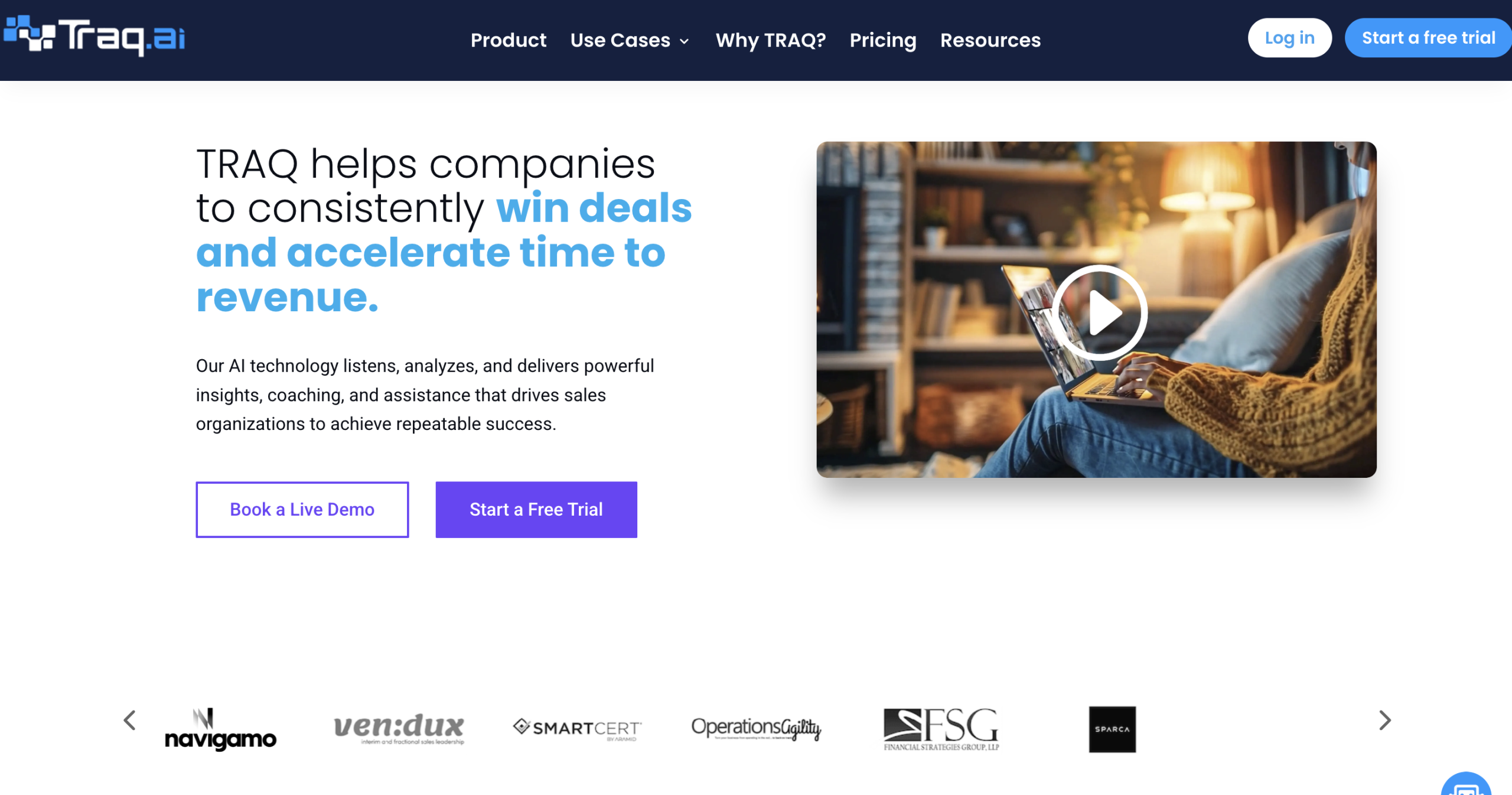
Traq.ai is an AI-powered platform that records, transcribes, and analyzes sales calls, extracting objections, opportunities, and next steps automatically rather than requiring a rep to take notes during the call itself.
Key features: automated call and video recording and transcription, AI-driven buyer sentiment and risk analysis, centralized deal intelligence storage, custom analysis tailored to your specific industry or sales process, integrations with HubSpot, Zoho, Microsoft Teams, and Google Meet.
Pricing: A free tier is available; paid individual and professional monthly plans exist, with enterprise pricing available on request. Confirm current tiers directly, since conversation-intelligence pricing in this category shifts often.
Best for: Smaller sales teams wanting call recording, transcription, and coaching insight without an enterprise-scale conversation intelligence contract.
6. Winmo
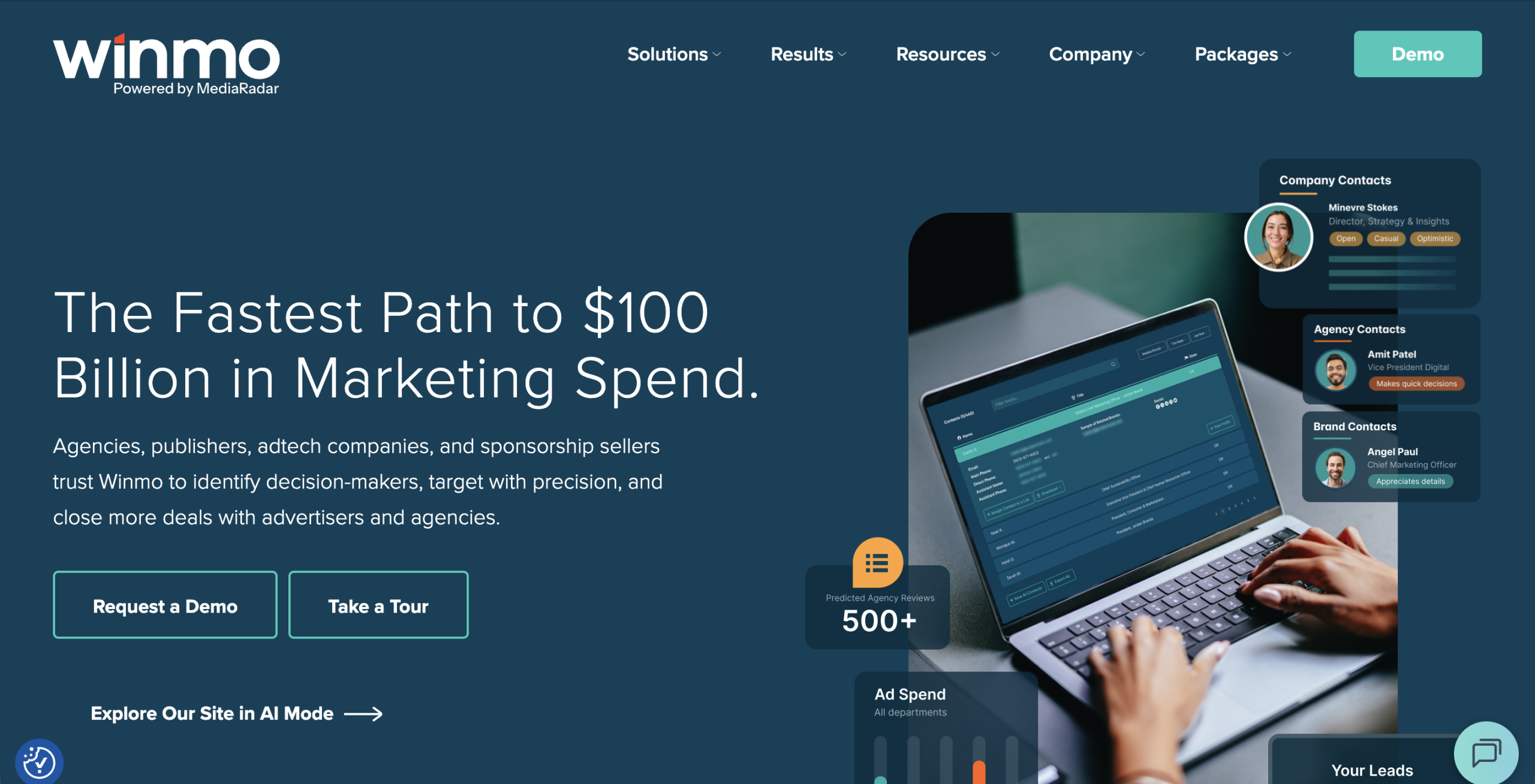
Winmo is a sales and marketing intelligence platform focused specifically on media, advertising, and brand contacts, surfacing media spend data and organizational changes to help sales teams identify new opportunities and reach the right decision-makers in that specific vertical.
Key features: a large database of advertising and brand contacts, media spend and ad-budget insights by brand, real-time alerts on organizational changes, decision-maker targeting within advertising and brand companies.
Pricing: Custom, quote-based, typically following a free-trial-then-custom-quote model.
Best for: Sales and business development teams specifically targeting media, advertising, or brand-side buyers, a narrower niche than most other tools on this list.
7. Apollo.io
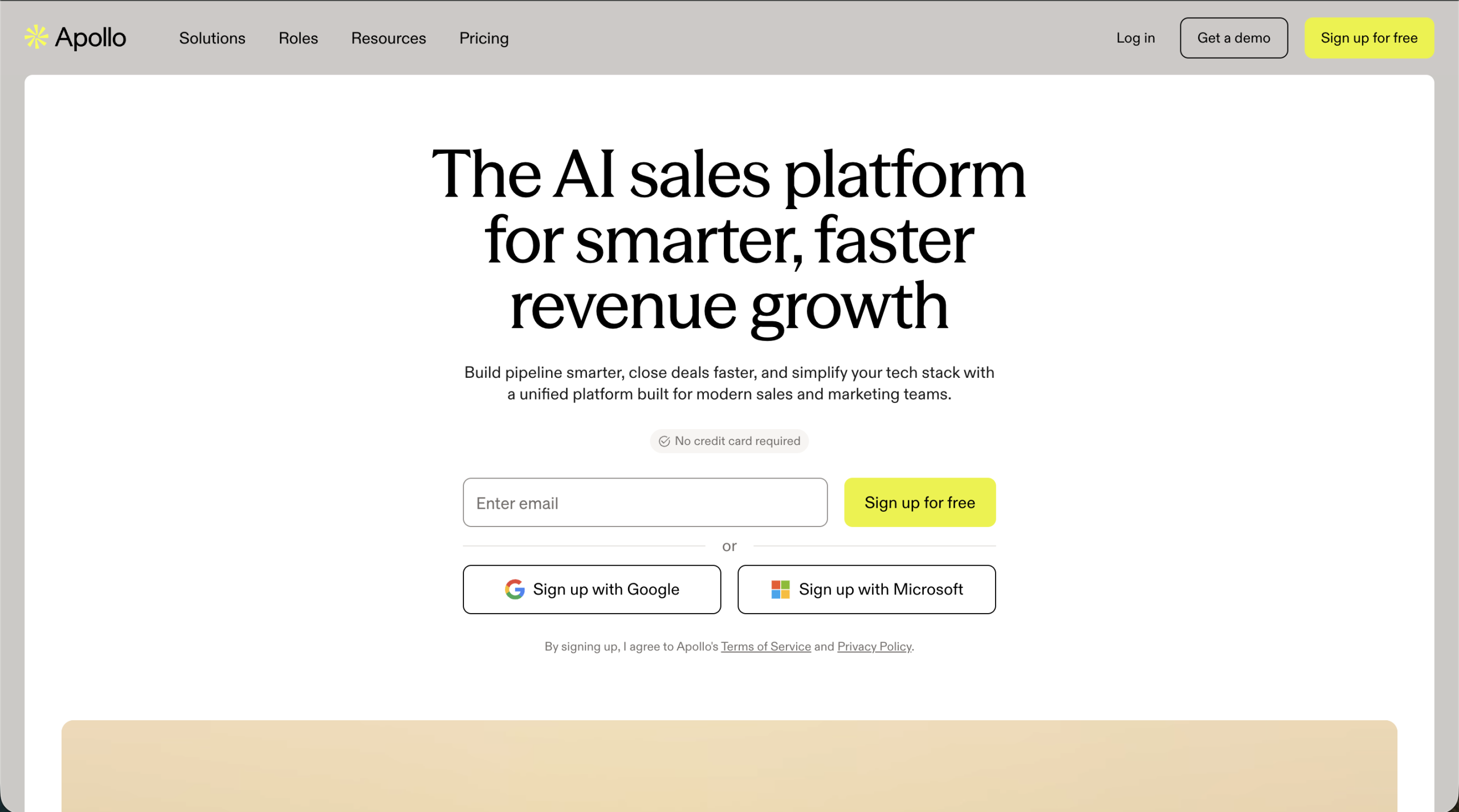
Apollo.io combines a large B2B contact database with sales engagement and sequencing in one platform, letting teams find, enrich, and reach prospects without stitching together a separate data provider and a separate outreach tool.
Key features: a contact database of 200 million or more verified B2B contacts, email automation and multi-step sequences, CRM integration with Salesforce, HubSpot, and others, lead scoring based on engagement and fit, sales analytics and reporting.
Pricing: A free tier is available, with paid tiers scaling by seat and feature depth, historically in the range of $49 to $99 per user per month for core plans, plus custom enterprise pricing. Confirm current tiers directly before budgeting, since Apollo has adjusted its pricing and credit structure more than once in the past two years.
Best for: Teams wanting prospecting, enrichment, and outbound engagement combined in one platform rather than paying for a separate data provider and sequencing tool.
8. Demandbase One
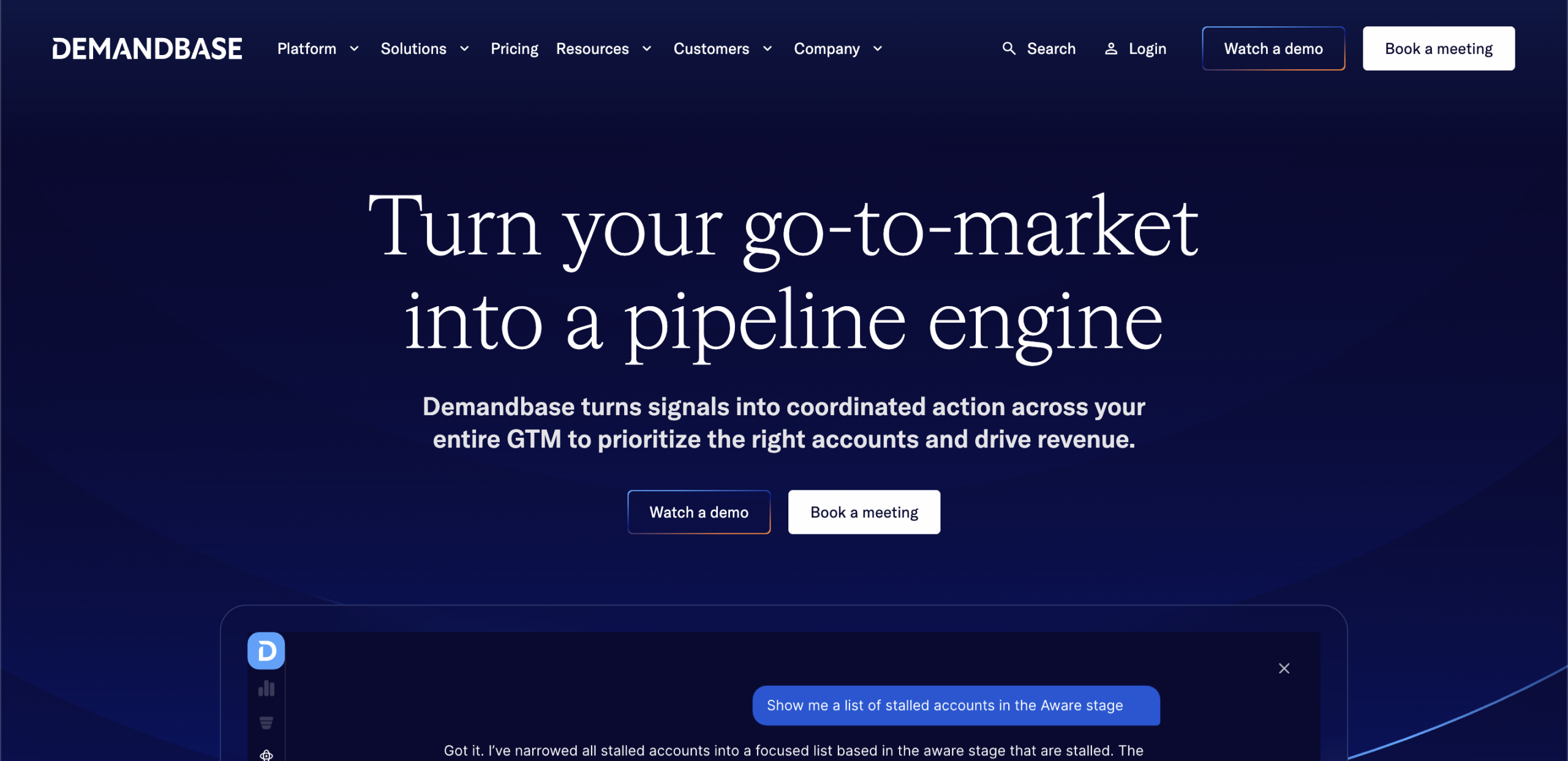
Demandbase is an account-based marketing and sales intelligence platform, identifying, engaging, and helping convert high-value target accounts through intent monitoring, personalization, and account-level analytics.
Key features: intent monitoring and buying-signal detection, account identification and prioritization by firmographic and behavioral fit, personalized advertising and campaign orchestration across channels, CRM integration for sales-marketing alignment.
Pricing: Custom, based on use case and account volume.
Best for: Marketing and sales teams running a coordinated ABM motion who need account-level intelligence shared across both functions.
9. 6sense
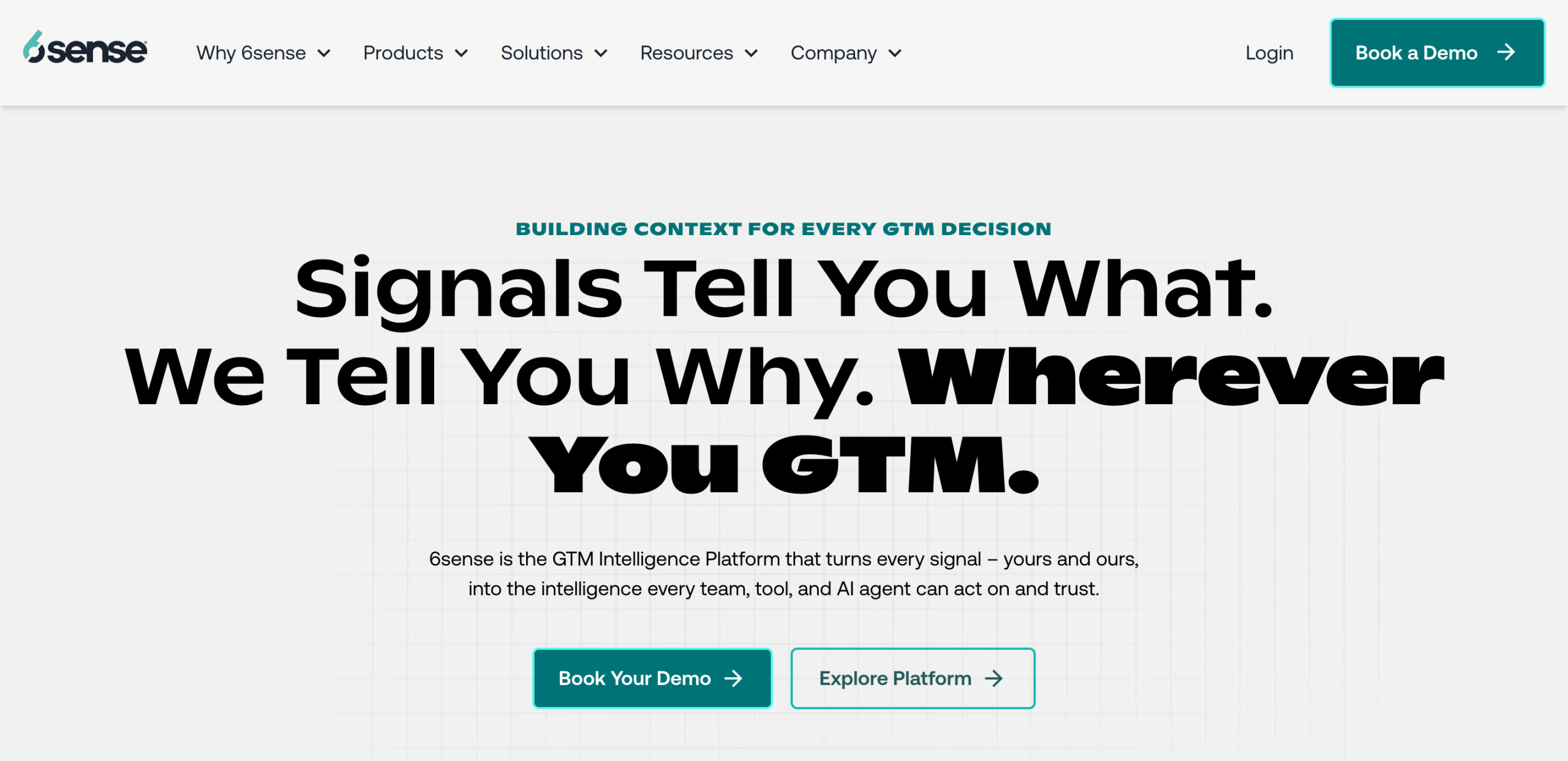
6sense is a predictive, AI-driven account intelligence platform, identifying accounts already showing buying intent and predicting where they sit in the buyer journey so sales and marketing can engage at the right moment with the right message.
Key features: intent monitoring across the web and third-party data sources, predictive account scoring based on likelihood to convert, personalized, account-specific engagement recommendations, revenue analytics tying campaign activity to pipeline movement.
Pricing: Custom, based on users and use case.
Best for: Teams running ABM at scale who want predictive scoring to prioritize which accounts to engage first, not just which accounts exist.
10. Cognism
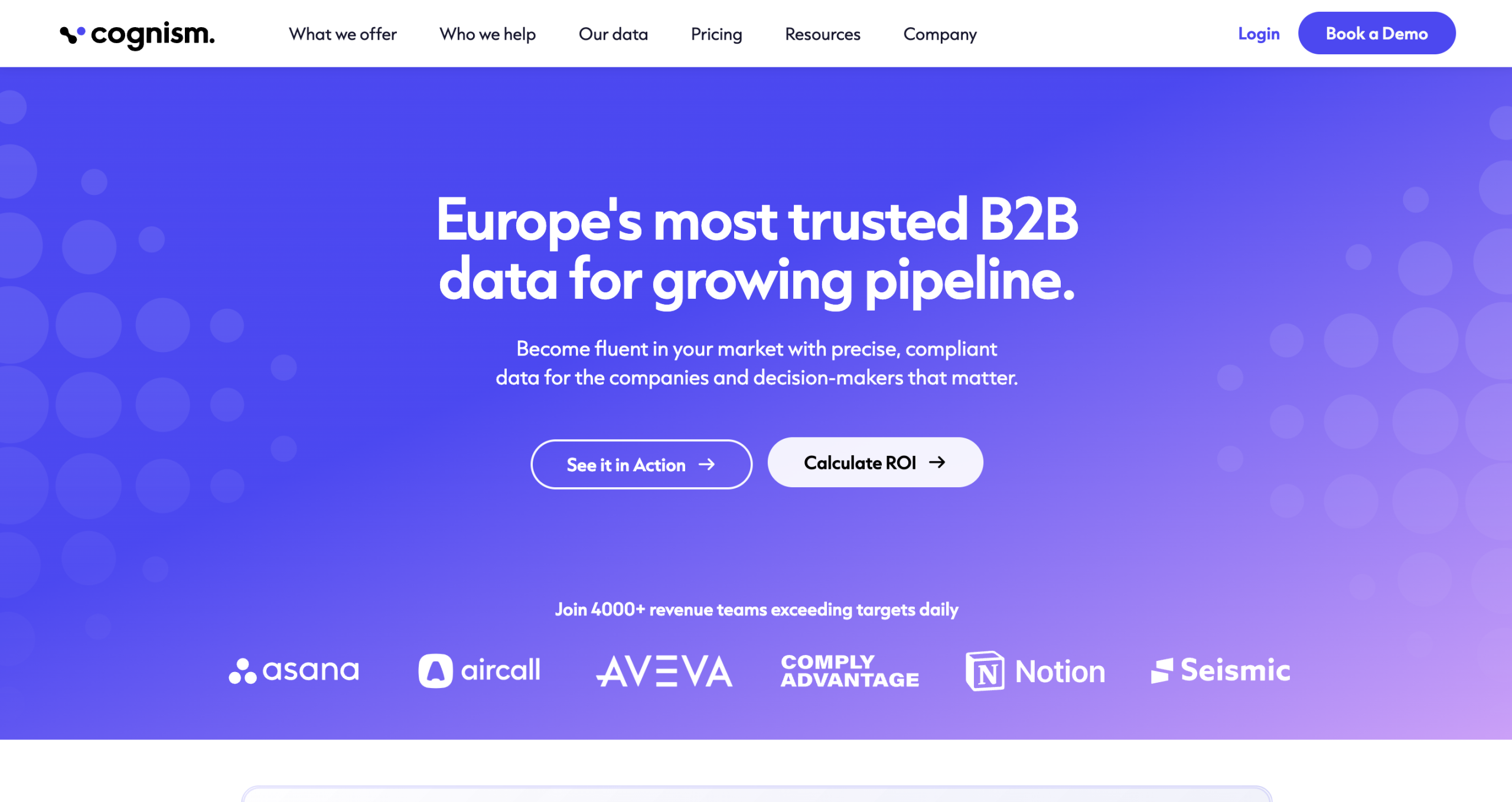
Cognism combines AI and human-verified data research to deliver accurate, compliant contact information, company insights, and intent signals, with particular strength in GDPR- and CCPA-compliant data sourcing for European and UK-based teams.
Key features: GDPR- and CCPA-compliant contact and company data, intent signals flagging active buying research, sales engagement tools including sequencing and activity tracking, Chrome extension for LinkedIn-based prospecting, direct-dial phone verification.
Pricing: Custom, based on team size and data volume needed.
Best for: Teams prioritizing compliant data sourcing, especially those selling into Europe or the UK, alongside intent-based prioritization.
Sales Intelligence Tools Compared
|
Tool
|
Core Strength
|
Best Fit
|
|---|---|---|
|
Nektar
|
Data foundation + AI signal layer
|
Salesforce-first teams building on AI
|
|
LinkedIn Sales Navigator
|
Social/professional network intelligence
|
Prospecting and warm-path discovery
|
|
HubSpot Sales Hub
|
CRM-native intelligence + automation
|
HubSpot-native teams
|
|
ZoomInfo Chorus
|
Conversation intelligence + B2B data
|
Teams already on ZoomInfo
|
|
Traq.ai
|
AI call recording and coaching
|
Smaller teams wanting affordable conversation intelligence
|
|
Winmo
|
Media/advertising contact intelligence
|
Teams selling to brand and agency buyers
|
|
Apollo.io
|
Prospecting + engagement combined
|
Teams wanting data and outreach in one platform
|
|
Demandbase One
|
Account-based intelligence
|
Coordinated ABM across sales and marketing
|
|
6sense
|
Predictive account scoring
|
ABM at scale with intent-based prioritization
|
|
Cognism
|
Compliant data + intent signals
|
Teams selling into Europe/UK
|
How AI Has Changed Sales Intelligence
The category has shifted in two specific ways since this list was first written. First, consolidation: several previously independent tools are now subsidiaries of larger data platforms, which changes what you’re actually evaluating when you look at them. A standalone product decision has become a “how deep into this parent platform’s ecosystem do I want to go” decision. Second, the AI layer itself has moved from a differentiator to a baseline expectation, predictive scoring, sentiment detection, and AI-drafted outreach are now standard features across most of this list rather than a reason to pick one tool over another.
What hasn’t changed, and matters more now: every one of these tools is only as useful as the underlying CRM data it’s connected to. An AI-driven recommendation reasoning over an incomplete or inaccurate pipeline produces a confident, plausible-sounding suggestion that may have nothing to do with what’s actually happening in the deal. That’s the gap Nektar exists to close, not by competing with the intelligence layer these tools provide, but by making sure the data underneath all of them is actually complete.
Frequently Asked Questions
Q. What's the difference between a sales intelligence tool and a CRM?
A CRM stores and manages contact and deal records, largely populated by manual entry. A sales intelligence tool adds data and insight on top, technographics, intent signals, conversation analysis, predictive scoring, that helps a rep or manager make a better decision, and typically integrates with the CRM rather than replacing it.
Q. Does Nektar replace tools like Chorus or Apollo?
No. Nektar is vendor-neutral and focuses on making sure the underlying CRM data those tools reason over is actually complete, capturing activity most CRMs miss rather than competing on conversation intelligence or contact enrichment directly.
Build Your Sales Intelligence Stack on Complete Data
Every tool on this list gets more accurate with better underlying data to work from. Get a free CRM scan to see how complete your own pipeline data actually is, or explore Nektar’s Data Foundation to see how automated capture keeps it that way.
Enjoyed our content? Follow Nektar on LinkedIn