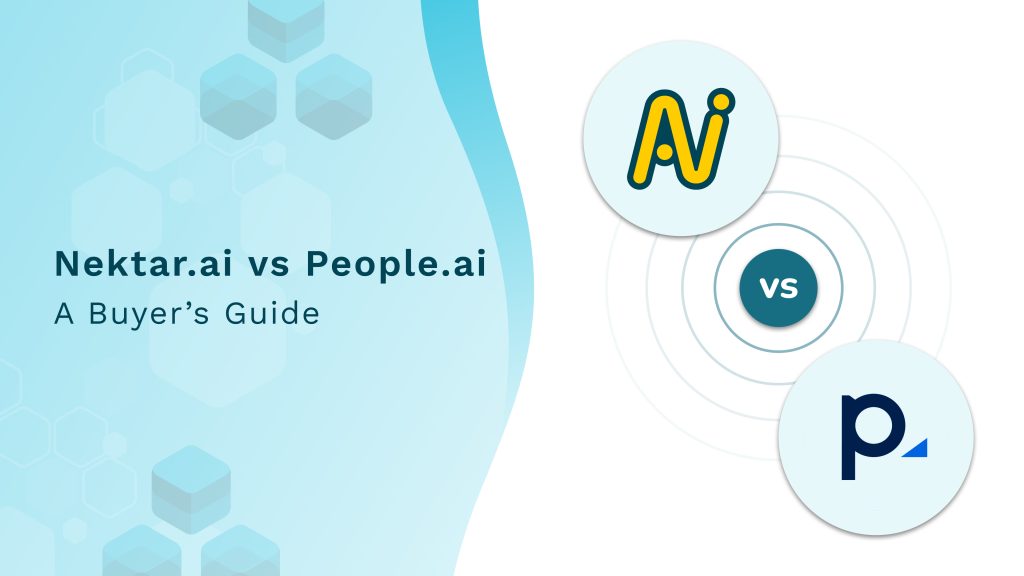
2026 Guide for Enterprise GTM Teams Seeking People.ai Alternatives RevOps 10 min Introduction: Two Different Approaches to the Same Problem Both People.ai and Nektar.ai operate in the revenue data capture category, helping enterprises automatically capture GTM activity and enrich their CRM using AI. However, they solve fundamentally different problems for different buyers. People.ai is an established revenue intelligence platform with strong analytics capabilities, recent recognition as a Visionary in the 2025 Gartner Magic Quadrant for Revenue Action Orchestration, and a mature suite of tools including ClosePlan, account planning, and leadership dashboards. Nektar.ai is an advanced data-first GTM telemetry solution focused on delivering clean, accurate, AI-ready CRM data directly into standard Salesforce objects, designed specifically for enterprises that want to power their existing BI stacks rather than adopt another analytics platform. This guide is intended for GTM leaders, RevOps leaders, Sales Operations teams, and Data teams evaluating both solutions. It draws on direct enterprise evaluation feedback, product analysis, and independent research to help you determine which solution fits your specific needs. Who This Guide Is For This comparison is most relevant if your organization: Already operates a mature BI stack (Databricks, Snowflake, Looker, Tableau) Has dedicated RevOps or SalesOps teams building custom analytics Prioritizes CRM data accuracy over out-of-the-box dashboards Needs granular control over what data syncs to Salesforce Requires specific details around internal and external participation or meeting attendance intelligence (not just invitee data) If your priority is comprehensive analytics UI, pre-built dashboards, and account planning tools, People.ai may be the stronger fit for your organization. But if you are looking at solving the data problem at its core without putting the additional enablement effort on a new training, Nektar is a better bet. This guide focuses on scenarios where data infrastructure is the primary buying criterion. The Core Difference: Analytics-First vs Data-First The fundamental difference between these platforms comes down to philosophy: People.ai is built around the premise that revenue teams need better analytics and insights delivered through their platform. Data capture exists to power their dashboards, scorecards, and AI-driven recommendations. Nektar.ai is built around the premise that enterprises already have analytics tools they trust. What they lack is clean, accurate, complete, unified rep activity data in CRM to feed those tools. Nektar focuses on being the best possible data layer. Neither approach is inherently superior; they serve different organizational needs. The question is which approach matches your GTM infrastructure strategy. Why Enterprises Evaluate People.ai Alternatives Based on conversations with enterprise buyers evaluating both platforms, several consistent themes emerge: 1. Existing Analytics Investment Many large enterprises have already invested significantly in Databricks, Snowflake, Looker, or Tableau. Their internal ops teams build custom dashboards tailored to their specific sales motions. For these organizations, adopting another analytics platform creates redundancy rather than value. They want the underlying data, not another UI. 2. Salesforce Integration Model People.ai uses a managed package approach that creates custom objects in Salesforce. While this provides rich functionality within People.ai’s ecosystem, some enterprises report challenges including: Additional automation required to map data into standard Salesforce fields Complexity when using captured data in existing workflows or forecasting Duplicate participant records requiring cleanup Nektar writes directly to standard Salesforce objects (Events, Tasks, Contacts), which can simplify integration with existing processes but may offer less specialized functionality. 3. Meeting Attendance Requirements A significant differentiator for some buyers is meeting attendance intelligence. People.ai’s meeting data typically relies on calendar invites and recorded calls via CI platform integrations. Nektar captures both invitees and actual attendees, along with meeting status (completed, cancelled, no-show, under 10 minutes), without requiring recording. For organizations focused on coaching, churn analysis, or executive involvement tracking, this distinction can be decisive. 4. Data Volume Control Some enterprises express concern about data volume and Salesforce storage costs. Nektar offers granular sync controls that let administrators define which activities to capture, which contacts to create, and what thresholds to apply. People AI’s capture approach may generate higher data volumes, which can be beneficial for analytics but challenging for storage-conscious organizations. Feature Comparison The following table summarizes key capability differences between the platforms: Key Differentiators: A Deeper Look Opportunity Matching Accurately attributing activities to the correct opportunity is critical for pipeline analytics and forecasting. The two platforms take different approaches: People.ai uses configurable, rule-based matching logic that can be customized per deployment. This approach offers predictability but may require ongoing maintenance as your sales process evolves. Nektar employs graph-based machine learning that analyzes email content, domain patterns, calendar metadata, and historical matching to attribute activities. Nektar reports accuracy rates above 90% in multi-opportunity environments, with the model improving over time through self-learning. Meeting Intelligence This is one of the most significant differentiators between the platforms: People.ai captures meeting data primarily through calendar integration and conversation intelligence partners (Gong, Zoom IQ, Webex). Insights from recorded calls are available in their analytics but may not be written as structured fields in Salesforce. Nektar captures both invitees and actual attendees directly from Zoom and Teams (without requiring recording), writes meeting status to Salesforce, and distinguishes between internal and external participants. This enables use cases like: Tracking which executives actually joined renewal calls Identifying no-show patterns that predict churn Measuring SE and CSM involvement in deals Coaching based on actual participation, not calendar entries Engagement Scoring People.ai provides engagement scoring as part of its analytics suite, displayed through their dashboards and scorecards. The scoring methodology is largely pre-defined and optimized for their UI. Nektar offers customizable engagement scoring that writes directly to Salesforce fields. Organizations can define their own scoring formulas based on email, meetings, touches, attendance, roles, and recency, making it easier to integrate into existing workflows and BI tools. Multi-User Attribution Modern enterprise sales involve multiple internal stakeholders: AEs, SEs, CSMs, AMs, and leadership. Accurate attribution matters for: Understanding true time allocation Measuring team effectiveness Forecasting with complete engagement data Pod-based and team selling models People.ai primarily attributes activities to the organizer, which can underreport involvement from SEs, CSMs, and other team members.