


Building Revenue Engines that Scale: Lessons on Forecasting, Alignment and Multi-Product Complexity

Building Revenue Engines that Scale: Lessons on Forecasting, Alignment and Multi-Product Complexity

A conversation with Jeff Perry

Executive Summary

This article unpacks the operational blueprint behind scaling a revenue org from $15M to $500M+ ARR, while steering three parallel businesses at once. It’s distilled from an in-depth conversation with Jeff Perry, Chief Revenue Officer at Carta, who brings more than two decades of GTM leadership experience across Oracle, DocuSign, and Carta.


Readers will learn:

  • How Jeff’s career evolved through three distinct phases: growth, scale, and building
  • What the “What’s Your Gut?” forecasting method reveals about improving accuracy
  • Why cross-functional alignment is the real competitive advantage in revenue operations
  • How to manage multi-product complexity with different ICPs and buying motions
  • The characteristics that separate great sellers and managers from good ones
  • Where AI fits (and doesn’t fit) in modern revenue operations
  •  

The Journey: Three Career Arcs That Shaped a Revenue Leader

1. Oracle: The Growth Phase

Jeff started his career at Merrill Lynch depositing physical stock certificates—ironic given he now leads Carta, the company eliminating physical certificates.

After a brief stint, he spent many years at Oracle where he learned:

  • Sales fundamentals through structured training programs
  • Leadership principles by observing great (and not-so-great) mentors
  • Scale operations as Oracle grew from 30,000 to 120,000 employees
Resources were abundant. Revenue operations, sales strategy, and training programs just happened. You operated inside a well-oiled machine.

2. DocuSign: The Scale Phase

Jeff made what many considered a lateral or downward move: from leading 250+ AEs at Oracle to managing a 20-person SMB team at DocuSign. Why he did it: He needed to prove he could operate in a smaller, scrappier environment where:
  • You’re hands-on with planning and execution
  • Resources aren’t automatic
  • You build the machine, not just run it
Over four years, Jeff doubled his team size and took on additional verticals. This experience opened the door to Carta.

3. Carta: The Building Phase

Jeff joined Carta in late 2018 when the company was at ~$15M ARR with 275 employees. Today:
  • $500M+ ARR
  • 1,800 employees
  • Three distinct businesses operating under one roof

“Sometimes you have to get one door opened up to lead to the next door. Oracle opened the DocuSign door. DocuSign opened the Carta door.” — Jeff Perry

The Multi-Product Challenge: Managing Three Companies Inside One

When Jeff joined Carta, it was a single-product cap table business. Today, it’s three distinct revenue engines.
  • Venture-backed companies
  • Venture Capital firms
  • Private Equity

The Growth Strategy: Classic Spreadsheet-to-Software

Carta’s playbook:
  1. Identify a spreadsheet problem (cap tables, back office GL, ownership tracking)
  2. Build software to solve it
  3. Add adjacent products that create cross-sell and upsell opportunities

I can’t have one AE that sells cap tables to venture-backed C-Corps and fund administration to private equity firms. We’ve built teams within that align to the ICPs” — Jeff Perry

Building Multi-Segment GTM Systems Without Chaos

Each market Carta serves has its own logic:

  • Startups care about cap tables, compensation benchmarks
  • Venture firms care about GL automation, fund admin
  • Private equity teams want scenario modeling and ownership accuracy

The Challenge

Different products have different:

  • ICPs (leading to data segmentation issues)
  • Sales cycles (transactional vs. enterprise)
  • Buyer journeys
  • Conversion benchmarks

Example issue:
A prospect reaches out to Jeff about their product. Jeff searches the CRM. The company isn’t there.

Why? They were doing business under a different name. The data doesn’t connect.

The RevOps Implication:

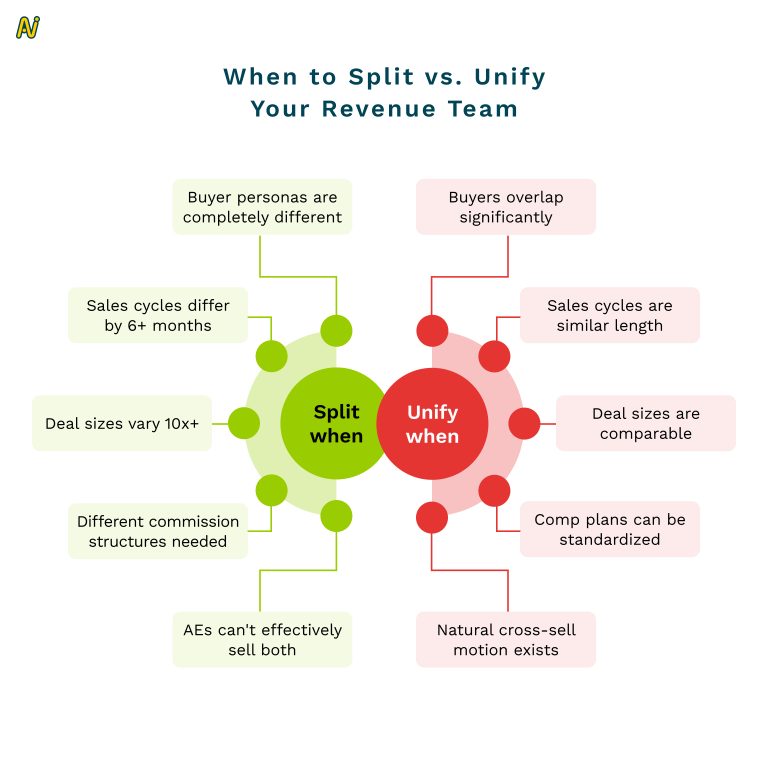
As you add products with different ICPs, you can’t force unified systems. You need:

  • Separate sales teams aligned to buyer personas
  • Different quota structures
  • Distinct sales motions (transactional vs. enterprise)
When to Split vs Unify your revenue team

The "Don't Lose Alone" Philosophy: Why Lone Rangers Fail

Jeff flips the classic advice: people say “Don’t try to be the hero.” He says don’t lose alone. Early-career reps want to be the savior who lands the big deal at the end of the quarter, makes a bunch of money, and gets recognized as the hero. Why this backfires:
  • You limit your access to support and expertise
  • Leadership lacks visibility to help you close
  • You give yourself a lower probability of winning
  • You don’t build career capital beyond the one deal
The better approach: Involve your leadership team, product experts, and delivery teams early.

It does no good to be at the end of a quarter and say, I delivered this X hundred K deal and be the hero. You give yourself a better chance to win by involving the right people along the way.” — Jeff Perry

Your future relationship builders are the SDRs learning your business today. If you automate away those roles, you lose the talent pipeline that becomes your future AEs and managers.

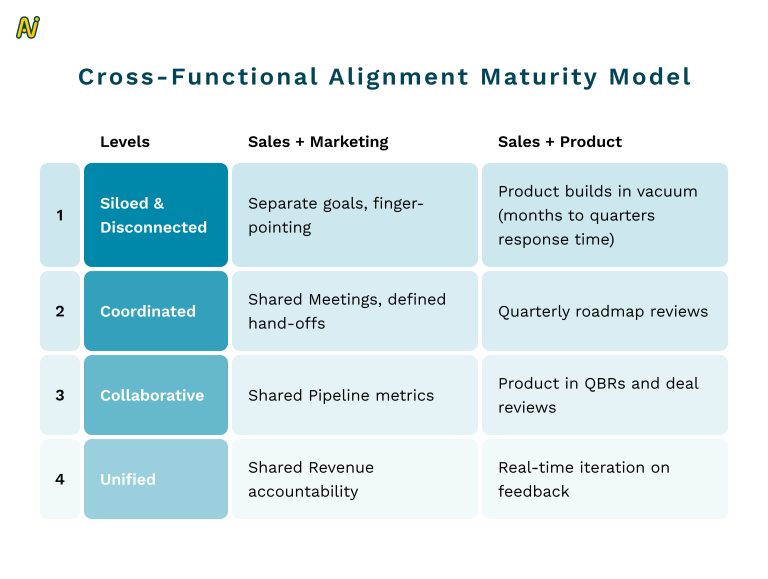
Cross-Functional Alignment: The Secret Competitive Advantage

Carta’s gone from 275 employees in 2018 to ~1800 today. Alignment usually decays with scale. But Jeff argues the opposite is possible, if leaders treat every metric like a shared asset.

Marketing isn’t feeding leads to sales.
Marketing and sales are feeding the same revenue engine.

Nicole, Carta’s CMO, doesn’t look at it as Jeff’s revenue number. She sees it as our revenue number.” — Jeff Perry

Sales + Marketing: One Team, One Number

The old model:

  • Marketing owns lead generation
  • Sales owns revenue
  • Finger-pointing when numbers miss

New model:

  • Shared pipeline ownership
  • Joint accountability for closed revenue
  • Integrated planning across demand gen and sales capacity
  • No classic sales-marketing friction

Product isn’t building in a vacuum.
Product is reacting to customers at lightning speed.

He describes a moment at a Napa event:

Prospects gave feedback at 11am.
By evening the CPO confirmed engineers were already building on it.

That’s alignment at operational speed.

RevOps as the Connective Tissue

Jeff’s perspective on where RevOps fits: It depends on company culture and structure, but:

RevOps often has the clearest view of:

  • The buyer journey
  • Data flow across systems
  • Change management needs
  • Narrative resonance through metrics

Many CEOs include RevOps in the small leadership group for exactly these reasons.

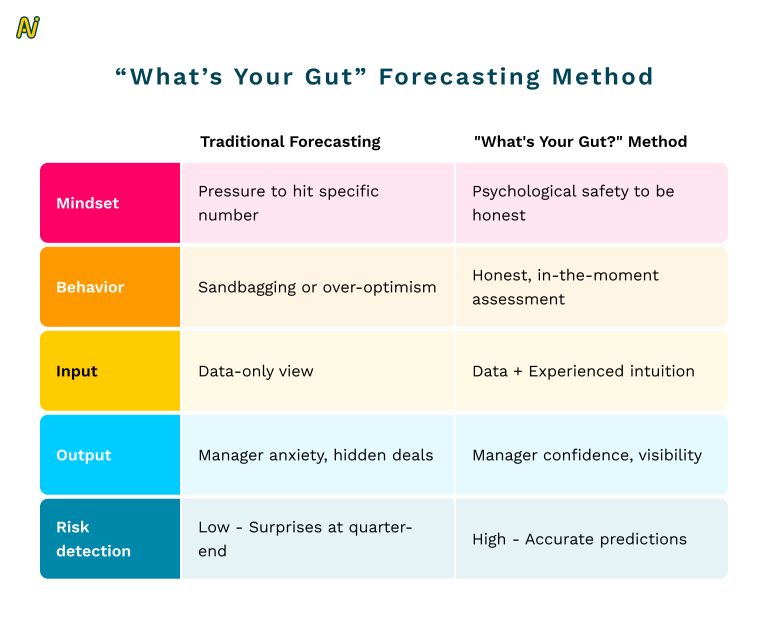
The "What's Your Gut?" Forecasting Method

The problem with traditional forecasting is that most forecast calls involve:

  • Best case scenarios
  • Worst case scenarios
  • Commit numbers

The result: Sandbagging, over-optimism, manager anxiety, and hidden deals.

Instead, he starts with a simple, disarming prompt:

“On January 2nd, if we sit down and we’re going to have a beer and celebrate you having a great quarter — just tell me, where do you think you land?” — Jeff Perry

It sounds casual, almost too casual for forecasting. That’s the trick. The question bypasses the usual performance armor, no pressure to justify a number. Just a grounded, human read on the quarter.

How Carta Put It Into Practice:

  • Managers share their gut feel during forecast calls
  • No pressure to commit to the number
  • Review gut vs. actual after quarter closes
  • Build pattern recognition over time

Experienced sellers have incredible intuition. Data shows trends, but gut feel reveals reality.

What's your gut forecasting method

What Separates Good from Great

Great Sellers: The Hustle Factor

It’s not about tactics. It’s about an intangible drive. Characteristics:
  • Put themselves in uncomfortable situations
  • Come to you with problems (and solutions in progress)
  • The whole team can feel their energy
  • Find ways to win, no matter what

Great Managers: Think Bigger Than Their Team

Stop being the person who only protects AEs. Start thinking about the business, the organization, and long-term impact. Many first-time managers are promoted off the team they now lead. They’re managing former peers. The instinct: Say “yes” to every AE request to maintain relationships. The requirement: Balance team advocacy with company needs. The answer can’t always be “yes.”

You can’t just be the ‘I’m only and always just protecting the AEs.’ You have to think differently and bigger about the business, your team, the organization as a whole. — Jeff Perry

Deal Strategy: Multi-Threading Beats Strong Champions

The question:

What wins more — a strong champion but single-threaded, or a weak champion with multiple engaged stakeholders?

Jeff’s answer:

Weak champion with multi-threading.

Why:

  • Transparency and exposure increase win rates
  • Multi-threading turns weak champions into strong ones
  • Single-threaded deals are vulnerable to champion departure
  • More relationships = more trust = more paths to close

AI: Hype vs. Reality in Revenue Operations

Jeff’s view is grounded, not breathless.

AI will automate a lot.
AI will inform tons of decisions.
But AI cannot replace the relationship.

“The core ingredient in sales is trust and credibility. That can’t be automated.” — Jeff Perry

Enterprise buyers — especially CFOs of billion-dollar firms — don’t buy software the way people buy headphones on Amazon.
Post-sale delivery and ongoing engagement. That doesn’t happen without people.

Carta’s AI Strategy: The 3-Minute Video Rule

The problem:

AI sprawl. Different functions buying different tools with no connective strategy.

CEO Henry Ward’s mandate:

If you want to buy an AI tool, you must:

  1. Create a 3-minute (or less) video demo
  2. Explain what it does and the problem it solves
  3. Answer: Should we build this ourselves or buy it?

What this accomplishes:

  • Weeds out low-value tools (if you won’t make the video, it’s not important)
  • Prevents duplicate investments across departments
  • Surfaces “snake oil” solutions quickly
  • Forces build vs. buy analysis

“The amount of demos we’ve been doing with some of these AI tools—my leader’s like, get off the phone. These are things our AEs can do in an hour. They build the same formula in N8N and they’ve got it.” — Jeff Perry

Conclusion: Why These Lessons Endure

Jeff Perry’s journey from Oracle to DocuSign to Carta illustrates a fundamental truth about revenue leadership:

Success at scale requires systems, not heroics.

Whether you’re managing one product or three businesses, the principles remain:

  • Forecasting that combines data with human intuition
  • Alignment that breaks down silos and creates shared accountability
  • Data that becomes cleaner and more actionable as you grow
  • Teams built on trust, transparency, and collective success
  • Technology that enhances human relationships, not replaces them

If your organization is struggling with:

  • Forecast accuracy and visibility
  • Multi-product or multi-segment complexity
  • Cross-functional silos
  • Data governance at scale
  • AI tool sprawl
  • Developing future revenue leaders

Then the frameworks Jeff shared aren’t optional. They’re the operating system for how you build, scale, and sustain a revenue engine that works.

Want to hear more stories from revenue leaders? Subscribe to The Revenue Lounge podcast to never miss an episode!

More Resources

Top 15 Guided Selling Tools for 2025

Top 15 Guided Selling Tools for 2025 RevOps 10 min Imagine that you are planning to build a new house but are unsure where to start. You have a basic idea of what you want but are not an expert in home construction or design. In such a situation, you would need a skilled architect who understands your needs, preferences, and budget and then guides you through designing your dream home. The architect would help you make informed decisions about your new home’s design, materials, and features. Similarly, a guided selling tool uses customer data and sales expertise to help customers navigate the purchasing process and make informed decisions. It can provide personalized recommendations based on the customer’s needs and preferences, answer questions, and offer advice to help them choose the right product or service. What is Guided Selling? Guided selling is a strategy involving a structured approach to lead potential customers through the sales process. It is the process of analyzing current sales, historical sales, and customer data to help sales reps provide tailored product recommendations to customers and increase the likelihood of conversion.  Let’s say you are shopping for a new laptop. You visit a website that offers guided selling, and you’re prompted to answer a series of questions. The questions might include things like: What will you primarily use the laptop for? Do you need a large screen or a lightweight design? How important is battery life to you? What is your budget? Based on your responses, the website would then recommend a few different laptops that meet your needs. It might provide detailed information about each laptop, such as the processor, RAM, and storage capacity, as well as customer reviews and ratings. The website might offer additional guidance, such as recommending accessories or providing information on warranties and support. Throughout the process, the focus is on helping you make an informed decision based on your unique needs and preferences. Guided selling can be particularly effective for complex or high-value products or services where customers may require more personalized guidance and support to make informed purchasing decisions. By providing a more consultative sales approach, guided selling also helps to establish long-term customer relationships. How Does Guided Selling Work in B2B SaaS In B2B SaaS, guided selling typically involves a sales representative or a customer success manager who guides the customer. The process usually begins with the customer expressing their needs and goals and the guide using that information to suggest relevant products or services. The guide may use various tools, such as a software demo, to help the customer understand the features and benefits of each option. In addition, guided selling often involves providing educational resources to the customer to help them better understand the product or service and how it can help them achieve their goals. This may include case studies, white papers, or other content that provides valuable insights into the benefits and use cases of the product. Let’s have a look at the guided selling process in detail: The Process of Guided Selling Tools The guided selling process is a customer-centric approach to sales that involves guiding potential customers through the buying process by providing personalized recommendations, advice, and support. The following are the general steps involved in a typical guided selling process: 1. Gathering customer information The first step of the process involves collecting data on the customer’s needs, preferences, budget, and any other relevant information that can help the sales process. 2. Identifying customer pain points In this stage, the sales team uses the information gathered in the previous stage to identify the customer’s pain points or areas of concern.This is typically done through a series of questions or a needs assessment. 3. Providing product recommendations Based on the customer information and pain points identified, the sales team provides recommendations on the products or services that best meet the customer’s needs. 4. Presenting solutions At this stage, the sales team presents the recommended products or services to the customer and explains how they address the customer’s pain points. The sales representative provides information about the recommended products or services, including their features, benefits, and pricing. 5. Handling objections If the customer has any objections or concerns, the sales team addresses them and provides additional information or alternative solutions as needed.  6. Closing the sale Once the customer is satisfied with the recommended product or service, the sales team closes the sale by facilitating the purchase process. 7. Follow-up and customer support After the sale is complete, the sales team provides follow-up support to ensure the customer is satisfied with their purchase and offers any additional assistance or support as needed.   Examples of Guided Selling Tools in Businesses Here are some examples of techniques of guided selling tools:  1. Automate sales playbook To ensure consistent performance, sales playbooks should be automated. Guided selling relies on a solid foundation of methodologies, blueprints, and plays that facilitate the sales process. It’s important to choose a solution that simplifies the playbook for sellers, allowing them to follow the plan and consistently advance deals easily. 2. Identify specific needs In some situations, customers may need a clearer idea of what they are looking for when they visit your website. In such cases, a brief questionnaire can be used to determine and guide their specific requirements. For instance, if you run an online clothing store, you could ask customers questions about their preferred fit and fabric to steer them toward products that best match their preferences. This approach can increase the likelihood of a purchase by helping customers make informed decisions based on their needs. 3. Real-time response For a guided selling software to be effective, it needs to be adaptable and flexible, able to react to changing circumstances in real time. At a fundamental level, ensuring that sales representatives remain attentive to communication and other sales activities can reduce the time it takes to close deals and result in higher revenue velocity. In other cases,

A 30-60-90 Day Guide for First-Time Directors of Revenue Operations

A 30-60-90 Day Guide for First-Time Directors of Revenue Operations RevOps 10 min Starting a new job as a Director of Revenue Operations is an exciting opportunity to make a significant impact on a company’s revenue growth. To ensure success in this role, it’s essential to have a strategic plan that guides your actions during the crucial first three months. Here’s a 30-60-90 day plan that will help you strategically manage revenue operations and drive sustainable growth. We recently spoke to Hassan Irshad, Director of RevOps at FEVTutor. He shared his approach to this powerful framework, demonstrating how each phase (30, 60, and 90 days) builds strategically upon the last to deliver alignment, trust, and sustained improvement. By breaking down complex goals into achievable milestones, the 30-60-90 day approach empowers RevOps leaders to initiate meaningful change without overwhelming teams. For all the RevOps leaders, it’s a way to approach change with purpose, driving measurable impact and laying the groundwork for long-term success.  The 30-60–90 day framework must be an indispensable tool and here is how you can implement progressive, sustainable growth strategies from day one. First 30 days for a Director of Revenue Operations The purpose should be to gather insights and understand the organization, especially the needs and challenges of different teams. 1. Goals for first 30 days:   i. Meet Key Stakeholders Meet with cross departmental teams like Finance, HR, and Sales to understand their goals, challenges, and priorities. ii. Document Everything Create a “lay of the land” document summarizing findings on different team goals, challenges, and processes.   iii. Understand the Product Take product demos, listen to sales calls, and use tools that show how the product is sold. This helps in understanding the customer needs better. iv. Dive into Your CRM Understand your CRM (whether Salesforce or HubSpot) to assess how the data is organized. This is to check whether it’s easy to use, and identify immediate improvements. The CRM should be the central source of truth, with other tools supporting it. The data should be unified with easier adoption for the teams. v. Build Trust Internally Establish trust within your teams by listening carefully, asking questions about how RevOps can help, and addressing quick fixes to show you’re there to help. Having this trust shows them that you’re here to support their success. Quick wins, such as small fixes that make people’s jobs easier, helps in establishing credibility early. 2. Establish Clear KPIs   i. Understanding Team KPIs It is important to ask you stakeholders about the KPIs that matter to understand their goals and what their expectations are. ii. Aligning KPIs Across Teams Different departments oftentimes work in silos. RevOps should strive to align these departments and check if these KPIs match the overall business objectives. Gaps must be closed if their KPIs don’t align. iii. Setting RevOps KPIs As you approach the end of the first 30 days, start establishing RevOps-specific KPIs that match company goals, which may involve metrics like revenue increase, conversion rates, or improvements in overall efficiency. 3. Tech Stack Audit Deep dive into the existing tools that your company is using. Identify all redundancies, and find opportunities to streamline the entire tech stack. i. Map Out Tools Compile a list of all tools used by teams, noting their purpose and how they work with the CRM. ii. Evaluate Use and Cost Determine if tools are actively used or if there are duplicates. Look for cost-saving opportunities by consolidating tools when possible. https://www.youtube.com/watch?v=sVDJ9KI1tGw&t=869s Next 30 days – Alignment and Control The next 30 days marks a shift from discovery to alignment. The goals should be to create cohesion between departments (e.g., Sales, Marketing) and laying down effective controls. The improvements need to be implemented without overwhelming the teams. This phase combines further exploration with actionable improvements with the primary task being bringing the teams into sync.   1. Ways to bring your teams together i. Encouraging cross-team collaboration by addressing silos and ensuring all teams work toward shared quarterly or company-wide goals. ii. By creating alignment, you help teams see RevOps as a support system rather than an enforcer. This keeps communication channels open and creates buy-in. iii. Based on your findings, introduce controls wherever needed to improve workflow. Example: If close dates aren’t being recorded properly, this could skew reports. Meet with sales, identify the root cause (e.g., manual data entry that is taking too much of a reps’ time), and provide solutions or tools to make their tasks easier. Ensure that controls are practical and developed with the trust built in the first 30 days. Foster internal consensus within teams so that these improvements are adopted seamlessly. 2. Navigate Organizational Politics (i) Barrier Removal Larger organizations may have internal politics or ingrained processes that resist change. Find an internal “sponsor” who trusts and supports RevOps initiatives and can authorize actions to navigate any resistance. (ii) Trust and Consistency As you implement changes, make sure your efforts consistently demonstrate how RevOps can make work easier and more efficient for everyone. 3. Evolving the Tech Stack (i) Assessing Tech Needs If tools aren’t fully integrated (e.g., a tool not writing data back to the CRM), identify their gaps and consider evolving the tech stack. (ii) Holistic View Use insights from the discovery and alignment phases to start envisioning necessary tech improvements that align with company goals. Beginning of the 90-Day Phase: Vision and Execution This phase, described as “Vision and Execution,” involves shaping and executing a strategy based on insights gathered from the discovery and alignment phases. a. Roadmap Creation Create a roadmap covering the next two quarters, focusing on long-term, high-impact changes that align with business goals. Use learnings based on stakeholder needs, organizational goals, and the findings from the first 60 days i. Set Priorities Collaborate with end users (Sales, Marketing, Customer Success) to understand their pressing needs and align the roadmap with these needs. ii. Strategic Execution Prioritize initiatives that will have immediate revenue impact or

Top 10 Relationship Intelligence Tools for 2025

Top 10 Relationship Intelligence Tools for 2025 RevOps 10 min When it comes to sales, building strong relationships is essential.  But let’s face it, the process can be incredibly time-consuming and demands a significant amount of effort from the sales reps. But here’s the kicker: Today, 44% of millennial buyers prefer minimal contact with a sales rep during the buying process. That means your sales rep has ~5% of the prospect’s time to establish a connection. It’s tougher than ever to develop relationships from a seller’s point of view. Does this mean that your reps should stop building relationships? Should your reps just try and sell whatever they can to whoever you find? The answer to that is a resounding NO. In the digital era, data and insights are what drive sales . They have the potential to give out more information than you know about your prospects. CRMs capture all possible data, churning it and spurting out information that otherwise was not visible earlier. But wait. There’s more to sales success than your CRM. To truly understand your prospects, you need to dig deeper to uncover hidden insights to help close your deals faster. That means mining your CRM data for a wealth of valuable information that will give you a competitive edge. This is exactly what relationship intelligence does. What is a Relationship Intelligence Tool? Picture this: You have access to a wealth of data from your clients, colleagues, and partners, but it’s scattered across various touchpoints like emails, phone calls, messages, meetings, and more.  How do you make sense of all that information? That’s where relationship intelligence comes in.  By pooling in, processing, and analyzing all that data, relationship intelligence technology provides invaluable insights, builds stronger relationships, and helps you make smarter decisions.   With relationship intelligence, you can discover a treasure of data-driven and actionable insights that support the organization’s understanding of the customer, identify the optimal solutions, and determine the best communication strategies. This results in a more tailored and informed approach to prospects to maximize the best chance of a positive outcome. Your prospects are more than just a phone number or an email. Relationship intelligence broadens your potential and plays a strong role in connecting the dots from other sources. It supplements your CRM, finding other & useful opportunities to close prospects, otherwise not visible to us. Why Does a Relationship Intelligence Tool Matter? Enterprise-based selling in B2B is no walk in the park.  With a plethora of relationship intelligence tools out in the market, organizations are spoilt for choice. However, tools that leverage AI/ML, offering data-driven intelligence with invaluable and actionable insights, will be the ones that will dominate the market. On the flip side, the process of onboarding a tool no longer rests in the hands of a single decision-maker. Gartner states that the number of buyers involved in the last decade has increased from 5 to 20. A potential account will have multiple stakeholders who will be involved in the decision-making process. Hence, it becomes critical for sales reps to identify and engage with key stakeholders regularly. With the rise of digital selling, organizations can now track the process of selling in a more in-depth manner. All forms of digital outreaches and communication with prospects can now be tracked, analyzed, and acted upon with the help of relationship intelligence.  Today, with markets being down and companies being extremely meticulous in their choice of tools to invest, having a relationship intelligence tech stack will be the game-changer. Here’s how 1. Showcasing a single view of all your relationships with your prospects Having relationship intelligence data will bring together all the stakeholders in one view, so sales reps have a clear idea of the sales cycle the account is currently in.  2. Identify every stakeholder involved With the buying process evolving constantly, the final decision often lies not with one but multiple owners. In other words, for a sales rep, multithreading is the best way forward. And in this process, it’s very easy to confuse the right person to engage with, especially if there is a handover involved.  Sales reps often fail to map out the stakeholders involved. The dots are not connected and not visible, which can lead to confusion and no clarity to other higher authorities. Relationship intelligence tools fill these gaps. It will identify each & every stakeholder involved at every stage of the selling process, bring them together, and map out the relationship of each, and provide all the information about these stakeholders. Not only that, but the data also provide insights to those who are frequently engaging and also point out the next best champion to continue the sales process seamlessly if the key decision maker is unavailable at any stage of the sales process. 3. Give detailed insights about each prospect The thing about relationship intelligence tools is that not only do they provide details in one place, but they also show you the best possible way to contact and reach out to your prospects. It can be email, phone calls, or video calls; it will give you solutions that are sure to boost your process of converting. 4. Recover lost leads In the world of sales, not all leads or prospects will convert.  If the target is to convert 2 leads in a month with a value of X, sales reps need to build a pipeline of at least 10 leads with a value of 10X. This results in 8 leads that will not convert or be disqualified or lost in the process. However, these 8 leads don’t have to be lost forever. With relationship intelligence, you can identify the most engaged buyers and reignite the relationship with them. And here’s the kicker: the relationship intelligence technology considers all the data even before onboarding the tool.  This kind of intelligence will only unleash hidden superpowers for your sales reps. Who knows, your lost prospect’s business priorities might have changed over time, and getting back to them might just make all the difference. 4. Discover trends in

Leave a Comment

Your email address will not be published. Required fields are marked *

Scroll to Top

Just one more step