



Transforming Customer Success in the Age of AI

Rebuilding Customer Success for the AI Era: Lessons from a VP of Customer Success

A conversation with Chad Gorman.

Executive Summary

This article examines how customer success leaders should rethink AI adoption, using insights from an in-depth conversation with Chad Gorman, VP of Customer Solutions and Success (North America) at LivePerson, on the Revenue Lounge Podcast hosted by Randy Likas.

Rather than focusing on automation or AI features, Gorman argues that AI-ready customer success is fundamentally about visibility, data discipline, and relationship intelligence.

Readers will learn:

  • Why most AI initiatives in customer success fail before deployment 
  • How unifying fragmented CS data is a prerequisite for AI or automation
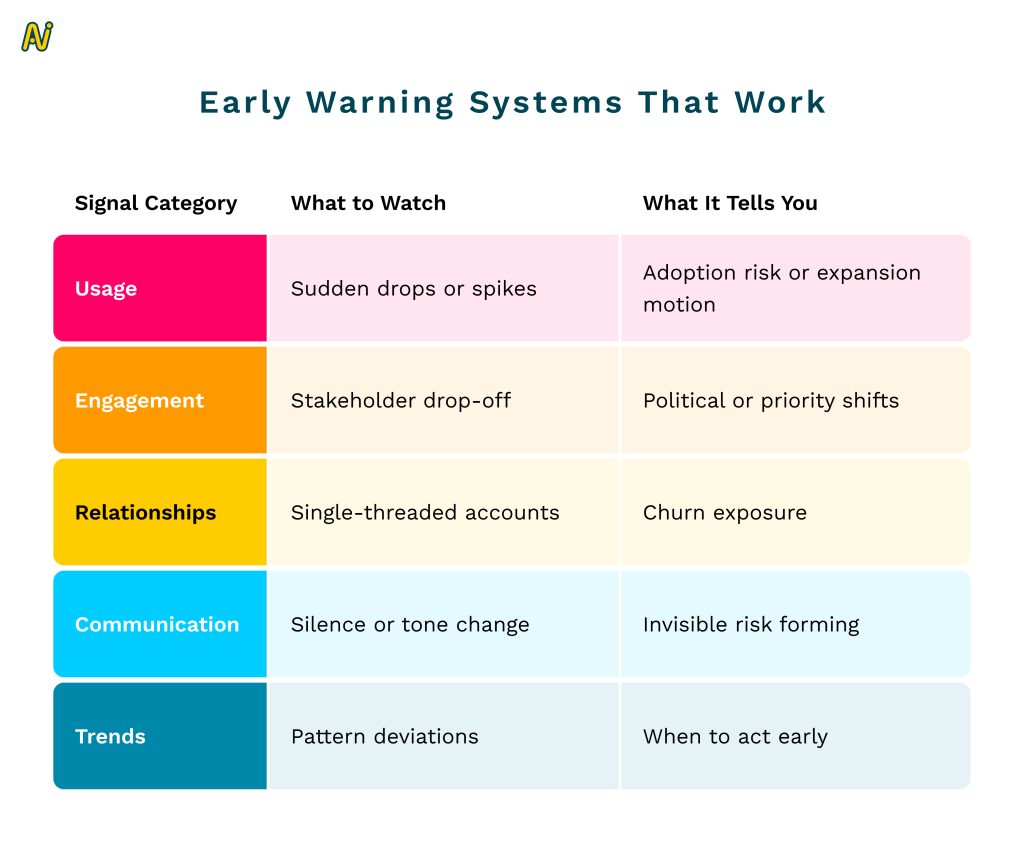
  • What an effective early warning system looks like 
  • Why engagement and relationship depth are stronger leading indicators than product usage alone
  • How AI can expose relationship “white space” across complex buying committees
  • Where buy vs build decisions actually differ across enterprise and mid-market segments
  • How to embed AI into CSM workflows over-relying on automation
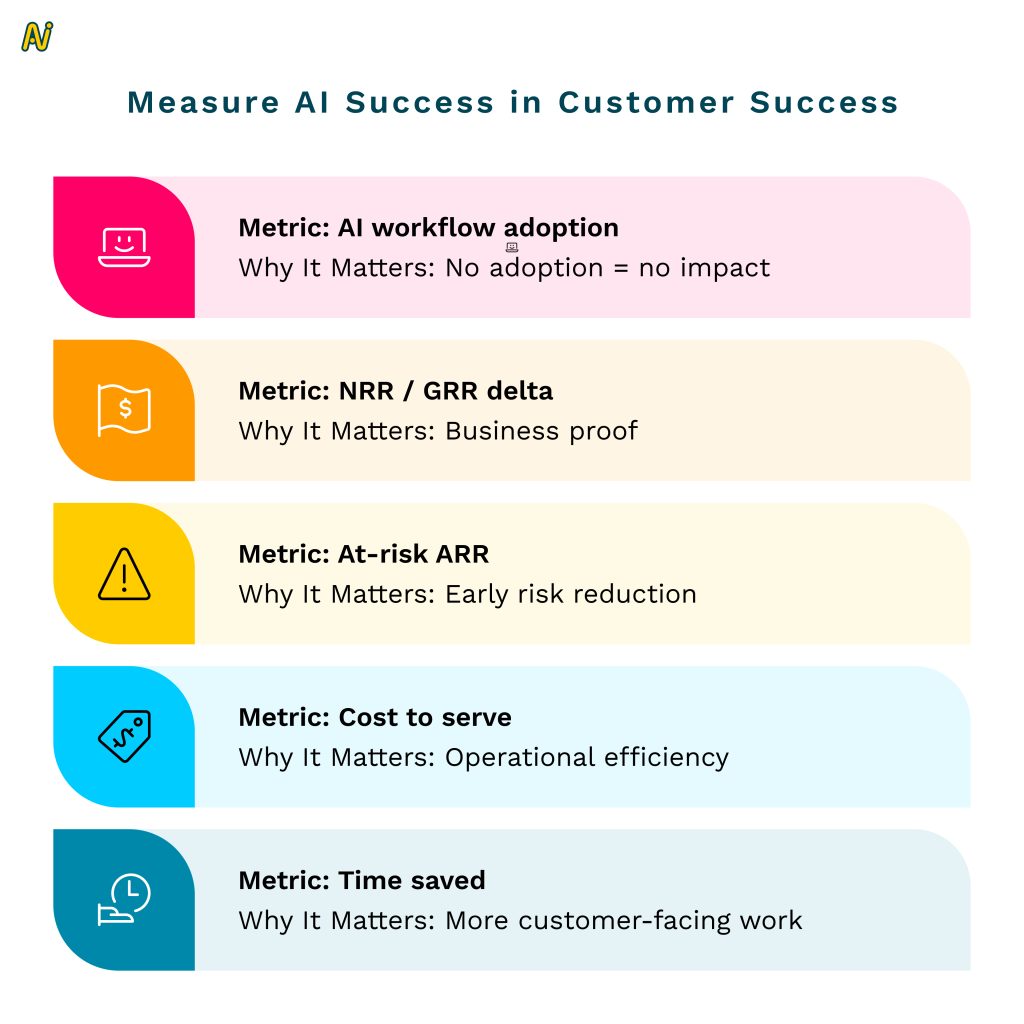
  • Which metrics matter when measuring AI’s impact on retention, risk, and productivity
  • Why the real promise of AI in customer success is reclaimed time for strategic customer work

From Call Centers to Customer Outcomes

Gorman’s perspective is shaped by an unusual career arc.

He started in contact center operations, moved into IT at DirecTV, and then crossed over to the vendor side after a colleague recruited him to Splunk.

“I didn’t even know what a CSM was,” he admits. “But once I saw how customer success could be built as a scalable engine, I was hooked.” — Chad Gorman

From Splunk, he went on to lead global cloud customer success at VMware, before joining LivePerson, where he now oversees customer success and professional services across North America.

That mix of operator, builder, and enterprise leader shows up in how he thinks about AI. Practical. Outcome-driven. Skeptical of hype.

​​AI Adoption Fails Before Deployment

Most AI initiatives stumble long before a model is ever deployed. According to Gorman, the real friction points show up earlier in the buying and approval cycle.

The Hidden Gates to AI Adoption

  • Governance reviews and AI councils
  • Legal, compliance, and security documentation
  • Industry-specific scrutiny, especially in financial services
  • Undefined success metrics

“You can sell software all day long. But if you are not there to shepherd customers through governance, compliance, and approval gates, adoption will stall.” — Chad Gorman

Customer Success Has Become Revenue Insurance

In volatile markets, customer success is no longer a post-sale support function. It is a revenue protection layer.

That shift forces CS leaders to answer harder questions:

  • Where is risk building right now?
  • Which accounts look healthy but are quietly disengaging?
  • Where is expansion hiding in plain sight?

The answer, Gorman says, is an early warning system built on stitched data.

The Anatomy of an Early Warning System

Gorman is blunt about the prerequisite.

“Data is non-negotiable. Full stop.” — Chad Gorman

Before AI enters the picture, organizations must understand what their book of business actually looks like.

Engagement Is the Most Underrated Risk Signal

Product usage is table stakes. Engagement is the differentiator. Gorman emphasizes that many churn events are preceded not by usage decline, but by relationship decay.

“If engagement drops and you do not notice, you end up ghosted and surprised later.” — Chad Gorman

What Engagement Actually Means

Engagement is not email volume or meeting counts alone. It is relationship depth across the buying group.
  • Who shows up to meetings?
  • Who stopped showing up?
  • Which roles are missing entirely?
  • Who influences decisions but never engages directly?
This is where Gorman believes AI has its most immediate impact.

Relationship Intelligence: Where Art Meets Science

Gorman describes relationship intelligence as the intersection of human judgment and system-derived insight.

“We think we know our accounts. AI shows us the white space we missed.” — Chad Gorman

AI-Assisted Relationship Mapping

AI can analyze:

  • Calendar data and meeting attendance
  • Email and collaboration patterns
  • Role changes and stakeholder turnover
  • Sentiment from meeting notes and transcripts

At LivePerson, Gorman’s team increasingly relies on workspace-level intelligence using Google Gemini to surface patterns across meetings, documents, and communications.

You can literally ask, ‘Who used to attend and no longer does?’ and get an answer.” — Chad Gorman

Buy vs Build Is No Longer Binary

Enterprise customers increasingly want flexibility.

Some bring their own LLMs. Others rely on vendor-provided AI. Most land somewhere in between.

  • Enterprise: Build and bring your own models
  • Upper mid-market: Hybrid
  • Down-market: Out-of-the-box AI

The common denominator remains the same: clean, structured, accessible data.

Embedding AI Into CSM Workflows

Even the best insights fail if CSMs do not trust them.

Gorman stresses three adoption levers:

  1. Data transparency
    Always link insights back to source systems.
  2. Prescriptive guidance
    Do not just flag risk. Recommend next steps.
  3. Respect experience
    AI should augment gut instinct, not override it.

Measuring AI Impact in Customer Success

AI success is not measured by novelty. It is measured by outcomes.

What’s Next: Agentic AI and Time Reclaimed

The next wave, according to Gorman, is not better summaries. It is execution.

The thing CSMs hate most is admin. AI agents that actually do the work change everything.” — Chad Gorman

Examples include:
  • Auto-generated QBRs with live data
  • Scheduled reporting without manual pulls
  • Automated follow-ups and task execution
The payoff is not speed. It is reclaimed time for strategic customer work.

Leadership Lessons From the Field

When asked what advice he would give his younger self, Gorman’s answer is simple.

“Know your book. Be curious. Admit what you do not know.”” — Chad Gorman

  • Growth mindset
  • Curiosity within and beyond the “box”
  • Meticulous organization
  • Executive presence
  • Tight partnership with the AE 

Want to hear more stories from revenue leaders? Subscribe to The Revenue Lounge podcast to never miss an episode!

More Resources

5 Steps to Navigate Buying Groups in 2025: A RevOps Guide

5 Steps to Navigate Buying Groups in 2025: A RevOps Guide RevOps 10 min In today’s business environment, B2B buying is never just one person. According to Forrester Research, more than half of global business buyers purchase in complex buying scenarios that include more people, more departments, and generally higher price points. And this buying group can be made up of 7 to 20 people! Unlocking the power of buying groups is a crucial aspect of the B2B landscape. This blog is a synopsis of our conversation with revenue operations leader, Nandini Karkare. She is currently the SVP of RevOps at Zywave. Nandini suggests strategic steps to navigate through the realms of Revenue Operations and helps uncover the strategies, insights, and best practices that constitute a comprehensive guide to mastering the dynamics of buying groups. Read on to get actionable tips on how you can navigate buying groups in 2025 (and beyond). And implement the learnings to create a winning GTM motion. Here are the 5 steps Nandini recommends: 1. Decode Your Buying Groups The buying groups typically consist of members from departments and they all contribute different aspects. It is critical to understand the scope of decision-making including the people who play the most significant roles in making the call. Gartner’s report on B2B Buying highlights that 77% of B2B purchases involve a buying group of four or more people. PS: The key stakeholder can turn out someone altogether different from who you had building a relationship with all along. a. Capturing Buying Group Members   Effective buying group management means considering not just decision-makers but influential stakeholders across departments. Misidentifying key players or focusing solely on the main contact risks derailing the sale. (i) How can you map the entire buying group efficiently? Leverage internal and external data to identify the key players Segment the Group by Role and Influence (ii) Not everyone in the buying group holds equal power or influence. Segment them into categories: Decision-makers (who give the final heads-up) Influencers (who sway the decision) Users (who use the product and provide feedback) Budget owners b. The Role Transition Within a Buying Group   Moving the focus from a buying group to a renewal or expansion committee includes knowing precisely who remains in the relationship, as well as who becomes more active as an account grows. (i) New roles may emerge in a Buying Group Technical or operational leaders may become more influential post sale, since they are now using the product. (ii) The focus shifts from buying to renewal The interaction should be more about the return on investment (ROI) of the product placed on the market, ongoing value delivery, and ongoing needs. (iii) Alignment between the buying groups and renewal committee Leveraging the same enthusiasm and relationships generated at the first-buying stage helps in anchoring the transitions and preventing any drop-offs in engagement. Related Resource: Navigate Enterprise Buying Committees: Strategies for Driving Alignment c. Understand the Personal and Collective Priorities of a Buying Group As per McKinsey & Company, B2B buying decisions increasingly require engagement across departments, with 60% of purchasing committees including members from outside traditional procurement, like IT and HR. (i)Alignment Between C-Suite and Technical Teams Decisions aren’t Made in a Vacuum Collaboration between C-suite and technical teams ensures a holistic approach to solving customer problems, creating stronger, more sustainable relationships Their cross departmental collaboration can help with: (ii) Alignment on Strategic Goals C suite executives need technical assistance to translate their strategic vision to reality that also aligns with company-wide objectives. (iii) Technical Validation These insights guide the C-suite in making informed decisions that fit technical infrastructure and future-proofing. (iv) Cross-functional Communication Bridging the gap between these two groups involves continuous, open communication, ensuring that technical evaluations don’t delay business goals but instead support them cohesively.   iii. Understand the Product Take product demos, listen to sales calls, and use tools that show how the product is sold. This helps in understanding the customer needs better. iv. Dive into Your CRM Understand your CRM (whether Salesforce or HubSpot) to assess how the data is organized. This is to check whether it’s easy to use, and identify immediate improvements. The CRM should be the central source of truth, with other tools supporting it. The data should be unified with easier adoption for the teams. v. Build Trust Internally Establish trust within your teams by listening carefully, asking questions about how RevOps can help, and addressing quick fixes to show you’re there to help. Having this trust shows them that you’re here to support their success. Quick wins, such as small fixes that make people’s jobs easier, helps in establishing credibility early. 2. Establish Clear KPIs   i. Understanding Team KPIs It is important to ask you stakeholders about the KPIs that matter to understand their goals and what their expectations are. ii. Aligning KPIs Across Teams Different departments oftentimes work in silos. RevOps should strive to align these departments and check if these KPIs match the overall business objectives. Gaps must be closed if their KPIs don’t align. iii. Setting RevOps KPIs As you approach the end of the first 30 days, start establishing RevOps-specific KPIs that match company goals, which may involve metrics like revenue increase, conversion rates, or improvements in overall efficiency. 3. Tech Stack Audit Deep dive into the existing tools that your company is using. Identify all redundancies, and find opportunities to streamline the entire tech stack. i. Map Out Tools Compile a list of all tools used by teams, noting their purpose and how they work with the CRM. ii. Evaluate Use and Cost Determine if tools are actively used or if there are duplicates. Look for cost-saving opportunities by consolidating tools when possible. https://www.youtube.com/watch?v=sVDJ9KI1tGw&t=869s Next 30 days – Alignment and Control The next 30 days marks a shift from discovery to alignment. The goals should be to create cohesion between departments (e.g., Sales, Marketing) and laying down effective controls. The improvements need to be implemented without overwhelming the teams. This phase combines

Everything You Need to Know About Sales Territory Mapping

Everything You Need to Know About Sales Territory Mapping RevOps 10 min Successful sales strategies play a key role in achieving business goals. But what drives these strategies from inception to execution, improving sales operations and on-ground performance? Sales territory mapping.  Without the right sales territory map template, your sales team could face challenges, namely: Poor productivity Revenue mismatch or imbalance Subpar revenue performance  Poor customer experience Leading to the loss of clients, and Waste of valuable resources  So, how do you get sales territory mapping right to achieve business goals and grow your revenue? Let’s find out in this blog. Sales Territory Mapping: Setting On-Ground Sales in Motion Sales territory mapping defines and visualizes the area, sales amount, and revenue your sales team will target. It divides and categorizes customers based on specific characteristics within your ideal customer profile (ICP). A sales territory map template also helps you assign categories and customers to the salespersons best equipped to serve them.  It lets you reach the right customers in the right areas with the right characteristics to achieve targets and improve growth.  The task of aligning your sales plan with business goals in the most profitable way lies with sales managers.  From the larger business perspective, sales territory mapping is part of location intelligence. Today, location intelligence helps segment customers and find more relevant target markets for revenue success.  How Is Sales Territory Mapping Instrumental to Business Growth? A sales territory map template does more than act as a blueprint. Here are 6 more ways in which it contributes to growth.  1. Ties Back to Business Goals Sales territory mapping creates a blueprint for achieving your business goals. It clearly lays out sales targets and directs reps to the most profitable customers or verticals by strategically assigning territories. 2. Maintains Balance One of sales territory mapping’s primary objectives is to secure a balanced and fair distribution of work among sales teams. It moves and optimizes resources effectively to maximize revenue potential.  3. Increases Selling Time Reps can increase facetime with clients by cutting down time spent on planning. This is specifically made possible with sales territory mapping tools that decrease planning time from months to minutes.  4. Improves Win Rates Naturally, when reps spend more time selling, they can nurture clients better through the sales funnel. Moreover, each assignment is backed by data. This data offers more visibility into customers and prevents deals from slipping through the cracks.  As a result, reps can improve customer experience and uncover new leads to increase win rates.  5. Boosts Morale A sales territory map template encourages intelligent planning, further improving sales productivity. Additionally, when reps can increase win rates, achieve their quota, and earn more, it boosts their morale. And if reps are happy, it means your attrition rates are lower.  It’s not just that. A sales territory map template also highlights improvement areas useful for coaching.  6. Extracts Hidden Insights Sales territory mapping helps measure sales data by connecting the map to the CRM. Therefore, when multiple salespersons are involved in a deal, you can attribute the sale to the right person.  Recognizing the benefits of sales territory mapping is the first step in setting up your own template. Step two is understanding its different types.  Choosing From 5 Types of Sales Territory Mapping Conventionally, sales territories were based on locations. However, you can customize them today as per your customer, market, or even product needs.  Let’s take a look at the 5 types below.  1. Geography Geographic sales territory mapping is the most commonly used and also the oldest. It classifies your market based on, you guessed it, geographical locations—cities, states, countries, and zip codes.  For example, Sales Team A can serve Texas, while Sales Team B covers California.  To get geographic mapping right, your sales team must have a regional, cultural, and linguistic understanding of the territory they’re allocated.  It’s also important to ensure that the selected sales team is available when customers are active in the designated regions.  2. Product Product-based sales territory mapping can be used when you have multiple offerings. You can categorize and assign reps to specific products or technological offerings.  This method is useful when certain reps have in-depth expertise on specific products. For example, Team A has expertise in CRM solutions and is assigned to this offering, while Team B caters to clients looking for Digital Advertising software.   Assigning your reps to the right products will ensure they can sell to clients more convincingly.  3. Customer  The third way to divide your sales territories is based on specific customer characteristics like demographics or roles.  For instance, Sales Team A may sell to clients with a yearly revenue of $500,000. On the other hand, Sales Team B focuses on the higher margin clients with yearly revenue of $1 million and upwards.  4. Industry  Industry-based sales territory mapping assigns reps to specific industries or verticals.  It works best when your product caters to individuals or businesses from multiple industries.  For example, Team A sells to the construction industry, while Team B covers the education sector. Similarly, Team A could be selling to the education industry overall, while Team B handles specific verticals–like universities or higher education–and Team C is responsible for schools.  5. Sales Channel An upcoming type of sales territory map template categorizes territories per the sales channels your reps or clients use.  That’s because buyers now use ten or more channels, on average, as they move through the buying process. They use a combination of digital self-serve channels for certain activities and videos or in-person channels for others.  Consider this example. Team A is responsible for selling via digital channels like social media, and Team B sells through offline channels such as cold calling.  You may also get more granular by assigning reps with expertise in certain platforms to those mediums. For instance, Rep A sells via emails, and Rep B may use LinkedIn.  Knowing the key types of sales territories is awesome. But figuring out the type of

Leave a Comment

Your email address will not be published. Required fields are marked *

Scroll to Top

Just one more step