Customer Success

AI, Customer Success

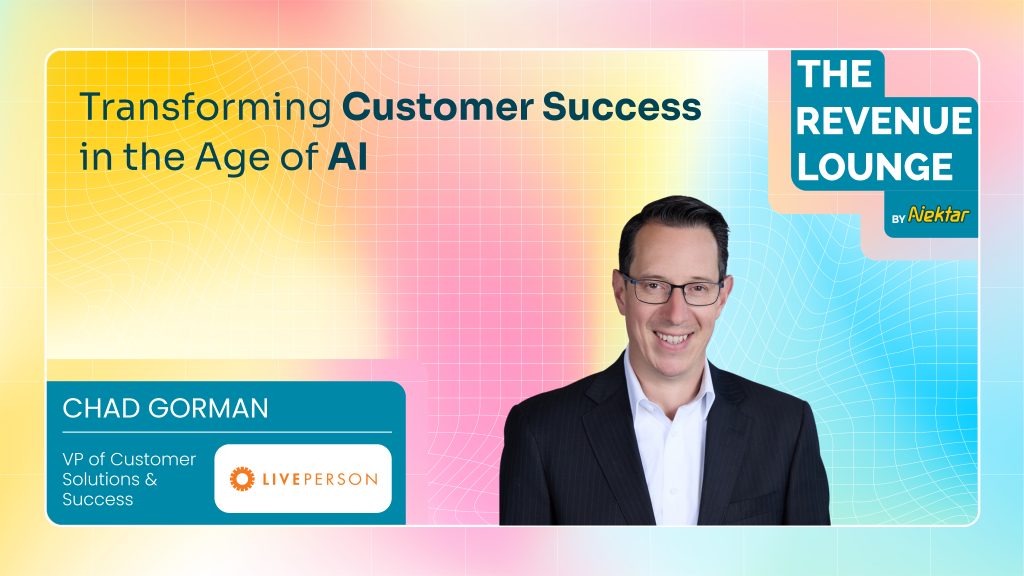
Transforming Customer Success in the Age of AI

Rebuilding Customer Success for the AI Era: Lessons from a VP of Customer Success A conversation with Chad Gorman. Executive Summary This article examines how customer success leaders should rethink AI adoption, using insights from an in-depth conversation with Chad Gorman, VP of Customer Solutions and Success (North America) at LivePerson, on the Revenue Lounge Podcast hosted by Randy Likas. Rather than focusing on automation or AI features, Gorman argues that AI-ready customer success is fundamentally about visibility, data discipline, and relationship intelligence. Readers will learn: Why most AI initiatives in customer success fail before deployment  How unifying fragmented CS data is a prerequisite for AI or automation What an effective early warning system looks like  Why engagement and relationship depth are stronger leading indicators than product usage alone How AI can expose relationship “white space” across complex buying committees Where buy vs build decisions actually differ across enterprise and mid-market segments How to embed AI into CSM workflows over-relying on automation Which metrics matter when measuring AI’s impact on retention, risk, and productivity Why the real promise of AI in customer success is reclaimed time for strategic customer work Facebook Twitter Youtube From Call Centers to Customer Outcomes Gorman’s perspective is shaped by an unusual career arc. He started in contact center operations, moved into IT at DirecTV, and then crossed over to the vendor side after a colleague recruited him to Splunk. “I didn’t even know what a CSM was,” he admits. “But once I saw how customer success could be built as a scalable engine, I was hooked.” — Chad Gorman From Splunk, he went on to lead global cloud customer success at VMware, before joining LivePerson, where he now oversees customer success and professional services across North America. That mix of operator, builder, and enterprise leader shows up in how he thinks about AI. Practical. Outcome-driven. Skeptical of hype. ​​AI Adoption Fails Before Deployment Most AI initiatives stumble long before a model is ever deployed. According to Gorman, the real friction points show up earlier in the buying and approval cycle. The Hidden Gates to AI Adoption Governance reviews and AI councils Legal, compliance, and security documentation Industry-specific scrutiny, especially in financial services Undefined success metrics “You can sell software all day long. But if you are not there to shepherd customers through governance, compliance, and approval gates, adoption will stall.” — Chad Gorman Customer Success Has Become Revenue Insurance In volatile markets, customer success is no longer a post-sale support function. It is a revenue protection layer. That shift forces CS leaders to answer harder questions: Where is risk building right now? Which accounts look healthy but are quietly disengaging? Where is expansion hiding in plain sight? The answer, Gorman says, is an early warning system built on stitched data. https://youtu.be/sDdV747jBJA?si=fVE8O2bqTcf2yTeN The Anatomy of an Early Warning System Gorman is blunt about the prerequisite. “Data is non-negotiable. Full stop.” — Chad Gorman Before AI enters the picture, organizations must understand what their book of business actually looks like. Engagement Is the Most Underrated Risk Signal Product usage is table stakes. Engagement is the differentiator. Gorman emphasizes that many churn events are preceded not by usage decline, but by relationship decay. “If engagement drops and you do not notice, you end up ghosted and surprised later.” — Chad Gorman What Engagement Actually Means Engagement is not email volume or meeting counts alone. It is relationship depth across the buying group. Who shows up to meetings? Who stopped showing up? Which roles are missing entirely? Who influences decisions but never engages directly? This is where Gorman believes AI has its most immediate impact. Relationship Intelligence: Where Art Meets Science Gorman describes relationship intelligence as the intersection of human judgment and system-derived insight. “We think we know our accounts. AI shows us the white space we missed.” — Chad Gorman AI-Assisted Relationship Mapping AI can analyze: Calendar data and meeting attendance Email and collaboration patterns Role changes and stakeholder turnover Sentiment from meeting notes and transcripts At LivePerson, Gorman’s team increasingly relies on workspace-level intelligence using Google Gemini to surface patterns across meetings, documents, and communications. You can literally ask, ‘Who used to attend and no longer does?’ and get an answer.” — Chad Gorman Buy vs Build Is No Longer Binary Enterprise customers increasingly want flexibility. Some bring their own LLMs. Others rely on vendor-provided AI. Most land somewhere in between. Enterprise: Build and bring your own models Upper mid-market: Hybrid Down-market: Out-of-the-box AI The common denominator remains the same: clean, structured, accessible data. Embedding AI Into CSM Workflows Even the best insights fail if CSMs do not trust them. Gorman stresses three adoption levers: Data transparency Always link insights back to source systems. Prescriptive guidance Do not just flag risk. Recommend next steps. Respect experienceAI should augment gut instinct, not override it. Measuring AI Impact in Customer Success AI success is not measured by novelty. It is measured by outcomes. What’s Next: Agentic AI and Time Reclaimed The next wave, according to Gorman, is not better summaries. It is execution. The thing CSMs hate most is admin. AI agents that actually do the work change everything.” — Chad Gorman Examples include: Auto-generated QBRs with live data Scheduled reporting without manual pulls Automated follow-ups and task execution The payoff is not speed. It is reclaimed time for strategic customer work. Leadership Lessons From the Field When asked what advice he would give his younger self, Gorman’s answer is simple. “Know your book. Be curious. Admit what you do not know.”” — Chad Gorman Growth mindset Curiosity within and beyond the “box” Meticulous organization Executive presence Tight partnership with the AE  Want to hear more stories from revenue leaders? Subscribe to The Revenue Lounge podcast to never miss an episode! More Resources

Customer Success

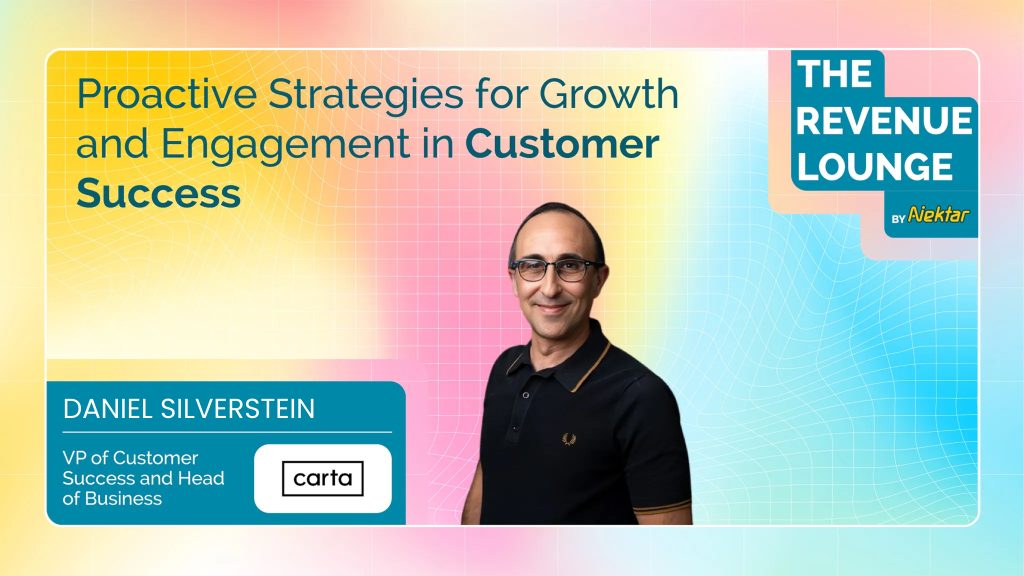
Proactive Strategies for Growth & Engagement in Customer Succes

Proactive Strategies for Growth & Engagement in Customer Success A conversation with Daniel Silverstein, VP of Customer Success & Head of Business at Carta. Customer Success has long carried a reputation as the team that steps in when something goes wrong. For many organizations, CS is positioned as a problem-solver, a renewals manager, or, worse, a support escalation point. But in today’s reality, where retention and expansion are the real engines of growth, that view of Customer Success is not just outdated, it’s dangerous. We spoke about this to Daniel Silverstein, VP of Customer Success and Head of Business at Carta. Over nearly six years, Daniel has helped turn a small, reactive post-sales team into a proactive, lifecycle-driven engine that now supports nearly 30,000 customers. His philosophy is simple yet powerful: revenue should not be forced; it should flow naturally as the byproduct of deep engagement, education, and timing. “Revenue is the result of the engagement. It’s not the purpose of it.”— Daniel Silverstein, VP of Customer Success at Carta This blog unpacks Daniel’s playbook: how to operationalize “moments that matter,” build scalable engagement models, and use data creatively when traditional adoption metrics don’t apply. Along the way, you’ll find infographics, templates, and checklists you can use to design a CS motion that doesn’t just retain customers. It accelerates their growth, and yours. Facebook Twitter Youtube Carta’s Starting Point: From Firefighting to Strategy When Daniel joined Carta in early 2019, the post-sales organization was a skeleton crew of five people. Their job was to wait for the phone to ring — firefighting when customers had issues, occasionally upselling without much repeatability, and otherwise remaining largely reactive. Carta itself was already a critical part of the private company ecosystem. Known as the cap-table management platform, Carta became the single source of truth for equity ownership. Whether you were a founder issuing stock options, a shareholder tracking your holdings, or a CFO managing dilution, Carta sat at the center of the equity lifecycle. The problem? Customers didn’t interact with the product daily. Unlike collaboration or productivity tools, cap-table management tends to be episodic. It spikes at key lifecycle moments — fundraising, audits, new share classes, compensation planning — and then recedes. This made traditional product adoption metrics useless as a barometer of customer health. Daniel’s mandate was clear: build an end-to-end post-sales strategy that could scale across tens of thousands of customers, drive revenue through expansion and retention, and, most importantly, deliver value at the right time. Why Daily Usage Metrics Don’t Work. And What to Track Instead In many SaaS companies, CS leaders live and die by usage data: logins, daily active users, feature adoption rates. At Carta, those metrics simply didn’t make sense. Customers didn’t need to log in every day — but they did need Carta to be correct, compliant, and ready for high-stakes events. This forced Daniel and his team to think differently. Instead of measuring frequency of use, they began tracking lifecycle and compliance signals. These signals became leading indicators of customer engagement, satisfaction, and future expansion. Key signals included: Whether a customer had an up-to-date 409A valuation. Gaps between issuances sent and issuances accepted. The health of HRIS integrations. Changes in company admins or CFOs. Whether the customer cleared the top 15 “health checks” that predict transaction readiness. Together, these signals painted a far richer picture than simple login counts. If adoption lagged, it might mean a churn risk. If a 409A was missing, it could mean a compliance problem. If new share classes appeared, it likely meant a fundraising round was imminent — a perfect time to engage. https://www.youtube.com/watch?v=KK436mBkToI&t=536s The Heart of Carta’s Strategy: “Moments That Matter” Instead of chasing customers with generic check-ins, Daniel built the CS motion around “moments that matter.” These are inflection points in a company’s lifecycle where Carta can provide outsized value — and where thoughtful engagement builds trust and, eventually, revenue. Consider just a few examples: New share class created → A likely fundraising or structural change. Carta CSMs reach out with planning guides and compliance checklists. Company admin changes → A new persona joins the account. Carta triggers a tailored onboarding flow, with education based on whether the new admin is in finance or HR. 409A out of date → A compliance risk. CSMs advise on timelines, audit defensibility, and why an updated 409A matters. Large hiring round (e.g., post-Series A) → HR workflows get complex. Carta introduces its total compensation tool. “If we’re doing it right, we leave the customer with something they didn’t know — and a plan for what’s next.”— Daniel Silverstein Scaling Engagement: High Touch, Medium Touch, and Tech Touch Supporting 30,000 customers with a lean CS team meant Daniel needed to segment ruthlessly. Carta developed a three-tiered approach: High Touch: Growing accounts with strong valuations, shareholder expansion, or new fundraising. These accounts got proactive EBRs, white-glove guidance, and strategic planning. Medium Touch: Accounts showing some, but not all, growth markers. CSMs engaged regularly but scaled their effort through playbooks and templates. Tech Touch: Accounts with limited growth signals or maxed-out product adoption. Engagement here leaned heavily on Carta’s digital library of 45-second explainer videos, community forums, and automated emails triggered by lifecycle signals. This segmentation ensured that every customer received value, but CSM bandwidth was directed where it mattered most. Turning Engagement into Expansion One of the most powerful insights from Daniel’s philosophy is that expansion is not the starting point. It’s the outcome. When Carta educates customers at the right moment, expansion follows naturally. For example, when a customer approaches an audit window, Carta doesn’t start with a sales pitch. Instead, they provide a detailed briefing on what the audit will require, what compliance risks exist, and how companies at a similar stage prepare. The conversation naturally leads to Carta’s stock-based compensation module. “Get there a couple of clicks ahead of whatever is going to happen next. The revenue comes back in when it needs to.”— Daniel Silverstein The Playbook Engine

ai in customer success
Customer Success

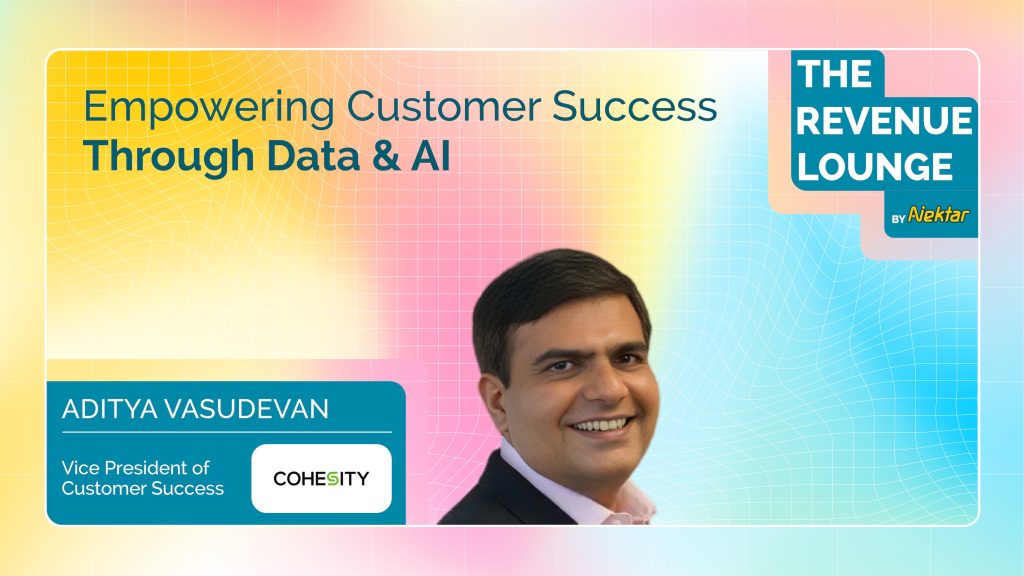
Empowering Customer Success Through Data & AI

Empowering Customer Success Through Data & AI A conversation with Aditya Vasudevan, former VP of Customer Success at Cohesity. Customer success has grown from a reactive support checkpoint into a deliberate, strategic engine for growth. But in an ocean of customer data, how can organizations extract meaningful insight, respond in real time, and nurture long-term loyalty—especially when budgets are always tight? We spoke with Aditya Vasudevan, former VP of Customer Success at Cohesity, a visionary who has transformed raw telemetry into timely triggers, dashboards into human-centric nudges, and silos into insights, all powered by data and AI. Facebook Twitter Youtube From Engineer to Customer Champion Aditya’s genesis story starts like many technologists’: he began life as an engineer but quietly discovered his true calling was with people—especially customers. Over 22 years, he journeyed through roles at Capgemini, VMware, Hitachi, and even ran his own Kubernetes-focused startup. That hands-on run-up, solving real customer problems in code, steadily shifted his path—not away from tech, but toward how technology meets human need. “I enjoyed finding where customers derive value out of a product… iterating the product… pre-sales, post-sales, and success.” Cohesity, with its mission to protect enterprise data from modern threats like ransomware, became his canvas—first leading solution architects to win Fortune 10 accounts, then steering the customer success ship itself. In that role, he faced head-on the growing pains of using data and AI to meet the evolving expectations of enterprise-scale customer success. When Running Lean Demands Smarter Playbooks In the world of customer success, budget isn’t elastic. “When is the last time your CFO gave you enormous budget to build customer success teams? Probably never. That’s why data and AI matter. They help you do more with less.” Thanks to this financial reality, Aditya and his team embraced a philosophy: scale through precision, not people. Data and AI didn’t replace the team—they upped the game of every individual. The AI Advantage in CS Imagine a platform that: Spots at-risk accounts earlier than a human might. Detects expansion opportunities without guesswork. Sends timely nudges along a digital journey. Prioritizes the right action—at the right time. That’s the power of a data-driven strategy in CS. It pays off in both retention and impact. https://www.youtube.com/watch?v=ent5fDPwls8&t=409s The Hidden Hurdles: Data Isn’t Always Your Friend Behind every shiny AI dashboard lies a set of sobering hurdles: Data Availability – Without product telemetry, you’re flying blind. Traditional companies often lack insights on whether customers are even using the product. Data Sprawl – Usage metrics, CRM entries, support cases… all scattered across systems. Aditya’s answer: consolidate into a data warehouse like Snowflake. Data Accuracy – Garbage in, garbage out. Trust must be earned via spot-checks and validation. Only once these are solved can you start asking sharper questions and building reliable automation and AI layers. The CS Data Maturity Model Stage Description 1. Manual Tracking High-touch, intuition-led, human to human 2. Data Consolidation Central data warehouse (Snowflake) 3. Insight Visualization Dashboards, renewal risks, adoption tracking 4. Automation Digital nudges, renewal alerts, playbook triggers 5. AI-Driven Insights Sentiment from case logs, pattern deviation alerts Building Toward Intelligence: The Layered Strategy At Cohesity, the progression looked like this: Data Warehouse – We combined telemetry, support, and CRM data into a central hub. BI Layer (Tableau) – Clean, contextual dashboards visualizing adoption, risk, and opportunity. Automation – Renewal risk lists auto-generated for CS teams to act on. Digital Journey Mapping – Identifying deviations from healthy product usage, sending nudges, and escalating where needed. AI Anchors – Sentiment analysis and LLM signals feeding into dashboards as “red/yellow/green” risk markers. “Every customer has a journey with your product. If they’re not following the right pattern, you nudge—digitally or by a call.” Customer Digital Journey Playbook: A Template Stage Signal to Track Healthy Behavior Nudge if Missing Owner Onboarding Deployment logs Full setup achieved Trigger email guide CSM Adoption License usage ≥80% of seats active Proactive check-in CSM Expansion Feature adoption 3+ features utilized QBR upsell recommendation CSM/AE Renewal Preparation Support cases + NPS Positive sentiment CS leader escalation CS Leader   Where AI Adds Real Punch Let’s be clear: much of CS data like usage stats and renewal dates is best handled through analytics, not AI. However, unstructured data, especially from support tickets or emails, is fertile ground. AI can detect: Negative sentiment Competitor mentions Subtle engagement shifts Suddenly, dashboards become smarter—and CS teams get sharper signals. “AI is best with unstructured data. Sentiment analysis in cases and emails augments statistical dashboards and surfaces risk earlier.” The Results: Tangible Impact at Scale Taking telemetry, dashboards, automation, and AI together produced striking results: 98% CSAT in the last quarter Highest retention rate in company history Increased adoption—making customers more secure Peace of mind for CS teams—‘one-stop’ visibility, fewer frustrations “Efficiency gains meant our team could cover more accounts with less frustration. Customers benefited with higher adoption and stronger security.” Next Level Strategy: Expansion Intelligence Data also became a beacon for new revenue—not just retention: Usage Gaps: When peers in the same vertical back up more asset types, the gap becomes an upsell opportunity. Compliance Patterns: Financial customers usually maintain 3 backup copies. Falling short surfaces cross-sell potential. Smarter QBRs: Instead of “nice to haves,” CSMs deliver pointed insights—“…you’re missing your second and third backup copy; here’s how to complete your security posture.” Expansion Opportunity Framework Signal Context Example CS Action Outcome Usage Gap Only 2 of 5 assets backed up Propose securing additional assets Upsell Compliance Gap Single backup copy only Recommend adding secure copies Expansion Plateau in Adoption Feature under-used Suggest supplemental training Higher adoption First Steps for CS Teams: Start Simple, Scale Smart Aditya’s advice for leaders just getting started: Nail the manual process first, define value, and own metrics. Build telemetry early, even basic logging helps. Ensure data quality before layering automation. Launch with dashboards, identify risk clusters. Pilot AI projects, like sentiment detection or journey mapping. “If you don’t have the manual process figured out, going digital is harder.

Scroll to Top

Just one more step