
Top 15 Revenue Optimization Tools to Consider in 2026
- RevOps
- 10 min
- Updated: July 28, 2026
You’re set up for the quarter, a dedicated sales team, a real marketing plan, regular customer feedback. And yet revenue growth has quietly hit a ceiling, and it isn’t obvious why. The causes can hide for months or years, draining potential the whole time. Stagnant growth is a real challenge, and diagnosing it can be harder than fixing it once you know what’s actually wrong. This guide covers what’s usually behind it and the tools that help address it.
Get our latest insights into your inbox

What Is Revenue Optimization?
Revenue optimization is maximizing revenue growth over the long term by managing pricing, user acquisition and retention, and sales and support enablement, using data analytics, behavior analysis, and predictive modeling to find where the opportunity actually is. Like a building needs a solid foundation before anything else, revenue optimization needs accurate data and real market analysis before any specific strategy gets built on top of it.
The 4 Pillars of Revenue Optimization
- Pricing. Setting the right price points through market data and testing, freemium, usage-based, or tiered models depending on competition and customer demand, rather than defaulting to “charge more.” HubSpot’s 2018 shift to a modular, lower-priced Starter tier is a well-known example of pricing optimization expanding a market rather than just extracting more from it.
- Product development. Using customer feedback and usage data to improve features and reduce churn, rather than shipping based on internal assumptions. Spotify’s data-driven personalization (Your Daily Drive being a well-known example) shows what this looks like when it’s genuinely data-led.
- Sales and support. Equipping sales and support teams with the resources to close deals and retain customers, training, CRM systems, and increasingly AI-assisted tooling that automates routine tasks so teams can focus on complex, high-value interactions.
- Marketing. Building brand awareness and converting prospects through the right mix of paid acquisition and owned channels like content and SEO. Dropbox’s referral-driven, low-CAC growth remains a commonly cited example of marketing-led revenue optimization done well.
The Revenue Optimization Process
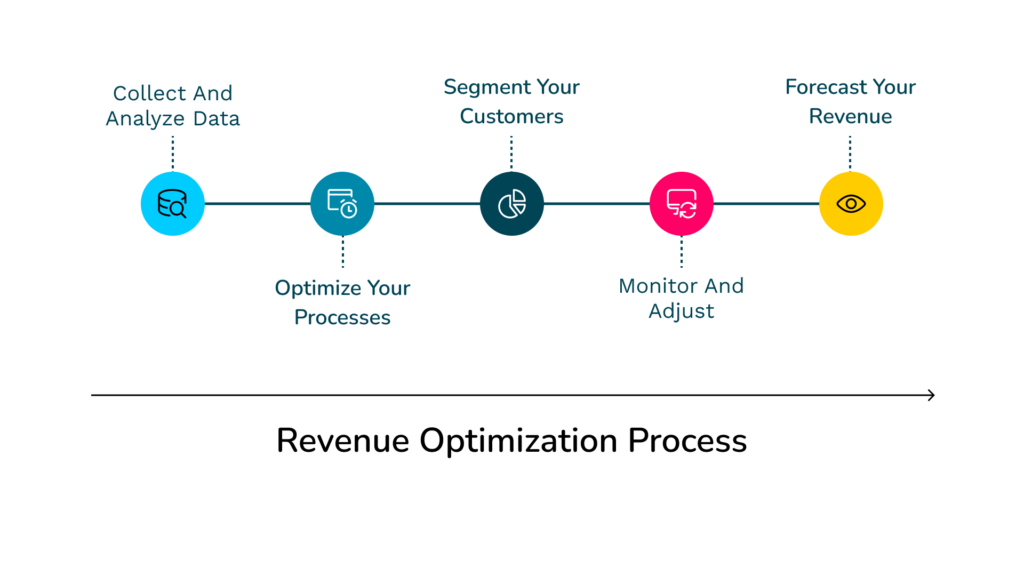
- Collect and analyze data. Everything downstream depends on this step. Gartner’s widely cited estimate puts the cost of poor data quality at $12.9 million per organization annually, a figure that keeps recurring across this whole audit because it keeps being the actual root cause. There’s a real chance your own data is more incomplete than you’d assume.
- Segment your customers. Once data is reliable, segment by demographics, behavior, and purchase history to identify the most profitable groups and tailor pricing and product to them specifically.
- Forecast your revenue. Use historical data and market trends to project forward. Organizations using statistical forecasting models consistently outperform those relying on gut-feel projections.
- Optimize your processes. Apply what segmentation and forecasting reveal to actual pricing, product, and marketing decisions. McKinsey research has found optimization strategies driving average revenue increases of 2 to 7%, with some cases reaching 15%.
- Monitor and adjust. Revenue optimization isn’t a one-time project. Markets and customer needs shift, and strategies need continuous evaluation to stay aligned with them.
Top 15 Revenue Optimization Tools for 2026
1. Nektar
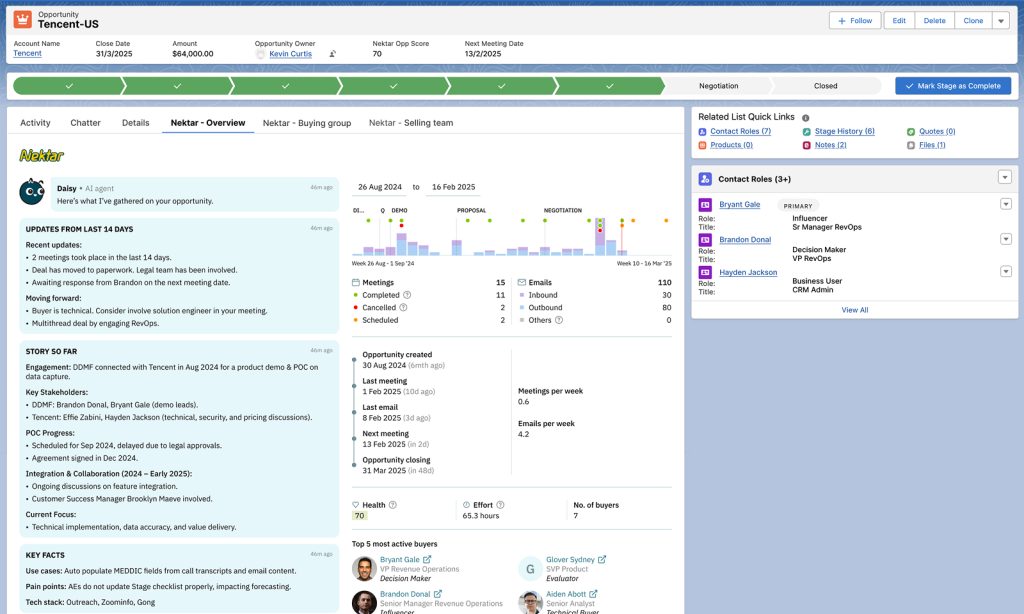
Nektar is the data foundation revenue optimization actually depends on, not another point tool competing with the ones below it. Every step in the process above (segmentation, forecasting, process optimization) is only as good as the underlying data feeding it, and most CRMs are missing a large share of the real customer interaction data that would make that process accurate.
Data Foundation automatically captures every email, meeting, call, and calendar event across a team and writes it natively into Salesforce, HubSpot, or Dynamics, with zero rep effort required. Time Travel™ retroactively corrects historical records as new context arrives. Daisy AI then surfaces the signals that actually drive revenue optimization decisions: buyer engagement scoring, deal risk flags, and buying-group coverage, directly on the Salesforce Opportunity tab.
Key features: zero-rep-effort activity capture, Time Travel™ retroactive correction, Daisy AI signal library across deal risk and buyer engagement, vendor-neutral integration with your existing CRM and sales stack.
2. Gainsight
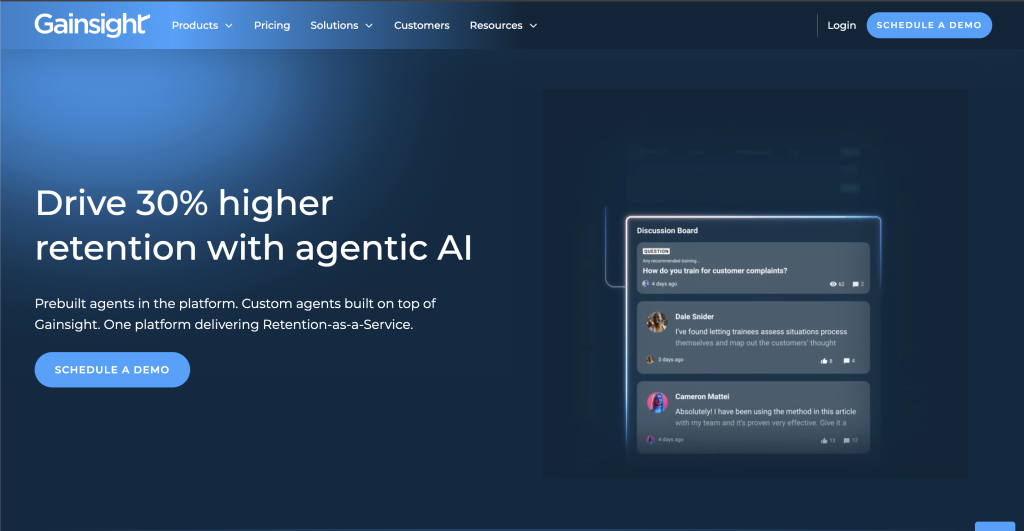
Gainsight offers Customer Success, Product Experience, and community-building tools under one umbrella, tracking interactions, monitoring engagement, and predicting behavior to manage and grow customer relationships at scale.
Key features: AI-powered insights for customer success and revenue growth, health score monitoring, journey mapping and touchpoint analysis, personalized recommendations for sales and CS teams.
3. Planhat
Planhat is a customer data platform for managing and growing customer relationships, tracking interactions, monitoring health and engagement, and automating workflows around personalized customer experiences.
Key features: real-time behavior tracking and segmentation, CRM integrations, health score monitoring, customer journey mapping.
4. ClientSuccess
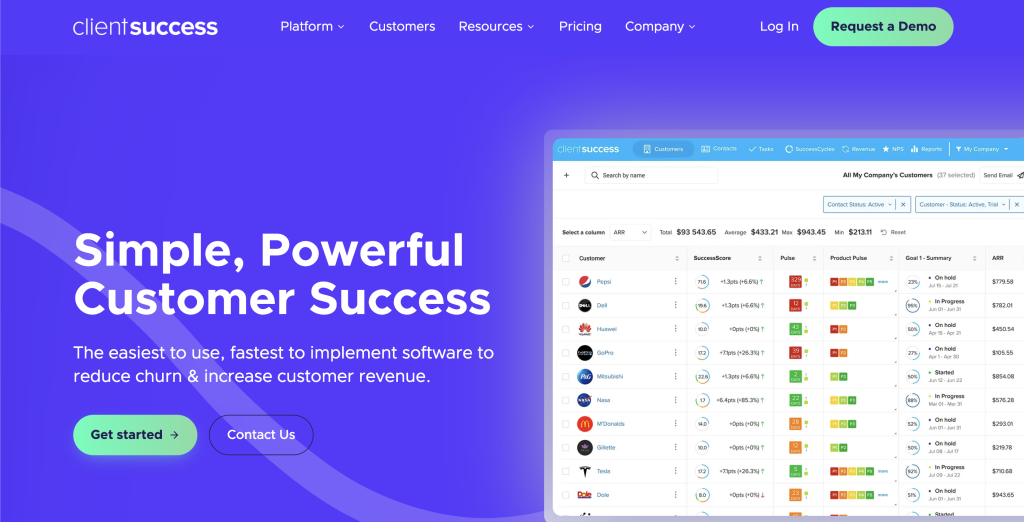
ClientSuccess is a focused customer success platform built to be adopted quickly without heavy overhead, pairing with dedicated onboarding (Baton) and product feedback (Product Signals) tools designed to work together from the start.
Key features: real-time engagement tracking, health score monitoring, next-best-action recommendations, collaboration and task management for CS teams.
5. Ambition
Ambition is a sales coaching and performance platform giving managers real-time visibility into sales metrics, with gamification (leaderboards, contests) to drive engagement toward revenue goals.
Key features: real-time performance tracking and gamification, CRM integrations, customizable KPI dashboards, automated coaching and feedback.
6. Vitally
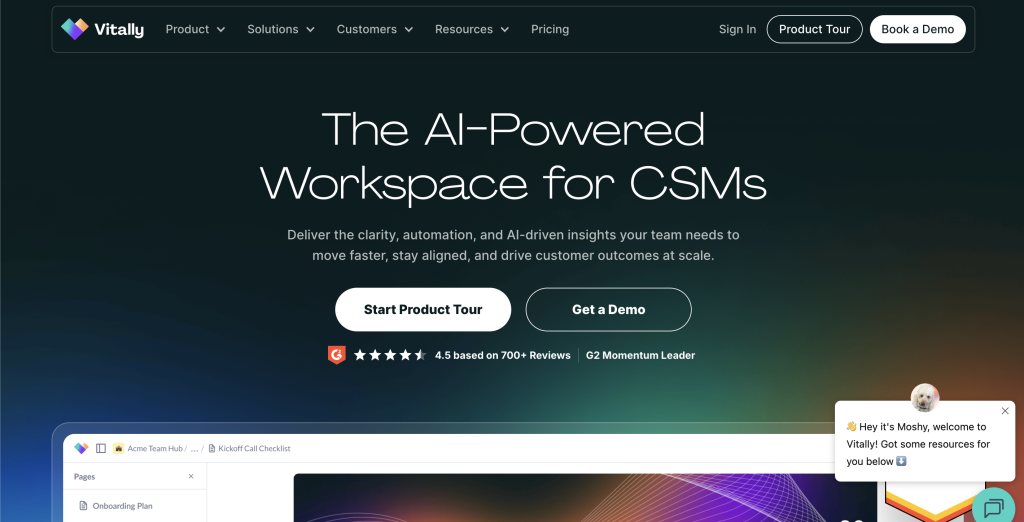
Vitally combines customer data with project management in one collaborative workspace, tracking customer health, automating workflows, and building personalized customer experiences.
Key features: customer health insights, automated health scoring and alerting, customizable segmentation, proactive churn-prevention workflows.
7. Totango (including Catalyst)
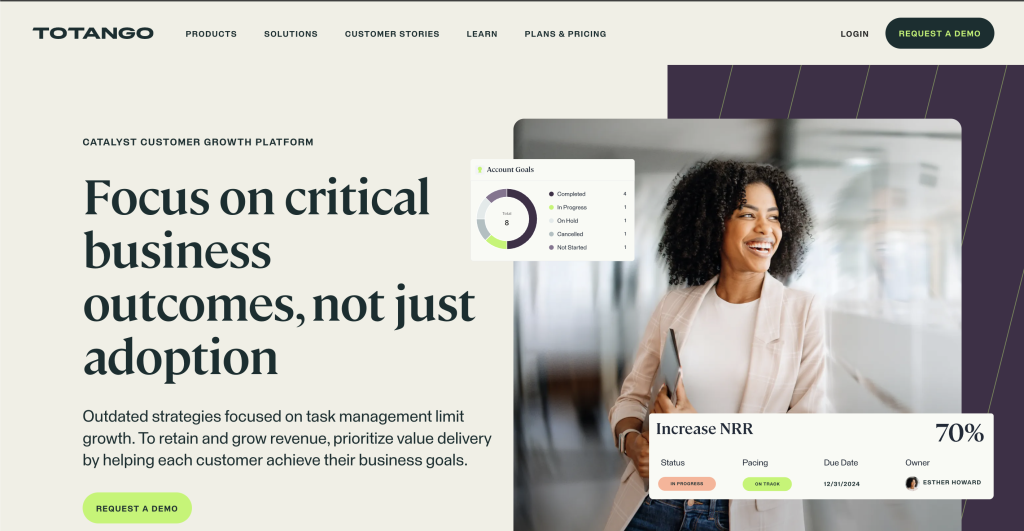
Totango and Catalyst merged in February 2024, and the combined company now operates under the Totango brand across three product lines: Totango (enterprise customer success, strong in hierarchy-based health scoring), Catalyst (customer growth platform, known for ROI-based scoring), and Unison (an AI churn-intelligence engine). If you’re evaluating either name individually, know upfront you’re now looking at the same parent company, with some reported integration disruption as the merged products come together, worth a direct conversation with the vendor about current product maturity before committing.
Key features: enterprise-hierarchy and ROI-based health scoring, AI-powered churn intelligence via Unison, customer journey mapping, predictive analytics for retention and expansion.
8. ChurnZero
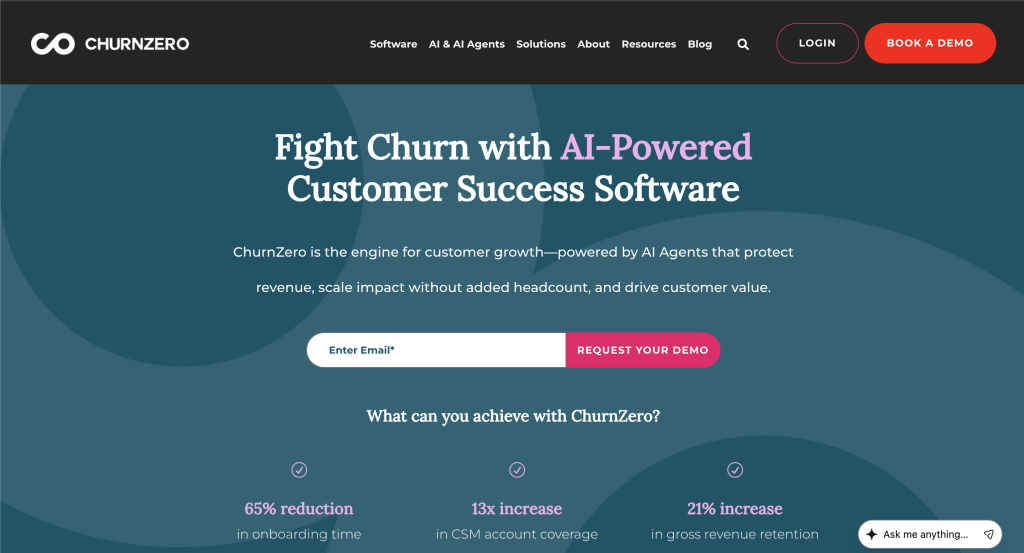
ChurnZero is a customer success and retention platform built around real-time usage tracking and automated playbooks, frequently named alongside Gainsight, Planhat, and Vitally as a leading option in this category.
Key features: real-time customer health scoring, automated playbooks triggered by usage signals, renewal and expansion forecasting, in-app engagement tools for driving product adoption.
9. DemandFarm
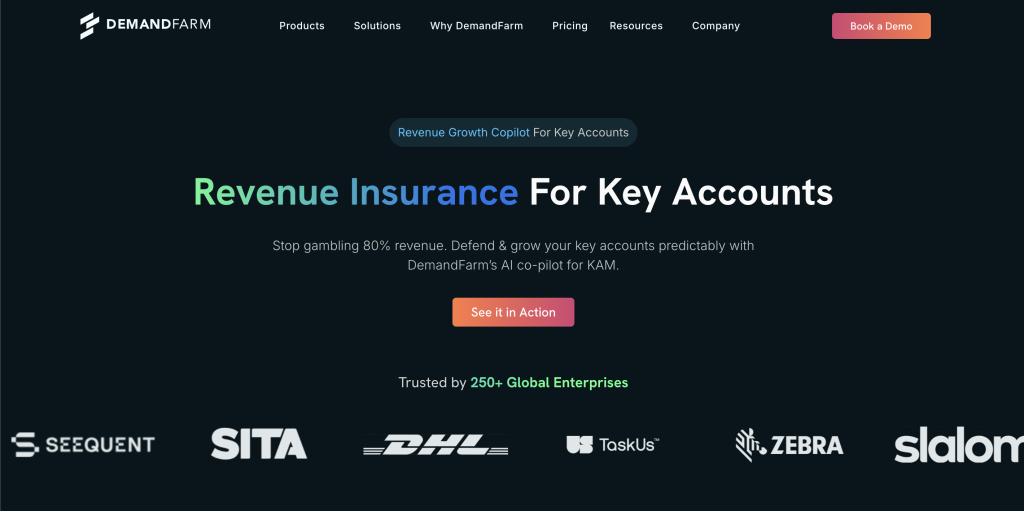
DemandFarm is an account-based customer success platform focused on high-value accounts, mapping account hierarchies, tracking health, and building personalized account plans to surface cross-sell and upsell opportunities.
Key features: strategic account planning, relationship mapping and stakeholder management, CRM integration, automated workflows and KPI reporting.
10. DealPad
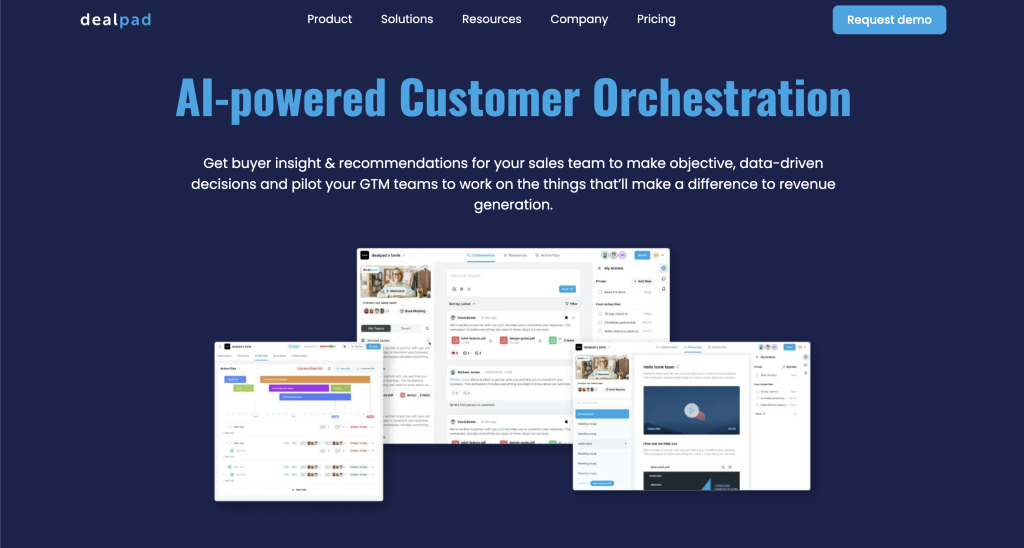
DealPad manages deal pipelines and workflows, giving reps visibility into the buying team and real-time data to evaluate deal health. Its Closing Certainty Index uses AI to predict close likelihood and recommend specific actions to improve it, aimed at removing optimism from deal reviews.
Key features: pipeline management and deal tracking, AI-powered deal scoring, mutual action plans built with the buyer, deal collaboration tools.
11. Zomentum
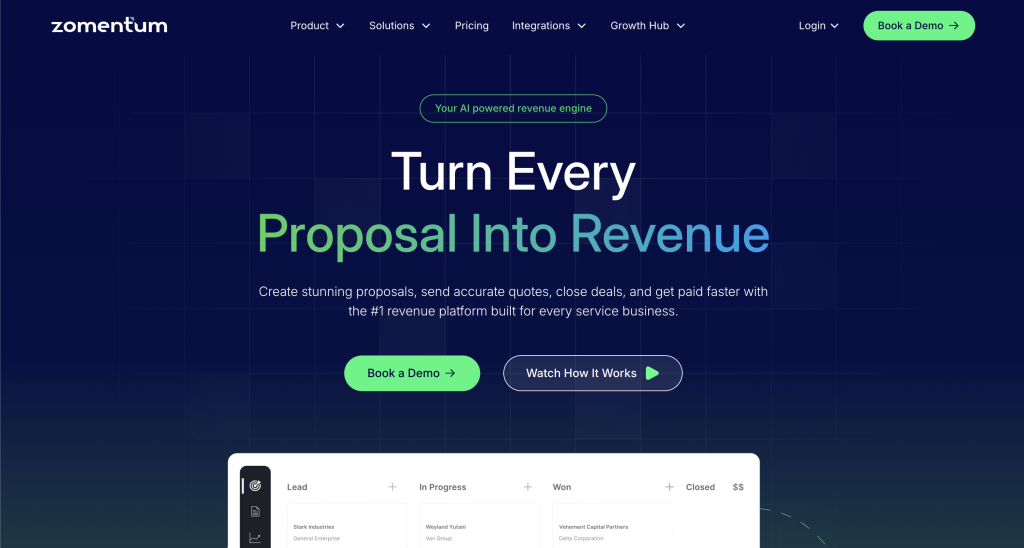
Zomentum is a revenue platform for IT service providers and MSPs specifically, consolidating discovery, selling, and account management into one platform.
Key features: pipeline and opportunity management, AI-powered deal scoring, automated workflows and reminders, performance tracking and KPI reporting.
12. Recapped
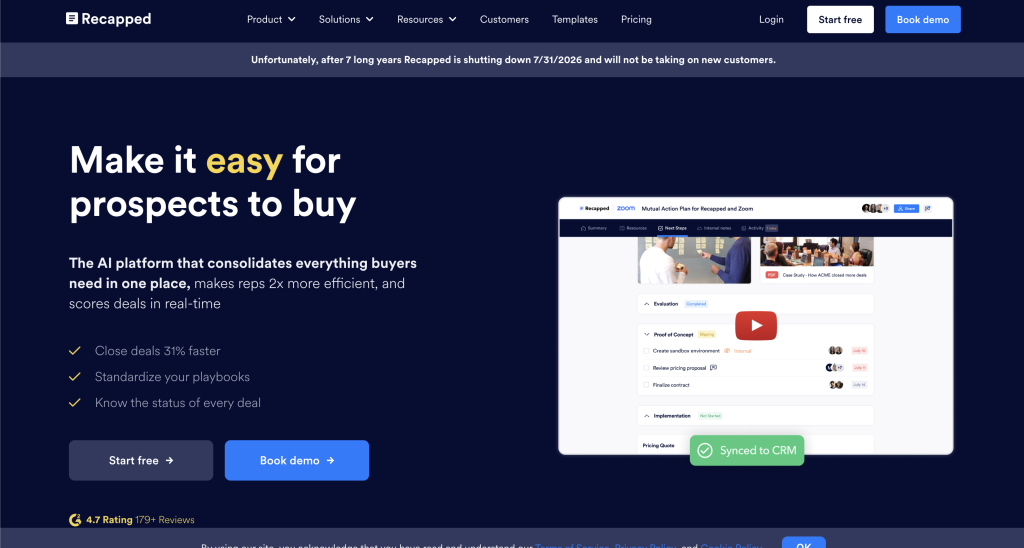
Recapped simplifies client communication for sales teams, organizing meetings, agendas, and action items in one shared workspace, with customizable templates for professional proposals.
Key features: automated meeting minutes and action-item tracking, video conferencing integrations, collaborative meeting prep, AI-powered sentiment analysis.
13. Prolifiq.ai (Crush)
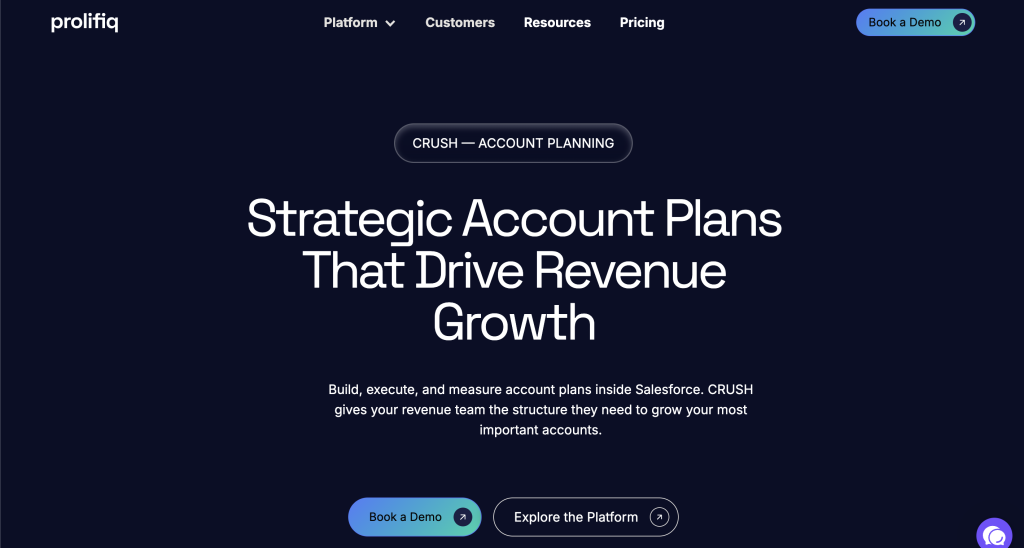
Prolifiq’s Crush is a sales acceleration platform for managing leads, automating workflows, and tracking performance to close more deals.
Key features: relationship mapping for stakeholder hierarchy, whitespace analysis for cross-sell and upsell, real-time influence charting, Salesforce-native reporting.
14. Squivr
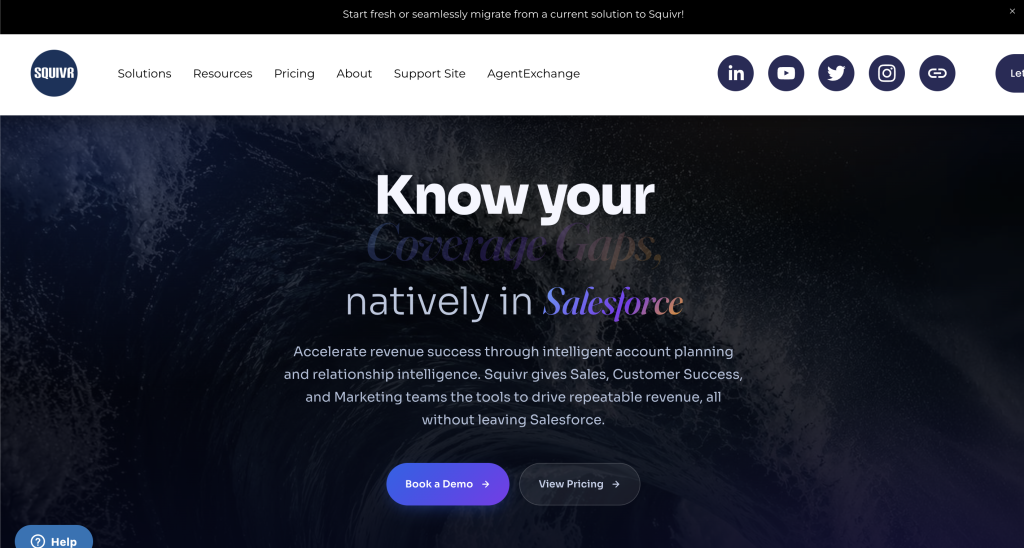
Squivr activates contact data inside Salesforce to identify key stakeholders, champions, and detractors, using relationship maps and org charts native to the CRM object model.
Key features: Salesforce-native org charts and relationship maps, contact data activation, stakeholder identification, whitespace analysis for cross-sell and upsell.
15. CustomerSuccessBox
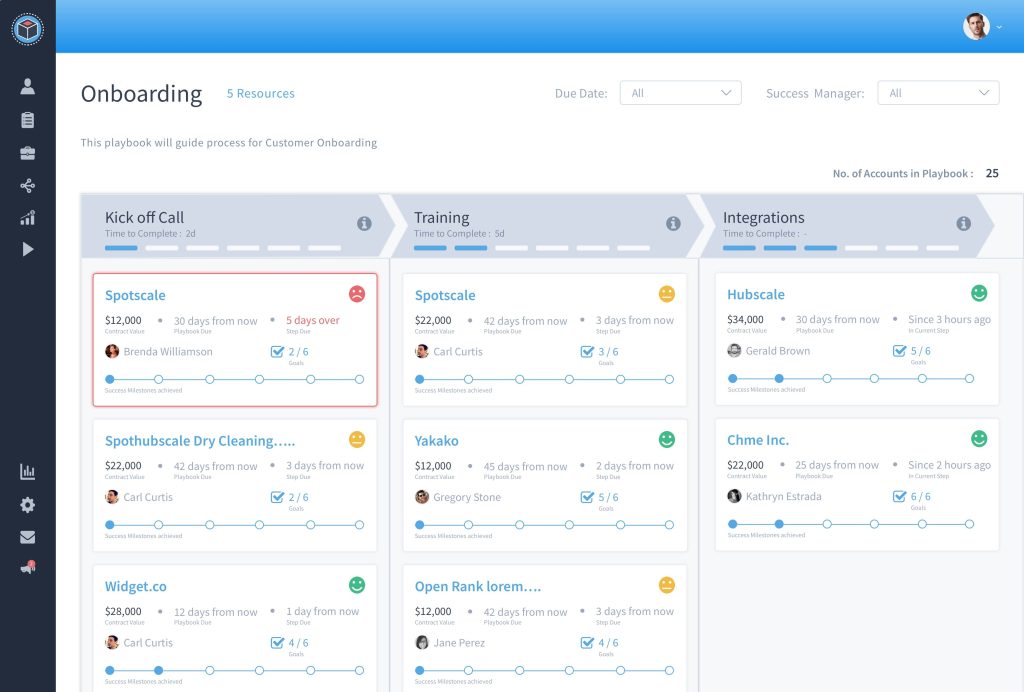
CustomerSuccessBox is a Customer Success Intelligence platform for onboarding, upselling, and retaining customers, surfacing insights meant to drive proactive rather than reactive account management.
Key features: predictive customer health scores, automated onboarding and retention playbooks, real-time feedback and sentiment analysis, cross-functional collaboration tools.
Start With Data You Can Actually Trust
Every revenue optimization strategy in this guide, pricing, segmentation, forecasting, depends on accurate underlying data. As Cindy Estis Green, CEO and Co-Founder of Kalibri Labs, puts it: bad data leads to bad decisions, which lead to bad outcomes, a domino effect no business wants to experience.
Get a free CRM scan to see how much of your own pipeline and customer data is currently missing, before you build a revenue optimization strategy on top of it.
Enjoyed our content? Follow Nektar on LinkedIn