Backstory (formerly People.ai) Alternatives: 10 Options for 2026
- Product
- 11 min
- Updated: July 20, 2026
People.ai rebranded to Backstory in April 2026, repositioning itself from an activity-capture platform into what it now calls a “Revenue Answers Platform” which is a conversational AI layer that reasons over captured activity data to answer natural-language questions about deal and account health. Same underlying company, same core capture technology, a meaningfully different pitch.
That rebrand is also a useful marker for something bigger that’s happened across this entire category since the original version of this list. Every tool built in the last decade for “capture activity, show a dashboard” is now being measured against a different bar: can it feed an AI agent that acts on that data directly, not just a human reading a report. That’s the lens this update applies to all ten entries below.
Get our latest insights into your inbox
What Is Backstory (formerly People.ai)?
Backstory automatically captures sales activity like emails, meetings, and calls, and structures it against CRM records. What’s new since the April 2026 rebrand is a conversational interface layered on top: instead of navigating dashboards, users can ask natural-language questions about deal or account health and get an AI-generated answer reasoning over the captured activity.
Worth knowing before you evaluate it: a conversational layer is only as reliable as the data it’s reasoning over.
Comparing Nektar & Backstory (People.ai)?
Top Backstory / People.ai Alternatives for 2026
1. Nektar
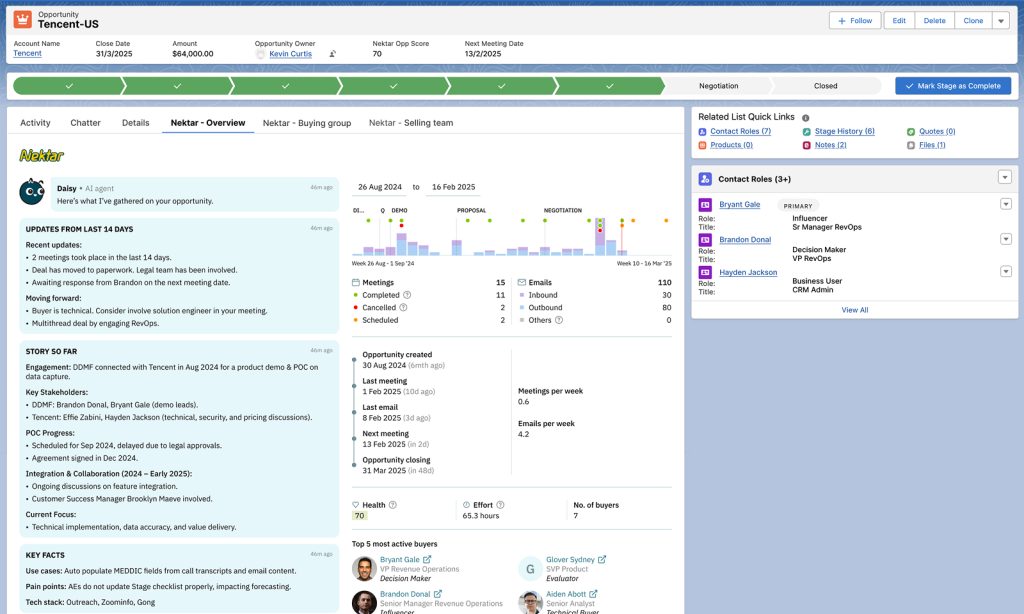
Nektar GTM telemetry platform that automatically captures every customer interaction and delivers clean data to your CRM, data warehouse, and AI applications, with zero manual entry or adoption friction.
Unlike tools that lock your data in proprietary interfaces, Nektar acts as revenue signals infrastructure: capturing emails, meetings, calls, and Slack, then piping structured intelligence into Salesforce, Snowflake, Claude, and your entire stack.
Data Foundation automatically captures every email, meeting, call, and calendar event and writes it natively into Salesforce, HubSpot, or Dynamics — zero rep effort, live in under two weeks. Time Travel retroactively corrects historical records as new context arrives, closing a gap no point-in-time capture tool (including Backstory) can touch. Daisy AI then surfaces 39 signals across categories like buyer visibility, deal risk, and rep performance directly on the Salesforce Opportunity tab.
Key features:
- Zero-rep-effort capture across email, calendar, meetings, and calls
- Time Travel retroactive correction: up to 12 months of historical backfill
- Daisy AI signal library across buyer visibility, deal risk, and forecast-relevant flags
- Vendor-neutral as it sits alongside your existing sales stack rather than replacing it
Best for: Salesforce-first enterprise teams that need CRM data reliable enough for AI agents to act on directly, not just a cleaner dashboard.
2. SetSail (now part of ZoomInfo)
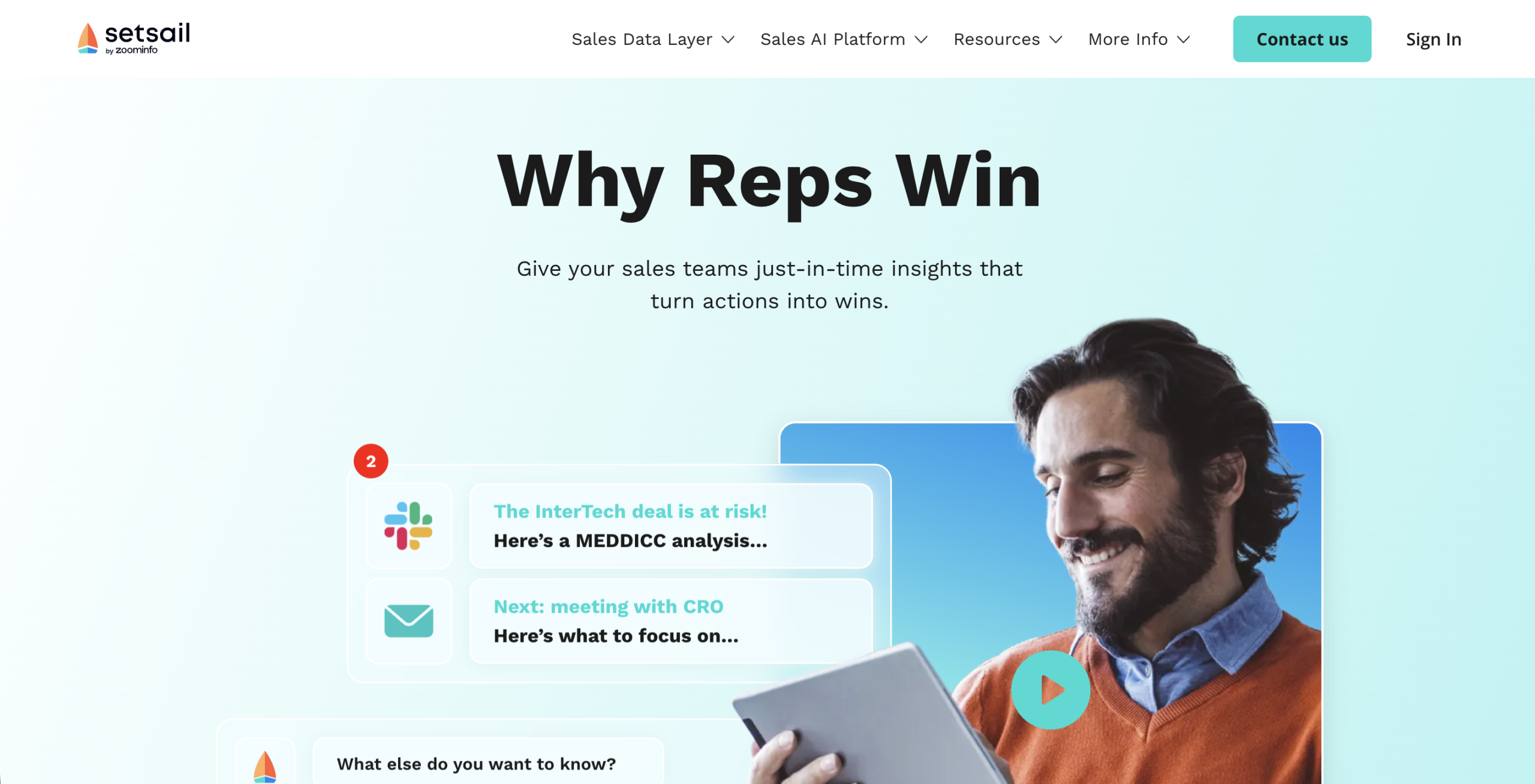
SetSail was acquired by ZoomInfo in 2024 and now operates within ZoomInfo’s broader platform rather than as an independent company. It still functions as an AI-powered sales data layer capturing activity across email, calendar, and call transcripts and surfacing the specific rep behaviors that correlate with winning deals, plus incentive mechanics to reinforce them.
Key features: automated activity capture across email, calendar, and calls; behavioral pattern analysis tied to deal outcomes; MEDDPICC-style meeting-prep summaries; incentive and gamification layer for reinforcing winning behaviors.
Best for: Teams already invested in the ZoomInfo ecosystem wanting behavioral analytics layered on top of activity capture.
3. Einstein Activity Capture (EAC)
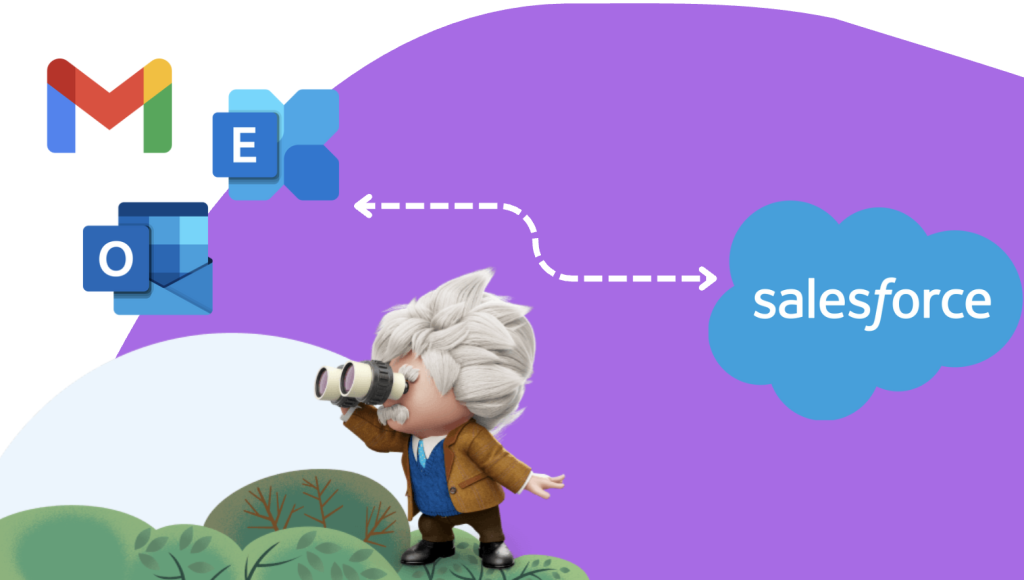
EAC remains Salesforce’s native tool for syncing email and calendar activity into Salesforce records. It’s a reasonable baseline for teams that want activity visibility without adding a third-party vendor, though it lacks the AI-driven signal layer — deal risk scoring, buyer engagement analysis — that dedicated revenue intelligence tools build on top of similar capture data.
Key features: captures email and calendar events from Microsoft or Google accounts, logs activity to the Salesforce timeline, native to Salesforce with no separate vendor relationship required.
Best for: Teams wanting basic activity capture natively inside Salesforce without additional AI features or vendor cost.
4. MatchMyEmail
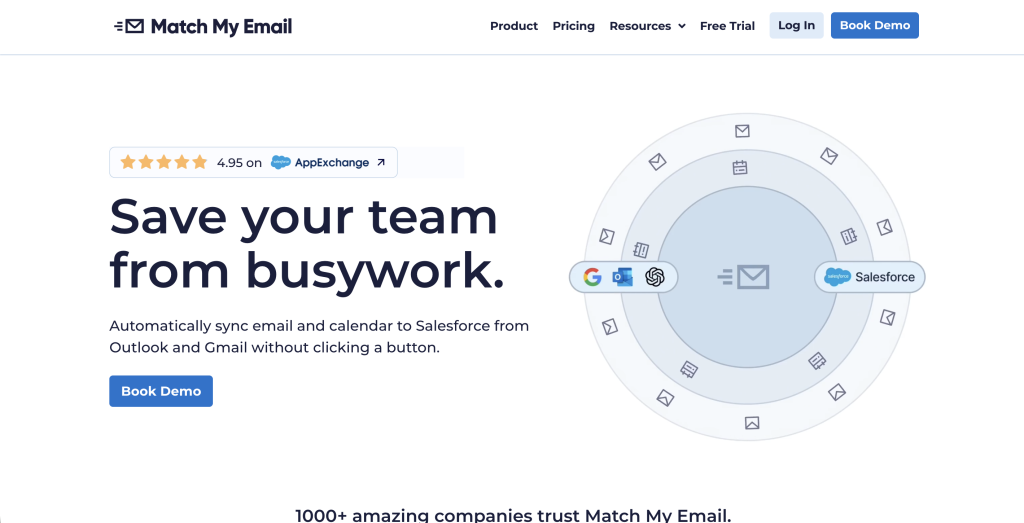
MatchMyEmail automates email and calendar logging into Salesforce, working with any email client or host rather than requiring a specific inbox provider. It’s a narrower, lighter-weight tool than most others on this list — no AI signal layer, just reliable, automated capture.
Key features: automatic email and calendar capture, permanent storage of historical communication data, compatible with any email client.
Best for: Teams wanting straightforward, dependable activity logging without a broader intelligence platform attached.
5. Revenue Grid
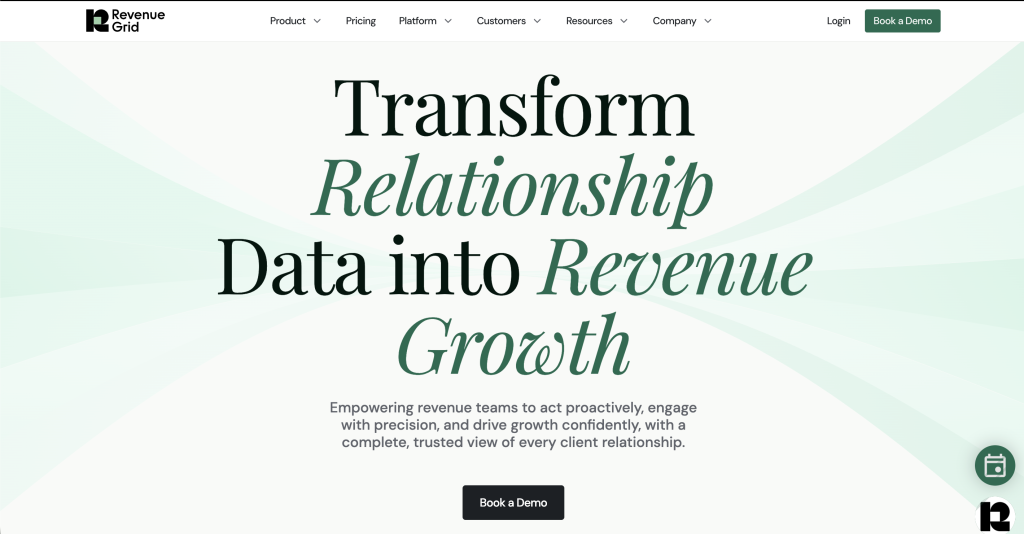
Revenue Grid combines activity capture with guided-selling and forecasting features — 360-degree pipeline visibility, forecast-to-actual comparison, and revenue signals aimed at improving process consistency across a sales team.
Key features: 360-degree pipeline visibility, forecast accuracy tracking, guided-selling signals embedded in Salesforce.
Best for: Teams wanting activity capture bundled with broader guided-selling and forecasting tools in one product.
6. Aviso AI
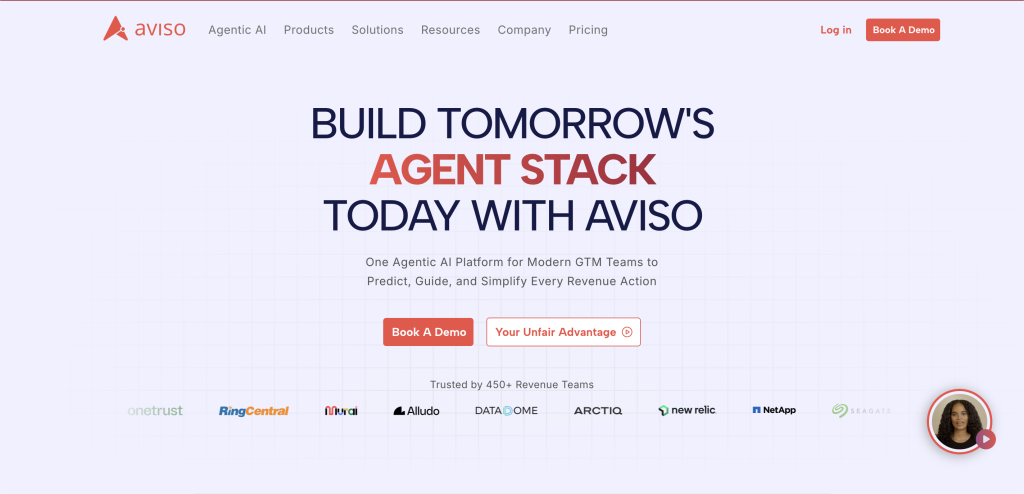
Aviso’s forecasting engine is now paired with MIKI, a conversational orchestrator that can query pipeline data and trigger CRM updates directly, alongside a library of 50+ pre-built revenue agents and a no-code studio for building custom agentic workflows.
Key features: MIKI conversational AI orchestrator, predictive forecasting, 50+ pre-built revenue agents, no-code agent workflow builder.
Best for: Teams wanting AI agents built directly into forecasting and pipeline execution, not just activity capture with a chat interface layered on top.
7. Collective[i]
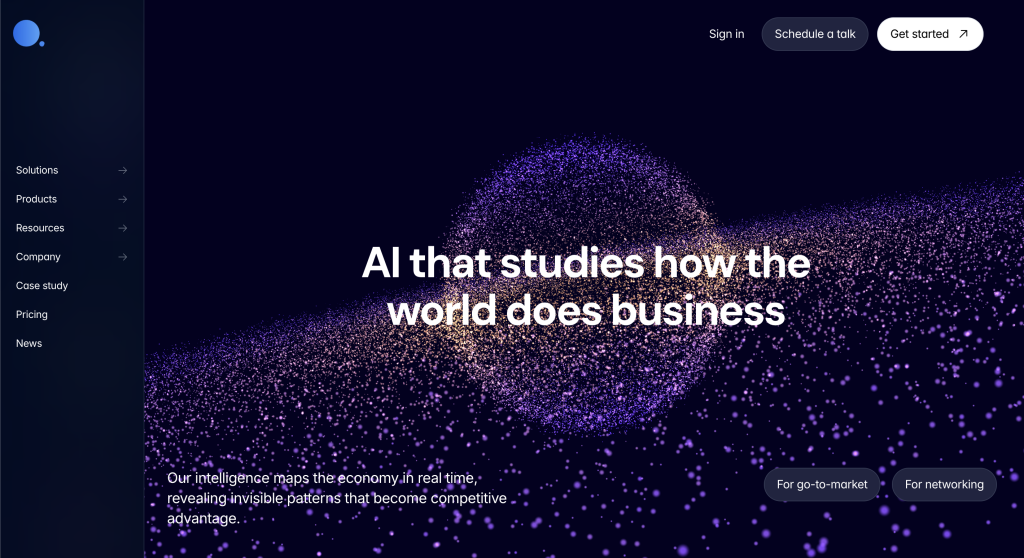
Collective[i] has repositioned itself around what it now calls “applications and agents” for sales forecasting and CRM optimization, explicitly framing its mission around helping organizations “operate with the speed and precision required to compete in an AI-first world.” Underneath the updated positioning, its core capability remains automated activity capture combined with AI-driven forecasting and opportunity scoring.
Key features: AI-driven forecasting and opportunity-win probability, automated activity and contact capture into CRM, professional-network intelligence for surfacing warm relationship paths.
Best for: Teams wanting forecasting and relationship-network intelligence combined in one platform.
8. LinkPoint360
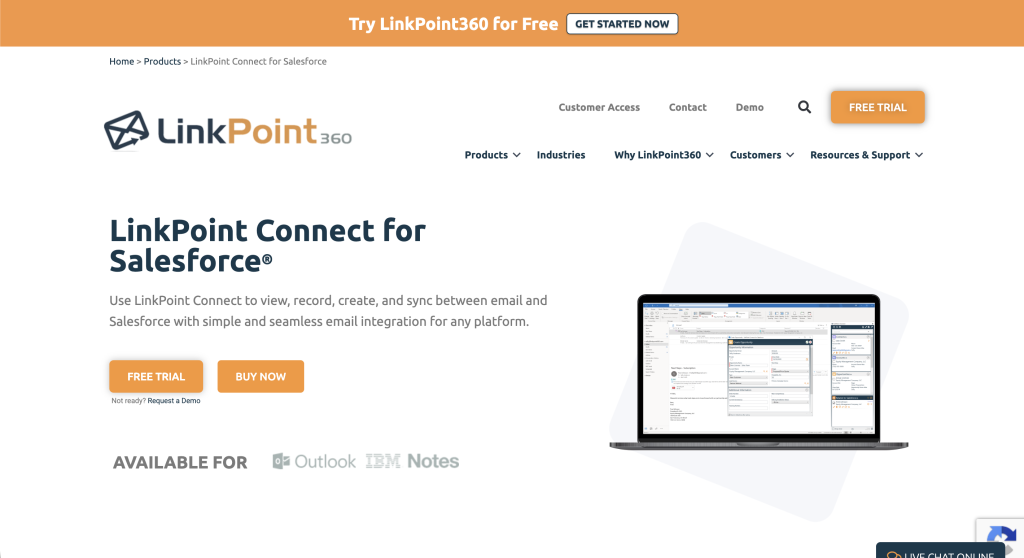
LinkPoint360 focuses specifically on email integration for Salesforce and Microsoft Dynamics — one-click email logging, custom object and field detection, and client-side deployment for teams with stricter data-residency requirements.
Key features: one-click email recording, custom Salesforce object and field detection, secure client-side deployment.
Best for: Teams whose primary need is reliable email-to-CRM logging with strong compliance and deployment control, rather than a broader intelligence layer.
9. Riva
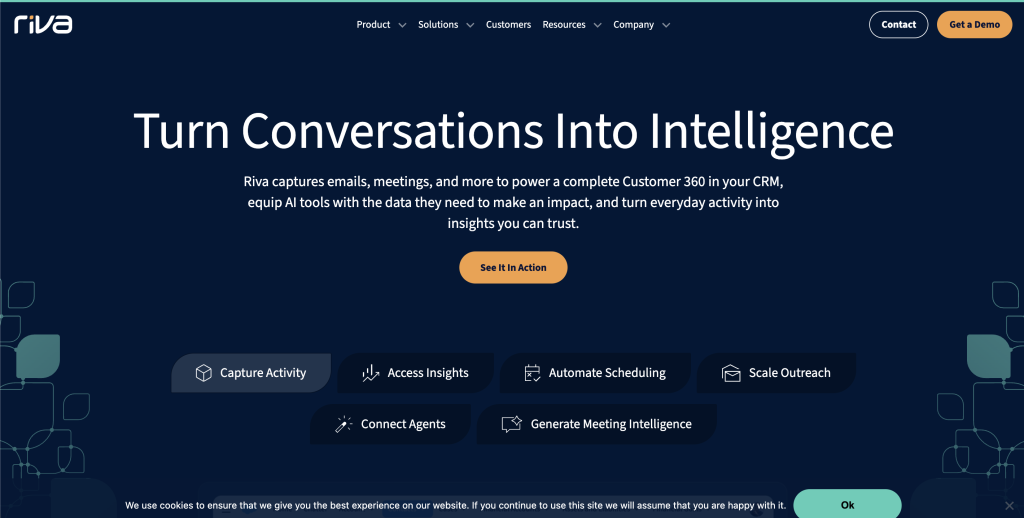
Riva syncs email, calendar, and contact data between CRM systems and communication platforms, positioning itself around data reliability and quality for revenue and customer data specifically — a narrower, infrastructure-focused alternative to a full revenue-intelligence suite.
Key features: automated data capture and sync, dedicated RevOps-facing interface, integrated meeting-booking sync.
Best for: Teams prioritizing dependable data sync infrastructure over an AI-driven insight layer.
10. Ebsta
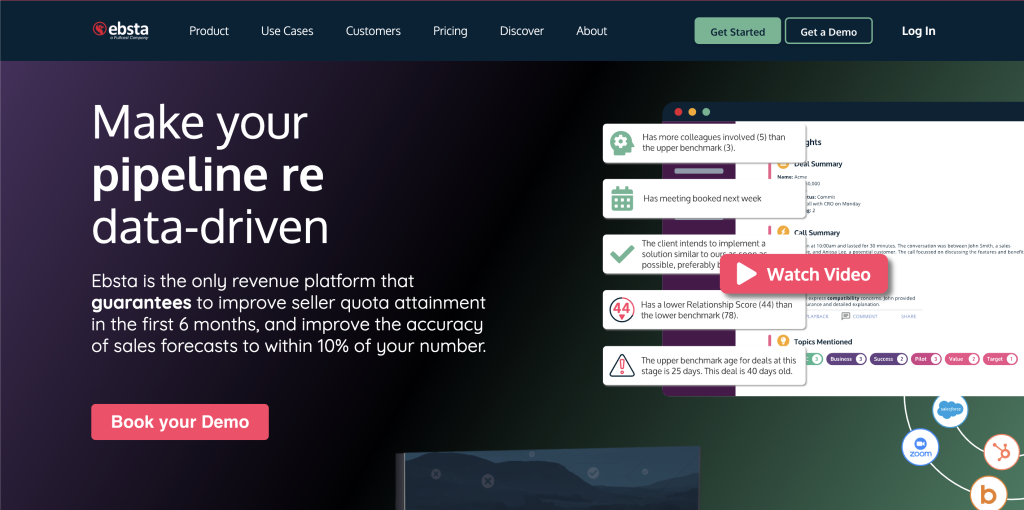
Ebsta turns CRM activity data into actionable insight — real-time opportunity tracking, activity analysis across the customer journey, and at-risk deal detection aimed at surfacing which deals need attention before they’re lost.
Key features: real-time opportunity data, activity tracking across the full customer journey, at-risk deal detection with actionable flags.
Best for: Teams wanting deal-risk detection layered on top of standard CRM activity tracking.
Backstory Alternatives Compared
|
Tool
|
Core Strength
|
Best Fit
|
|---|---|---|
|
Nektar
|
Data completeness + AI signal layer for both reps and agents
|
Salesforce-first enterprise teams building on AI
|
|
SetSail (ZoomInfo)
|
Behavioral analytics on captured activity
|
Teams already in the ZoomInfo ecosystem
|
|
Einstein Activity Capture
|
Native Salesforce activity sync
|
Basic capture with no added vendor cost
|
|
MatchMyEmail
|
Lightweight automated email/calendar logging
|
Dependable capture without a broader platform
|
|
Revenue Grid
|
Activity capture + guided selling and forecasting
|
Bundled capture, forecasting, and process signals
|
|
Aviso AI
|
Agentic forecasting and execution
|
Teams wanting AI agents built into pipeline execution
|
|
Collective[i]
|
Forecasting + relationship-network intelligence
|
Combined forecasting and network insight
|
|
LinkPoint360
|
Email-to-CRM integration with compliance controls
|
Strong deployment/compliance requirements
|
|
Riva
|
Data sync infrastructure across CRM and communication tools
|
Teams prioritizing sync reliability over an insight layer
|
|
Ebsta
|
Deal-risk detection on CRM activity
|
Surfacing at-risk deals from existing data
|
Frequently Asked Questions
Q. Did People.ai change its name?
Yes. People.ai rebranded to Backstory in April 2026, repositioning as a "Revenue Answers Platform" with a conversational AI interface layered on top of its existing activity-capture technology. It's the same underlying company and core capture capability, under a new name and pitch.
Q. Is Backstory the same company as People.ai?
Yes, Backstory is People.ai's new name and positioning following its April 2026 rebrand, not a separate company or acquisition.
Q. What's the difference between activity capture tools and AI agents in revenue intelligence?
Activity capture tools (Einstein Activity Capture, MatchMyEmail, LinkPoint360, Riva) automatically log emails, meetings, and calls into a CRM. AI agents go a step further, acting on that captured data directly, updating fields, flagging risk, or executing workflows, rather than just presenting it for a person to review. Several tools on this list, including Backstory itself, are adding conversational or agentic layers on top of what was originally pure activity capture.
Q. Does Nektar replace Backstory?
It depends on what you need. Both automatically capture activity data into Salesforce. Nektar's differentiation is Time Travel™ (retroactive correction of historical records) and a broader signal library (Daisy AI) built specifically to support both human decision-making and AI agent execution — worth comparing directly if you're evaluating the two head-to-head.
Choose an Alternative Built for Where Revenue Intelligence Is Actually Headed
The tools on this list split into two groups: those still built primarily around a dashboard for a human to read, and those built to feed an AI agent that acts on the data directly. That distinction matters more than it did when this list was first published, since a growing share of what happens to your CRM data now happens without a person reviewing it first.
Get a free CRM scan to see how complete your own pipeline data actually is, or read the full Nektar vs. People.ai comparison for a detailed side-by-side.
Enjoyed our content? Follow Nektar on LinkedIn