Top 10 Sales Enablement Software of 2026
- Sales
- 12 min
- Updated: July 30, 2026
Your sales reps have a mile-long to-do list. Generate leads, manage the pipeline, attend customer meetings, follow up on everything else, and somewhere in there, actually sell. It’s overwhelming by design, and it’s one of the biggest blockers for sales teams today. Reps consistently report spending only a third of their time actually selling, the rest goes to admin, research, and internal coordination.
Sales enablement software exists to fix that ratio: giving reps the tools, content, and resources they need to spend more time selling and less time on everything around it.
Get our latest insights into your inbox

Top 10 Sales Enablement Software for 2026
- HubSpot Sales Hub, unified sales platform with a broad AI toolset
- Showpad (now part of Bigtincan), content, coaching, and buyer engagement in one platform
- Spekit, AI-powered just-in-time enablement inside the flow of work
- Dock, an AI revenue enablement platform
- InsideSales, AI-driven sales engagement and buyer intelligence
- Allego, unified AI-driven learning, content, and coaching
- Spotio, field sales tracking and territory management
- SalesHood, independent onboarding, content, and coaching platform
- VanillaSoft, sales engagement with AI-driven lead prioritization
- Mindtickle, AI-powered sales readiness and live deal coaching
What Is Sales Enablement?
Sales enablement is no longer a nice-to-have, it's a must-have for any organization that wants to stay competitive in today's rapidly evolving business landscape.
Forrester Research
Sales enablement means giving sales teams the tools and resources they need to sell more effectively: product knowledge, training, customer insight, automation, and the content that helps a rep have a genuinely useful conversation instead of a generic one. The goal, ultimately, is more revenue through reps who are better equipped to have that conversation.
Overview of the 10 Best Sales Enablement Platforms
1. HubSpot Sales Hub
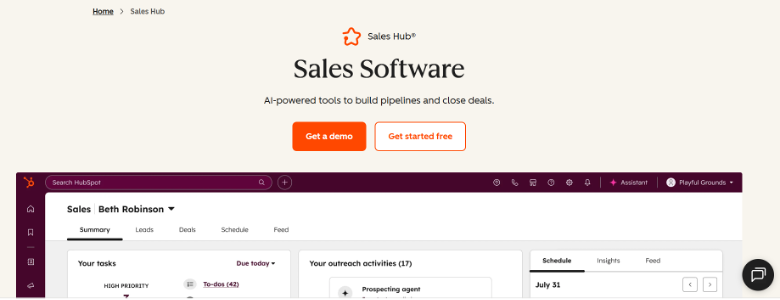
HubSpot Sales Hub is a unified sales platform known for a broad, genuinely useful AI toolset spanning outreach drafting, prospect research, report generation, and deal evaluation. It also includes CPQ management, conversation intelligence, document tracking, and sales playbook storage, all inside one straightforward interface.
Key features: AI-powered lead and deal scoring, automatic next-step suggestions for guided selling, sales forecasting and customizable dashboards, omnichannel communication, automatic CRM data enrichment, AI prospecting agent, email tracking and scheduling.
Best for: HubSpot-native teams wanting a single platform covering CRM, enablement, and AI-assisted selling without adding several point tools.
2. Showpad (Now Part of Bigtincan)
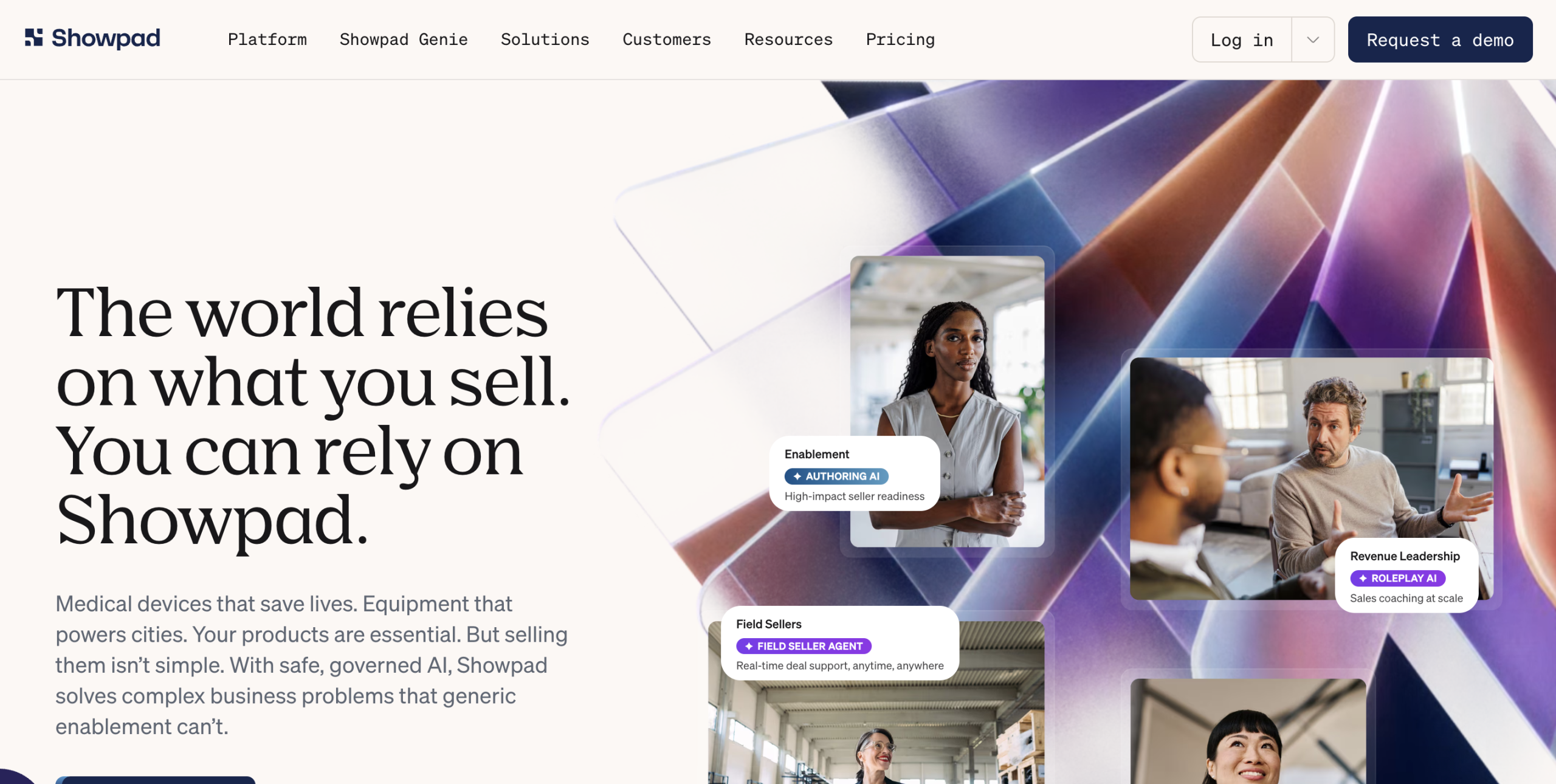
Showpad was acquired by Vector Capital and merged with Bigtincan in October 2025; the combined company continues to sell and support Showpad’s platform, so evaluating it today means evaluating a business mid-integration with its former competitor. The underlying product still combines content management, buyer engagement tracking, and coaching in one enablement platform, with AI-guided content recommendations that surface the right asset based on deal stage and buyer context, plus a Shared Spaces feature giving buyers a persistent, trackable hub for shared content across a deal. Worth asking directly about post-merger product roadmap stability before committing to a multi-year contract, a pattern that shows up across most of this category’s recent consolidation.
Key features: AI-guided content recommendations, buyer-facing Shared Spaces with engagement analytics, structured coaching and call review tools, content performance analytics tied to deal outcomes.
Best for: Enterprise sales teams needing content management, buyer-facing engagement tracking, and coaching bundled into one platform at scale, with the caveat that the product is currently integrating with its former competitor’s stack.
3. Spekit
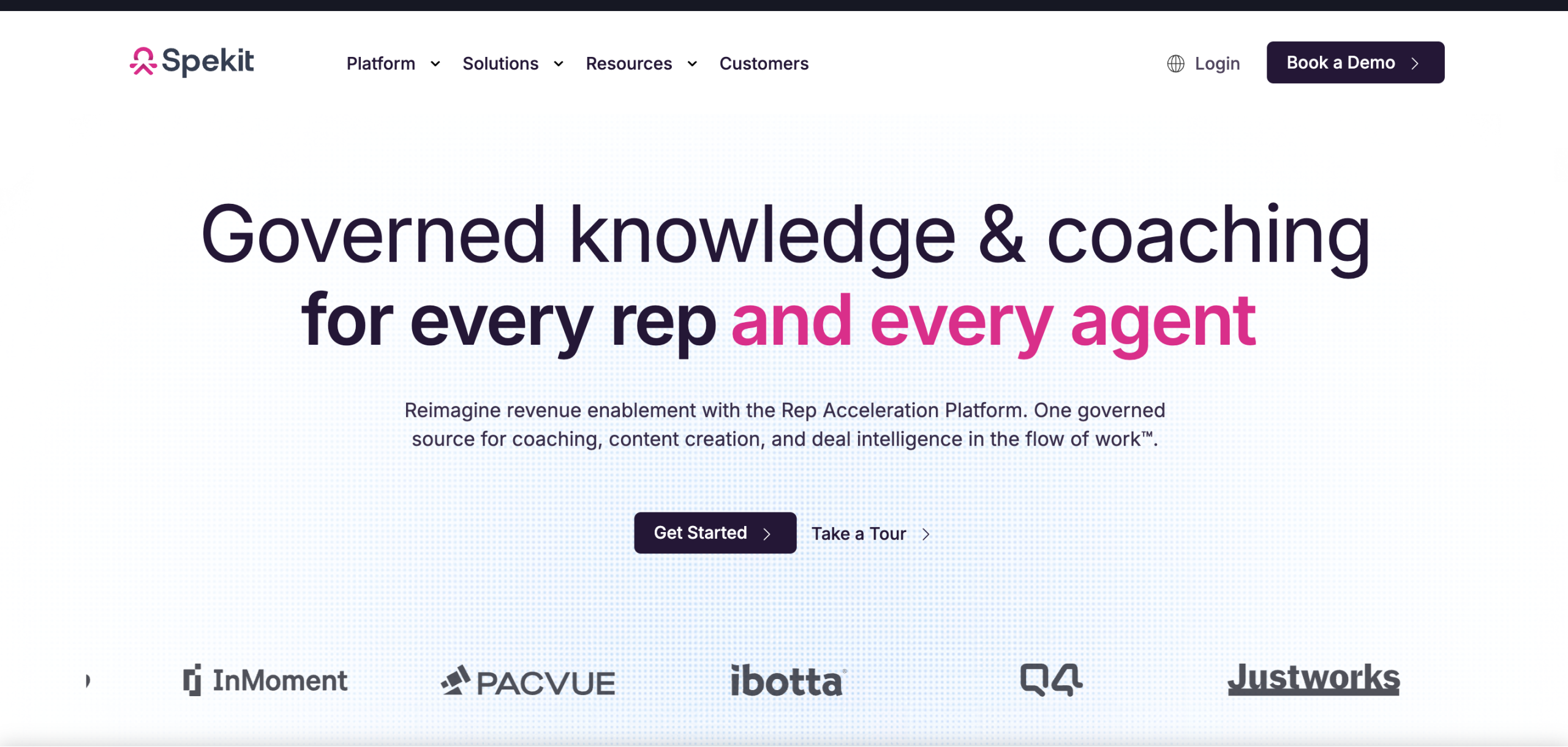
Spekit is a modern, AI-powered sales enablement platform built around delivering enablement in the flow of work rather than a separate tool reps have to context-switch into. Its AI Sidekick uses contextual signals from Salesforce, email, and call tools to anticipate what a rep needs next, surfacing the right playbook, case study, or talking point at the moment it’s actually useful. Reps can create and share content instantly through Deal Rooms, track buyer engagement in real time, and see how each asset actually influences pipeline through Revenue Insights.
Key features: AI Sidekick for contextual, just-in-time coaching and recommendations; intelligent content management that flags outdated material automatically; Deal Rooms with real-time buyer engagement data; Revenue Insights tying content usage to deal outcomes; a governance dashboard for content accuracy oversight.
Best for: Teams wanting the fastest implementation in this category and genuinely high adoption, since Spekit’s enablement surfaces inside existing workflows rather than requiring reps to learn a new interface.
4. Dock
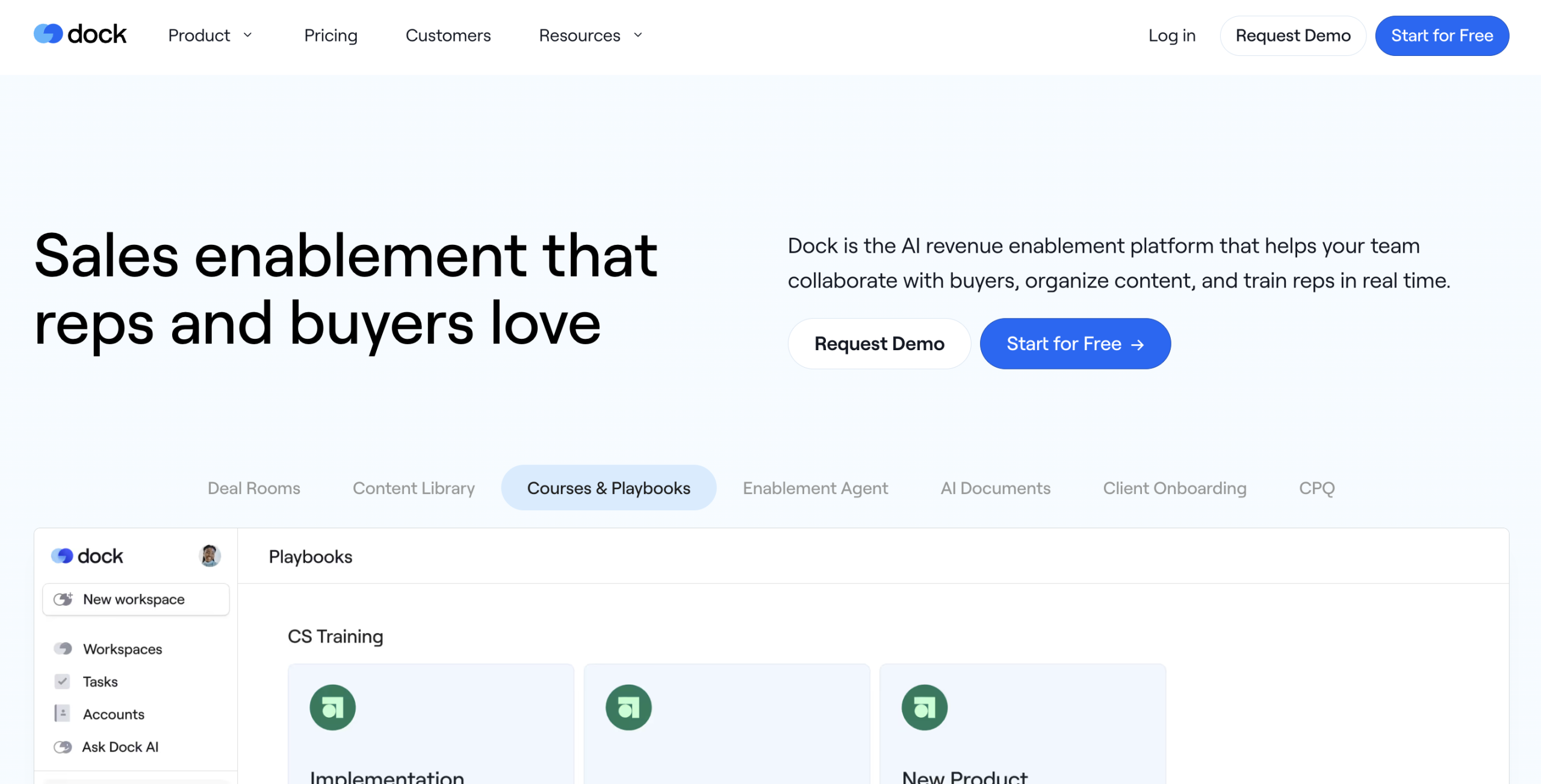
Dock is an AI revenue enablement platform that combines digital sales rooms, customer onboarding hubs, centralized content management, and learning tools for go-to-market teams. It gives reps the content, training, and buyer collaboration usually split across separate tools.
Dock covers the full customer lifecycle, from first pitch through onboarding and renewal, and keeps enablement content and playbooks current. Its AI drafts sales content and answers rep and buyer questions from the company’s own material and deal data.
Key features:
- Branded digital sales rooms with buyer engagement tracking
- Customer onboarding hubs with shared plans and tasks
- Centralized content library for decks, docs, and links
- Learning playbooks and courses for ramping reps
- AI agents that answer using your content and deal data
- Native order forms and e-signature
- Salesforce and HubSpot integrations
5. InsideSales
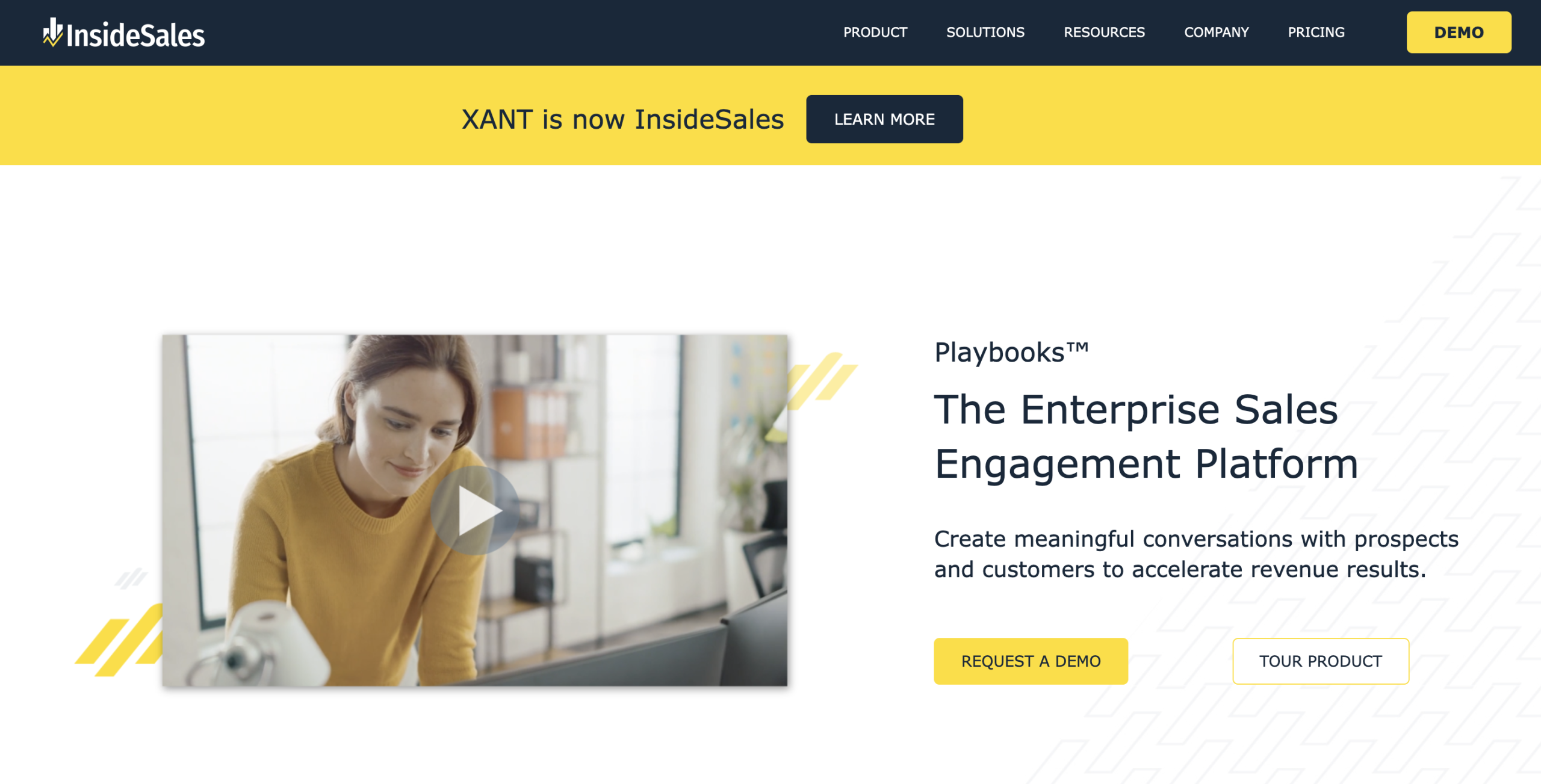
InsideSales uses AI and machine learning trained on a large base of aggregated buyer-behavior data to help reps figure out who to call, when, and in what sequence. Playbooks™ turns that into structured, repeatable outreach cadences, guiding a rep through a defined sequence of calls, emails, and follow-ups rather than leaving prospecting to individual instinct.
The platform’s Prioritization and Scoring tools rank leads and accounts by actual likelihood to convert, based on historical buyer patterns rather than a static lead-source rule, and its Buyer Intelligence layer surfaces signals (job changes, engagement patterns, account activity) that flag when a previously cold account is worth another look. Reporting and Scorecards give managers visibility into which reps and which cadences are actually driving pipeline, rather than just activity volume.
Key features: Playbooks™ for structured, AI-guided outreach cadences; predictive lead and account scoring based on aggregated buyer-behavior data; Buyer Intelligence signals for re-engaging cooled accounts; manager-facing reporting and scorecards tied to actual conversion, not just activity; native integrations with Salesforce, Microsoft, and SAP.
Best for: Enterprise sales development teams running high-volume outbound who want AI-guided cadence and prioritization backed by a long-established engagement brand, rather than a newer, less-proven entrant.
6. Allego
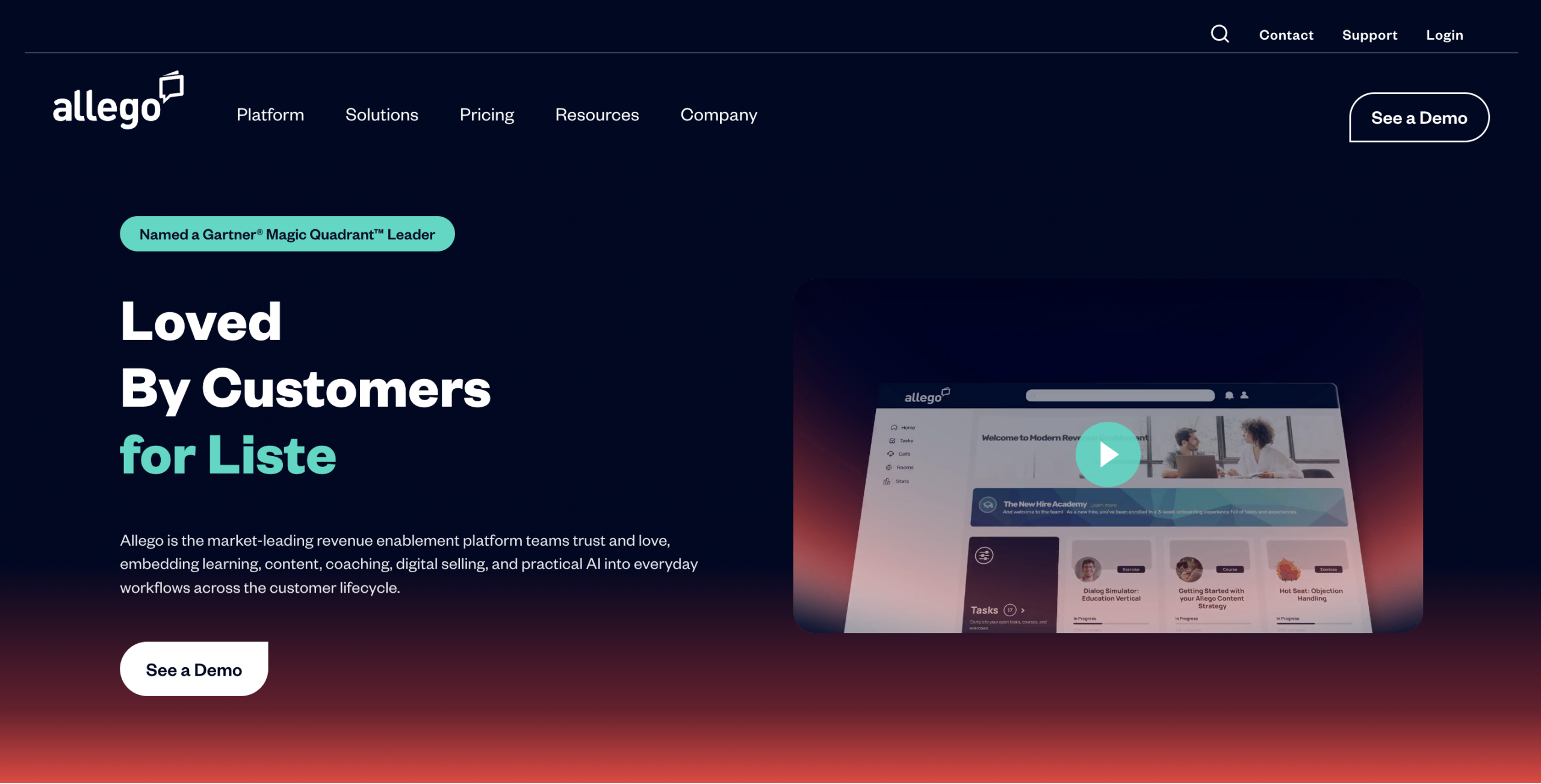
Allego unifies learning, content, and coaching in one AI-driven platform used daily by over 750,000 sales professionals. It has particularly strong traction in financial services and other regulated industries, where compliance requirements around seller certification and content governance are demanding, and emphasizes peer-to-peer, async learning built for distributed and hybrid sales teams rather than requiring everyone in the same room for training.
Key features: AI-powered practice, coaching, and certification embedded in the flow of work; governed content activation so reps get approved materials in live opportunities; peer-to-peer and async learning for distributed teams; reporting on rep readiness and content effectiveness.
Best for: Enterprise teams, especially in regulated industries, wanting the full enablement lifecycle (onboarding, coaching, certification, content) in one stable, independent platform rather than one still integrating post-merger.
7. Spotio
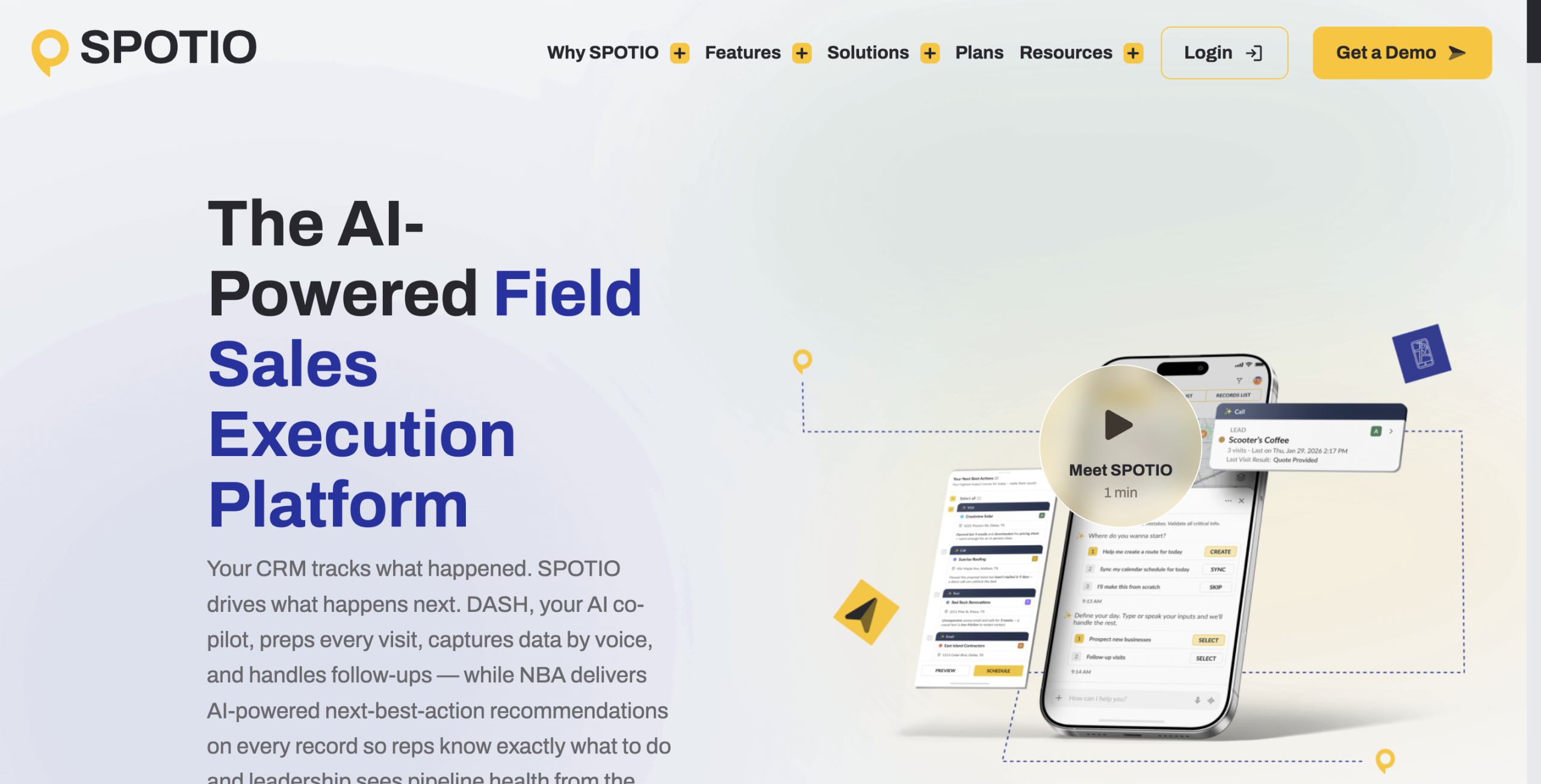
Spotio is a sales tracking and territory management platform built specifically for field sales teams, with a mobile app that lets reps manage territories, log activity, and check in automatically as they move between locations.
Key features: activity tracking and analytics, lead generation and pipeline management, territory management and customizable reporting, real-time location tracking, automatic check-ins and follow-up reminders.
Best for: Field sales organizations (door-to-door, territory-based B2B) needing location-aware activity tracking a desk-based enablement tool doesn’t provide.
8. SalesHood
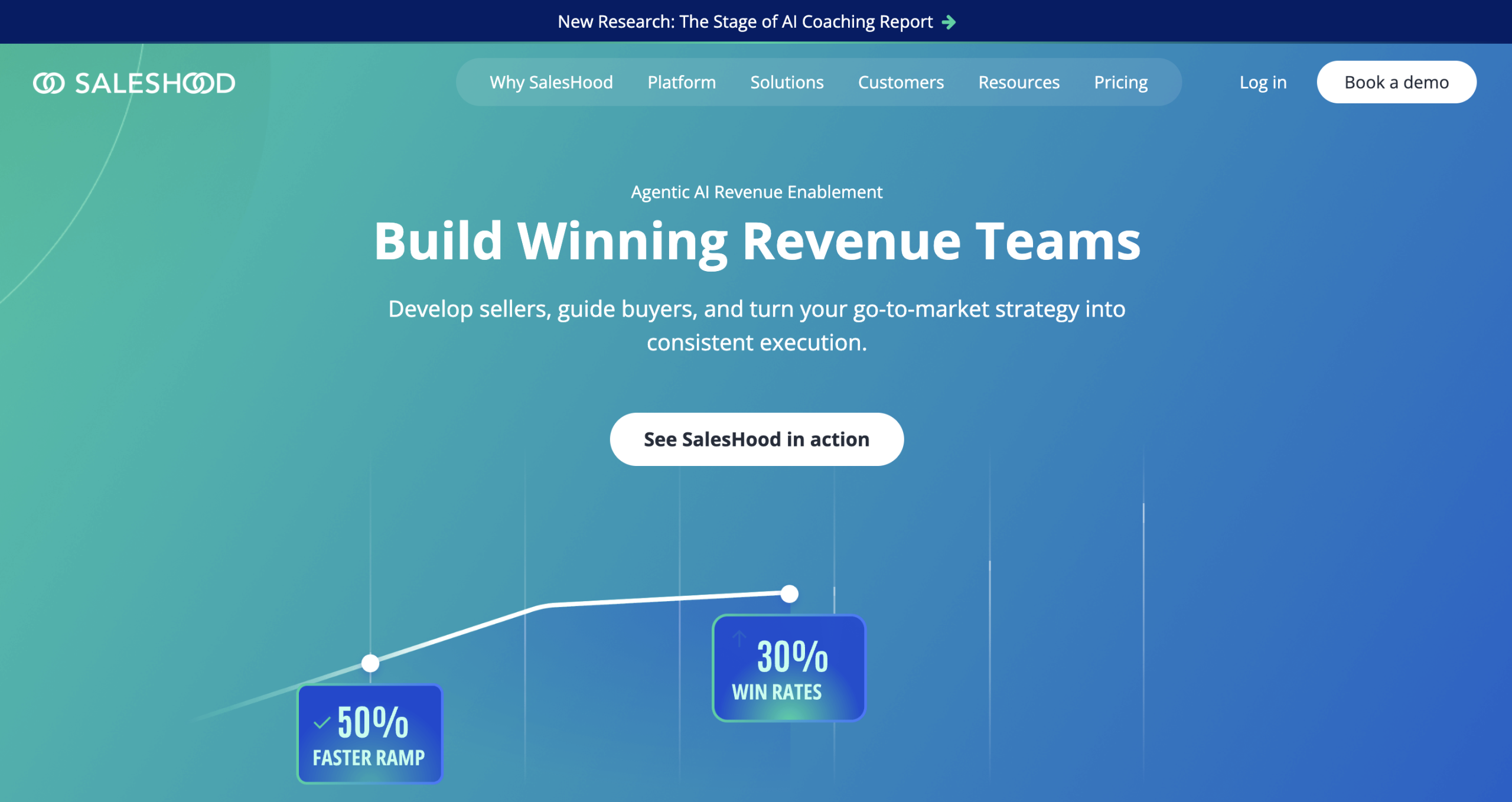
SalesHood is an independent sales enablement platform (not caught up in the recent wave of category consolidation) built around onboarding, content, and coaching in one system, with a particular focus on making it easy for RevOps and enablement teams to build and iterate on their own training programs without heavy vendor dependency.
Key features: guided onboarding and certification programs, content management tied to sales plays, peer coaching and practice tools, analytics on program and rep effectiveness.
Best for: Mid-market teams wanting a stable, independent enablement platform without the integration uncertainty currently affecting several larger, recently-merged competitors on this list.
9. VanillaSoft
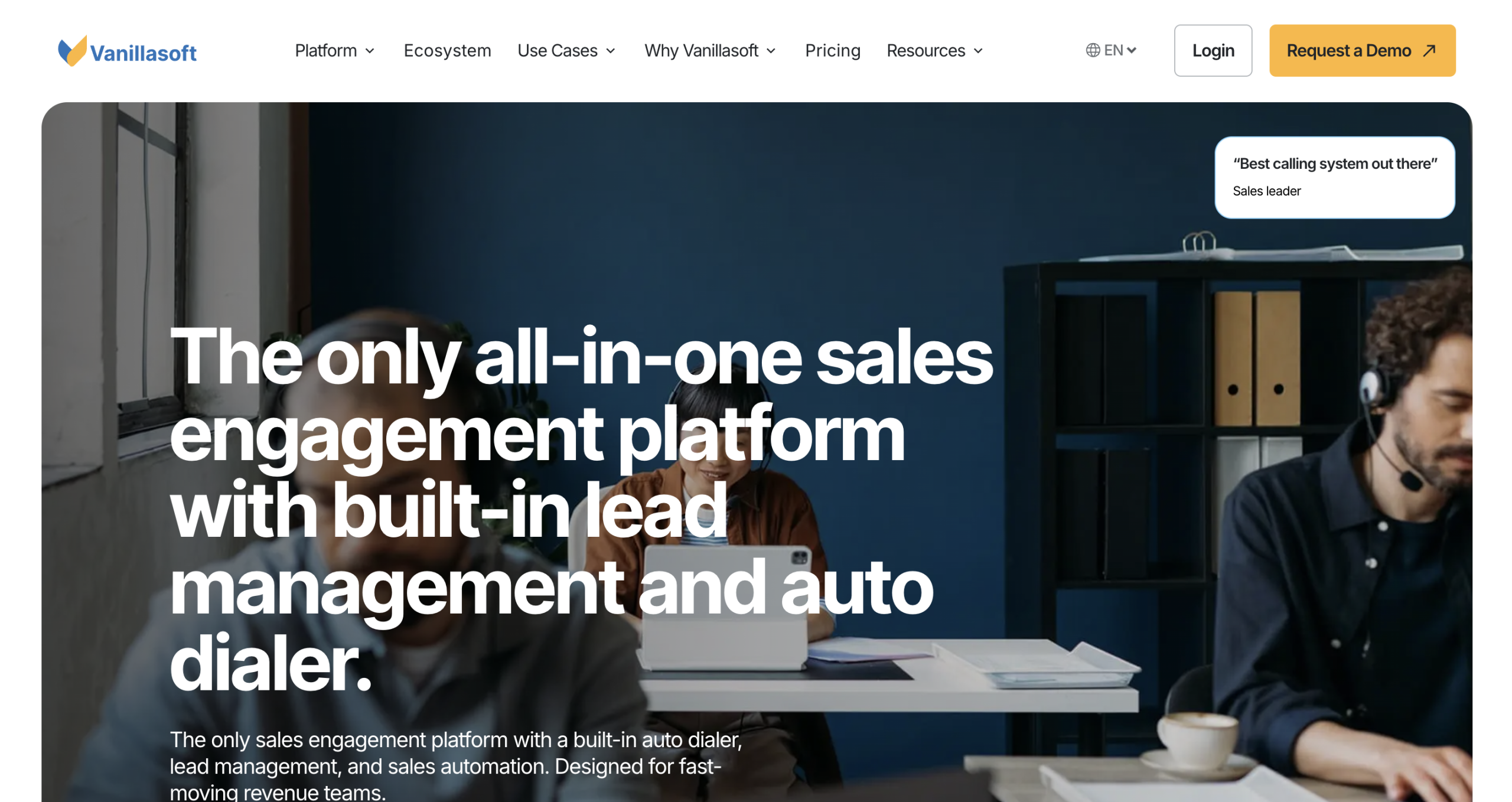
VanillaSoft is a sales engagement platform built around lead management, automated sales processes, and AI-driven lead routing, aimed at making sure reps spend their time on the leads most likely to convert.
Key features: auto-dialing and call recording, AI-driven lead routing and prioritization, sales reporting and analytics, appointment setting, multi-channel communication.
Best for: Inside sales and lead-qualification teams running high call volumes who need AI-assisted prioritization to focus effort on the strongest leads.
10. Mindtickle
Mindtickle is a sales readiness platform built around the idea that knowing the pitch and actually delivering it under pressure are different skills, most enablement tools only measure the first one. Reps practice against AI role-plays that respond dynamically to their input and get scored on how they actually handled a specific objection, with that readiness data carrying forward into live deals. Its ElevateOS layer adds live deal-risk flagging and adaptive coaching on top of the readiness foundation.
Key features: AI role-play simulations with dynamic buyer personas, readiness scoring tied to actual competency rather than activity volume, live deal-risk flagging, adaptive coaching paths per rep.
Best for: Large sales organizations wanting structured readiness (onboarding, certification, role-play) combined with live, deal-specific coaching.
Sales Operations Trends Compared
Why Sales Enablement Matters More Than Ever
- Sellers are expected to be advisors. Buyers today expect a rep to understand their specific situation and offer real insight, not just present a product. Enablement is what equips reps with the depth needed to do that credibly.
- Hybrid work is the norm, not the exception. A large and growing share of buyer interactions now happen remotely, which means reps need tools that work as well outside an office as inside one.
- The market keeps getting more crowded. Buyers are more informed and have more options, which raises the bar on differentiation through the actual sales experience, not just the product itself.
- Data-driven selling isn’t optional anymore. Companies that operate in a genuinely data-driven way consistently outperform peers on acquisition, retention, and profitability, and enablement is what turns that data into something a rep can actually act on mid-conversation.
What's Changed With AI in the Mix
Nearly every platform on this list now markets an AI feature, contextual recommendations, predictive scoring, AI-drafted outreach. That’s a real shift from a few years ago, when enablement mostly meant a content library and a training calendar. What hasn’t changed, and matters more now, is that every one of those AI features is only as useful as the data feeding it.
A contextual recommendation engine reasoning over incomplete deal data produces a confident, plausible-sounding suggestion that may have nothing to do with what’s actually happening in the deal. That’s the same underlying argument running through most of this audit: the enablement layer and the AI layer sitting on top of it both depend on the same foundation, complete, accurate CRM data, and neither one fixes a gap in that foundation on its own.
Elements of a Successful Sales Enablement Strategy
- Clearly defined buyer personas. Understanding your target audience’s pain points, needs, and buying behavior is the foundation everything else builds on.
- Investment in real content. Case studies, whitepapers, and other material that speaks directly to a buyer’s actual problem, not generic collateral.
- Sales training and coaching. Ongoing skill development on product knowledge, objection handling, and sales process, not a one-time onboarding session.
- Sales automation software. A CRM and enablement stack that lets reps track leads and deals and act on data-driven insight rather than memory.
- Continuous improvement. Regularly evaluating and adjusting the strategy based on real data and rep feedback, not a plan set once and left alone.
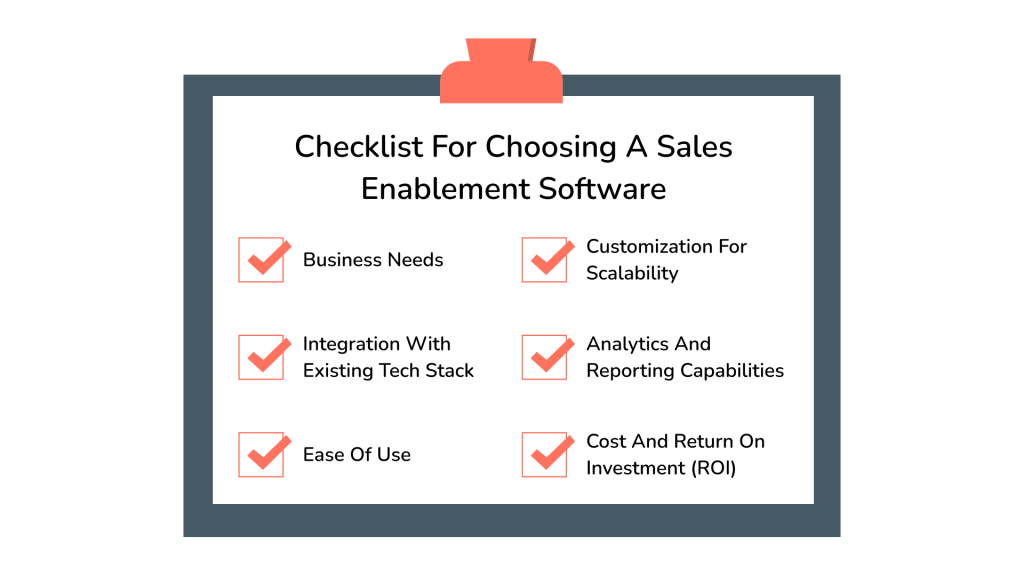
Checklist for Choosing Sales Enablement Software
- Business needs. Team size, target audience, and sales motion (remote, hybrid, field-based) all shape what “the right tool” actually looks like.
- Integration with your existing stack. Teams with close sales-marketing integration consistently see stronger quota performance than siloed teams, which makes integration with your CRM and marketing stack a genuine priority, not a nice-to-have.
- Ease of use. A steep learning curve is a real adoption risk regardless of how capable a tool is on paper.
- Customization for scale. The tool should be able to adapt as your process, team size, and customer needs evolve, not just fit today’s setup.
- Analytics and reporting. Without real reporting, you can’t tell whether the tool is actually improving rep performance or just adding another dashboard nobody checks.
- Cost and ROI. Weigh total cost of ownership, licensing, implementation, ongoing maintenance, against the actual return, not just the sticker price.
Frequently Asked Questions
Q. What’s the difference between sales enablement and sales engagement software?
Sales enablement covers the broader set of tools and content that help reps sell effectively, training, content, coaching, and data. Sales engagement is a narrower category focused specifically on outreach execution, sequencing emails and calls. Most modern platforms blend elements of both.
Q. Does AI replace the need for good sales enablement content?
No. AI features (recommendation engines, predictive scoring) work by reasoning over your existing content and data, they don’t create good content or clean data on their own. A weak content library or incomplete CRM data produces weak AI output regardless of how sophisticated the underlying model is.
Q. How do I know if my team actually needs sales enablement software, or just better process?
If reps consistently can’t find the right content, don’t know what to say to a specific objection, or spend more time on admin than selling, that’s a tooling gap. If the problem is inconsistent process or unclear ownership, fix that first, software won’t solve a process problem on its own.
Where Nektar Fits Alongside Sales Enablement Software
Every tool on this list solves a real piece of the enablement problem, content, coaching, engagement, readiness. None of them fix a different, upstream problem: most CRMs are missing a large share of what’s actually happening in a deal, which means even the best content recommendation or coaching prompt is working from an incomplete picture of the account.
Nektar isn’t a sales enablement tool, and it doesn’t compete with anything on this list. It’s the data layer underneath it. Nektar’s Data Foundation automatically captures every email, meeting, call, and calendar event and writes it natively into Salesforce, HubSpot, or Dynamics, with zero rep effort required, so that whichever enablement platform you choose from this list is actually reasoning over complete, current deal data rather than whatever a rep remembered to log.
If your enablement tool’s AI recommendations feel generic or occasionally off-base, that’s often a data problem, not a tool problem. Get a free CRM scan to see how complete your own pipeline activity actually is, or explore Daisy AI to see what the enablement layer above looks like once that gap is closed.
Enjoyed our content? Follow Nektar on LinkedIn