15 Sales Optimization Tools to Fast Track Your Deals in 2026
- Sales, Sales Tech Stack
- 11 min
- Updated: August 4, 2026
Imagine a machine with every part in working condition, run daily, that still produces suboptimal output. The issue is oiling. Without proper, regular oiling, the various parts can’t function together well. Sales optimization tools are that oiling, keeping the sales function running at its actual potential rather than just technically operational.
Get our latest insights into your inbox

What Is Sales Process Optimization?
Sales process optimization means refining and improving the steps involved in selling a product or service, lead generation, qualification, needs assessment, proposal creation, negotiation, and closing. The goal is greater efficiency and effectiveness, which translates directly into more successful sales and more revenue.
How Sales Optimization Tools Work in B2B Sales
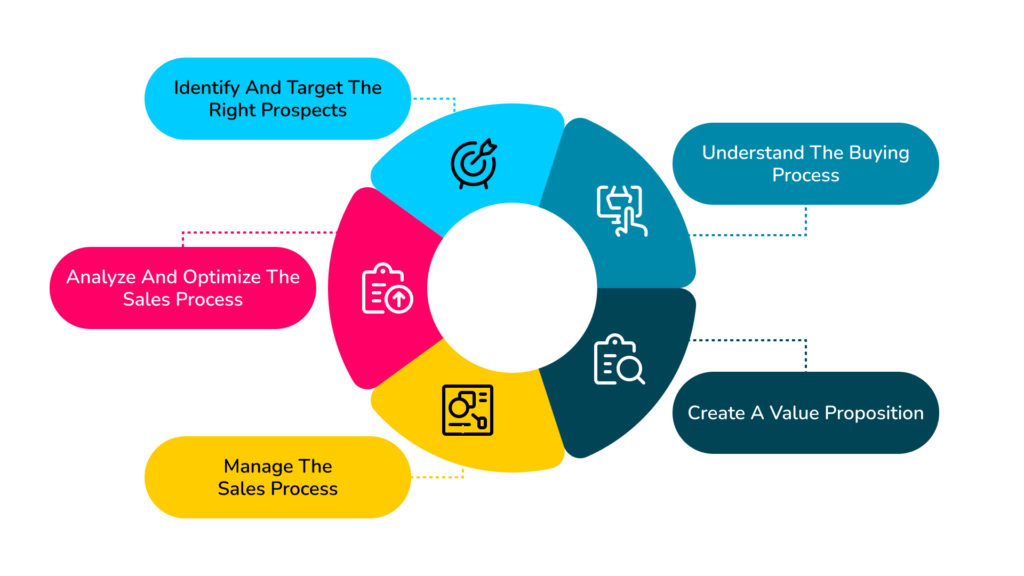
B2B sales cycles run longer and more complex than B2C, typically involving multiple decision-makers and influencers, and requiring a rep to demonstrate specific business value rather than a generic pitch. Sales process optimization in B2B specifically involves:
Identifying and targeting the right prospects. Using data analytics to find businesses that are genuinely a good fit, and building targeted outreach around that fit rather than a broad net.
Understanding the buying process. Identifying the actual decision-makers in a deal, understanding their individual needs and priorities, and tailoring messaging to each of them specifically.
Creating a value proposition. Articulating specifically how a product or service solves the prospect’s actual pain points, not a generic feature list.
Managing the sales process. Using CRM software to track leads and opportunities, setting regular touchpoints, and managing negotiation and closing deliberately rather than reactively.
Analyzing and optimizing continuously. Reviewing sales data and feedback to identify what’s actually working, and adjusting the process accordingly rather than running the same playbook indefinitely.
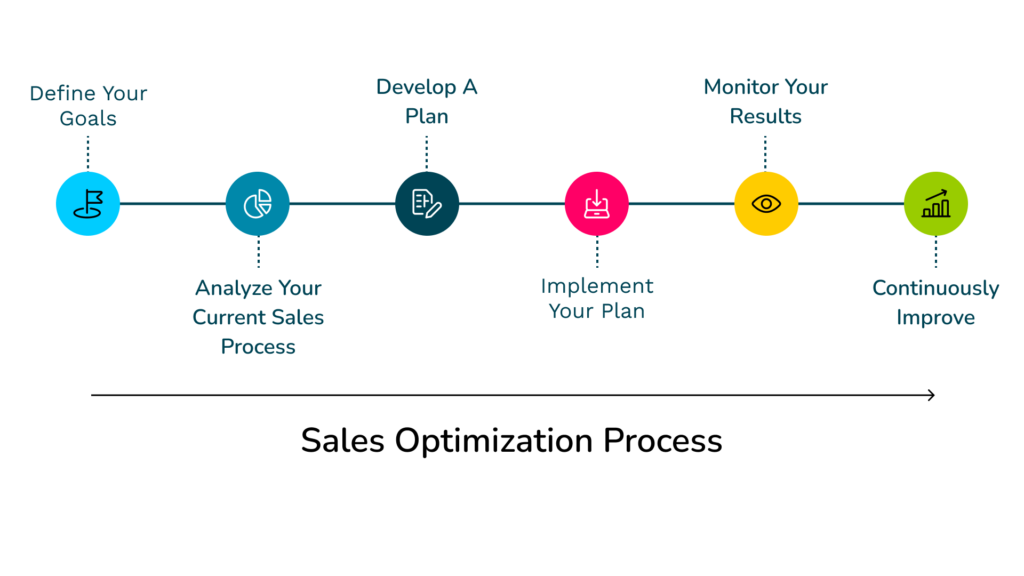
A Closer Look at the Sales Optimization Process
- Define your goals. Set specific targets, revenue, deal count, or whatever metric matters most to your business right now.
- Analyze your current process. Review sales data, talk to the team, and gather customer feedback to find where the real friction is.
- Develop a plan. Based on that analysis, decide what actually needs to change, strategy, tooling, or training.
- Implement the plan. Roll out new processes or tools, train the team, and adjust strategy as needed.
- Monitor your results. Track progress against the original goals, and keep gathering data and feedback as you go.
- Continuously improve. Sales optimization isn’t a one-time project. Keep refining based on what the data and your team are actually telling you, and be ready to make bigger changes if goals or market conditions shift meaningfully.
Use Cases of Sales Optimization Tools
Sales optimization spans automating lead generation, personalizing the sales experience, improving buying-group intelligence, and building out a real sales enablement strategy. A few specific examples:
Automate lead generation. Identify potential customers against specific criteria automatically, rather than relying solely on manual prospecting.
Personalize the sales experience. Understand each stakeholder in a buying committee individually, and tailor messaging to resonate with each of them, which also supports better multithreading by design.
Open more doors with more active contacts. Equip reps with additional contacts automatically discovered across the sales tools they already use, rather than a list built by hand.
Improve buying-group intelligence. Give reps immediate access to a buying committee map, so they know exactly whom to engage, how, and when to move a deal forward.
Real-time activity intelligence. Automatically capture structured and unstructured data and update it against active opportunities in real time, with no manual work from reps.
Implement a sales enablement strategy. Equip reps with the tools, training, and resources they actually need, a sales playbook, CRM access, and regular training on technique and best practice.
Optimize the sales funnel. Identify exactly where prospects drop off and simplify the process at that specific point, rather than guessing at what’s broken.
Use customer data to drive sales. Build targeted campaigns and personalized outreach around real buying patterns, rather than a one-size-fits-all message.
15 Best Sales Optimization Tools for 2026
1. Freshsales Suite
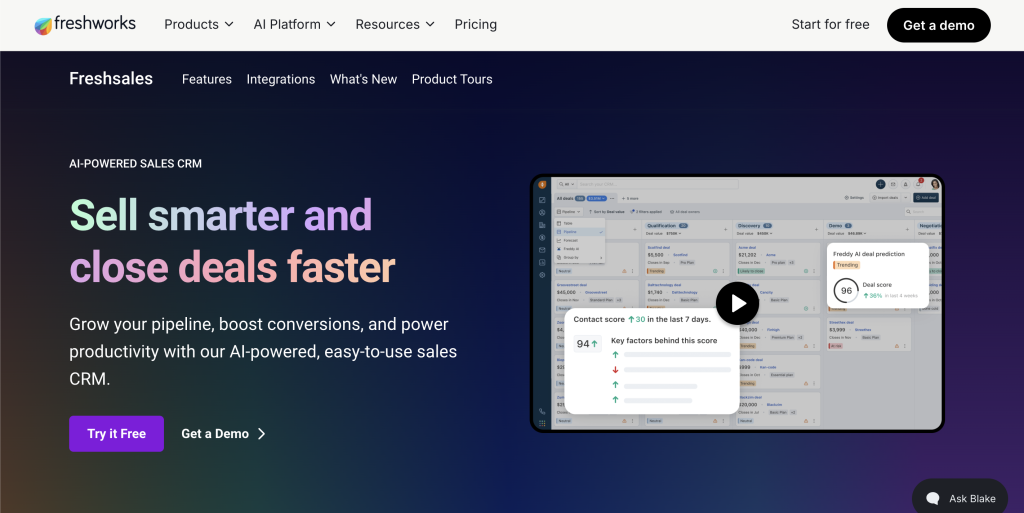
Freshsales Suite (Freshworks’ rebrand of its former standalone Freshsales product) is a comprehensive automation solution giving sales teams built-in email, phone, chat, and telephony, along with AI-powered insight to attract leads and drive deals. Native CPQ makes generating and sharing quotes straightforward, and the platform pulls sales, marketing, and support data into one system so a rep isn’t reconstructing customer context across separate tools.
Key features: built-in phone, email, and chat within the CRM itself; AI-powered deal insights and lead scoring; native CPQ for quote generation; visual pipeline and deal management; workflow automation for repetitive follow-up tasks.
Best for: Teams wanting communication channels, CPQ, and CRM unified in one platform rather than stitched together from separate vendors.
2. Aviso AI
Aviso brings AI-driven forecasting, pipeline inspection, and deal risk analysis into one workspace, paired with MIKI, a conversational AI orchestrator that can query pipeline data and trigger CRM updates directly rather than just displaying a dashboard.
Key features: MIKI conversational AI orchestrator for natural-language pipeline queries, predictive forecasting trained on historical deal and engagement data, real-time deal risk and coaching alerts, no-code agent studio for building custom guided workflows.
Best for: Teams wanting AI agents built directly into forecasting and pipeline execution, not just a static report.
3. Kluster
Kluster standardizes the forecasting and pipeline-review process, giving teams a consistent cadence and reporting structure rather than rebuilding the process every cycle, with AI-driven pipeline-change analysis flagging where a forecast is quietly drifting from reality.
Key features: live forecasting with historical accuracy tracking, pipeline-change analysis to catch drift early, security alerts for anomalous pipeline activity, revenue analytics across the full funnel.
Best for: RevOps teams wanting forecast consistency and drift detection without building the process manually in spreadsheets.
4. ClickPoint Software
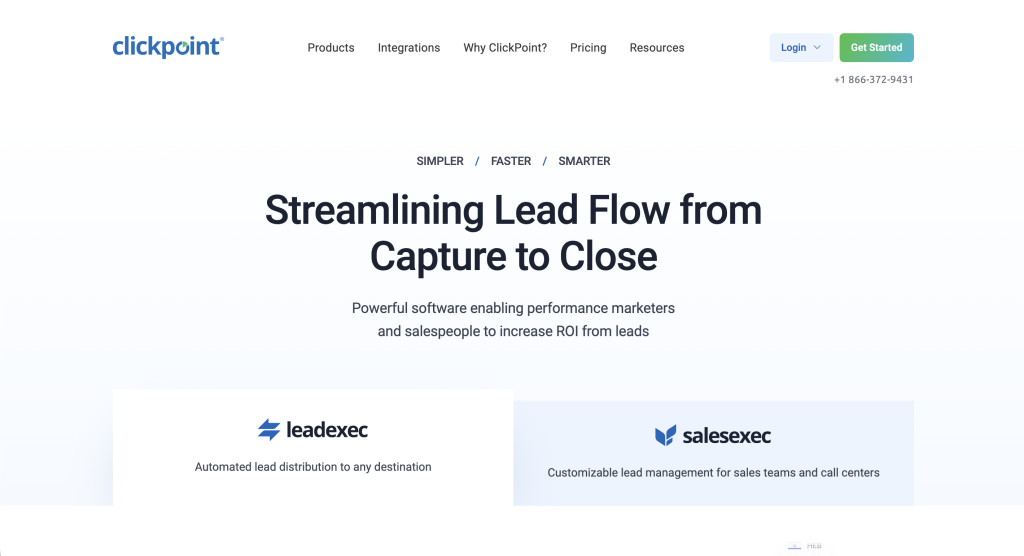
ClickPoint is a cloud-based lead management solution that helps reps reach more prospects and close deals more efficiently, with a track record specifically in improving return on lead follow-up. It’s built around the idea that speed and consistency of follow-up, not just volume of leads, is what actually determines conversion, and it’s been applied across a range of B2C-adjacent industries beyond straight B2B sales.
Key features: automated lead distribution and prioritization, multi-channel outreach (call, text, email) from one interface, lead scoring based on engagement, call tracking and recording, campaign performance reporting.
Best for: Teams whose core bottleneck is lead follow-up speed and consistency, particularly in high-volume, time-sensitive lead environments.
5. LeadSquared
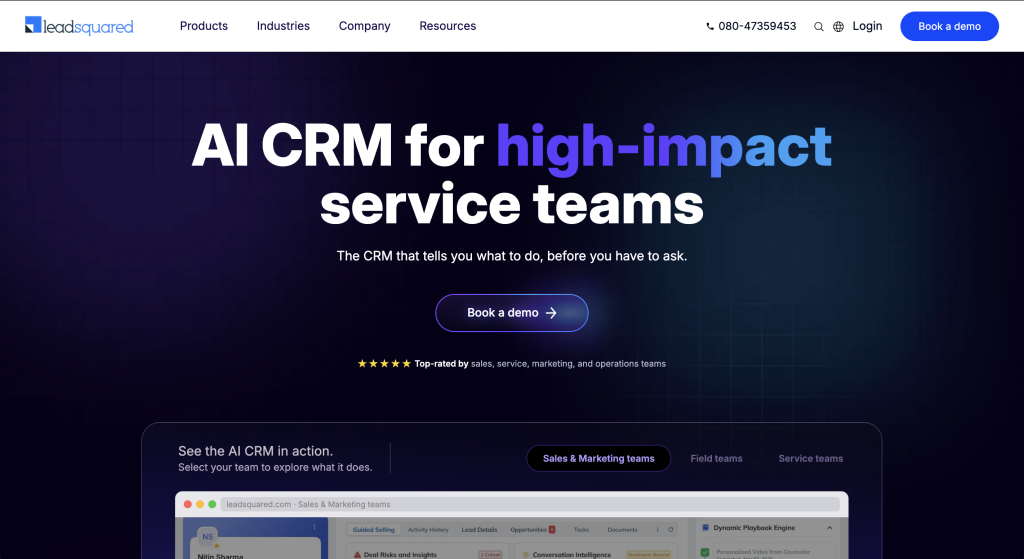
LeadSquared is a cloud-based marketing automation and CRM platform serving e-commerce, finance, education, software, real estate, and hospitality, covering lead capture, sales CRM, lead scoring, landing pages, and role-based access in one platform. Its cross-industry focus means it ships with pre-built workflows tuned to specific verticals rather than a purely generic sales process.
Key features: lead capture across web forms, ads, and third-party sources; behavior-based lead scoring; landing page builder; sales and marketing automation workflows; role-based user access and permissions; reporting and analytics across the funnel.
Best for: Mid-market teams in lead-volume-heavy industries (education, real estate, finance) wanting marketing automation and sales CRM combined in one platform.
6. ZoomInfo Chorus
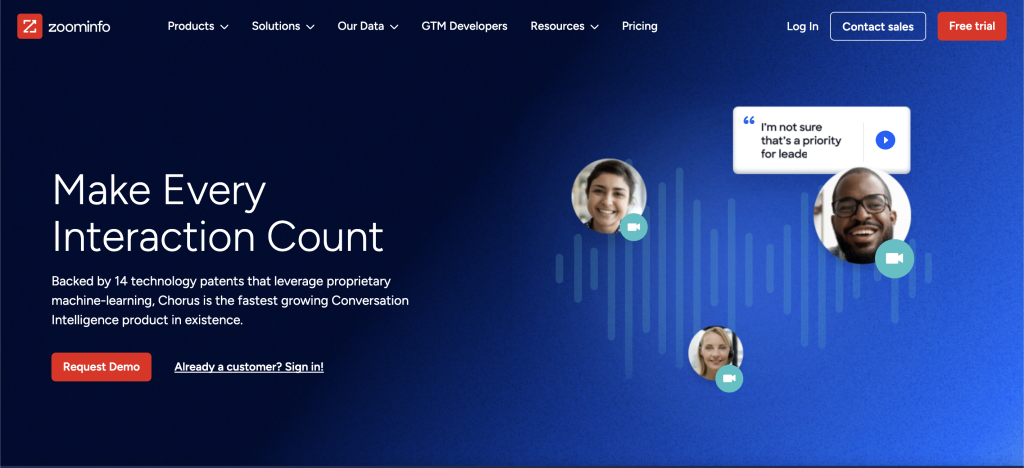
Chorus has been part of ZoomInfo since 2021 (not Zoom, a common mix-up) and records and transcribes sales calls, using AI to detect sentiment, keywords, and key moments in real time, giving managers live coaching visibility rather than a post-call summary days later.
Key features: call recording and transcription, real-time sales coaching during live calls, AI-detected sentiment and keyword analysis, deal-risk flagging based on conversation content, backed by ZoomInfo’s broader B2B data layer.
Best for: Teams wanting conversation intelligence as the core of their optimization strategy, particularly alongside ZoomInfo for prospecting.
7. Zoho CRM
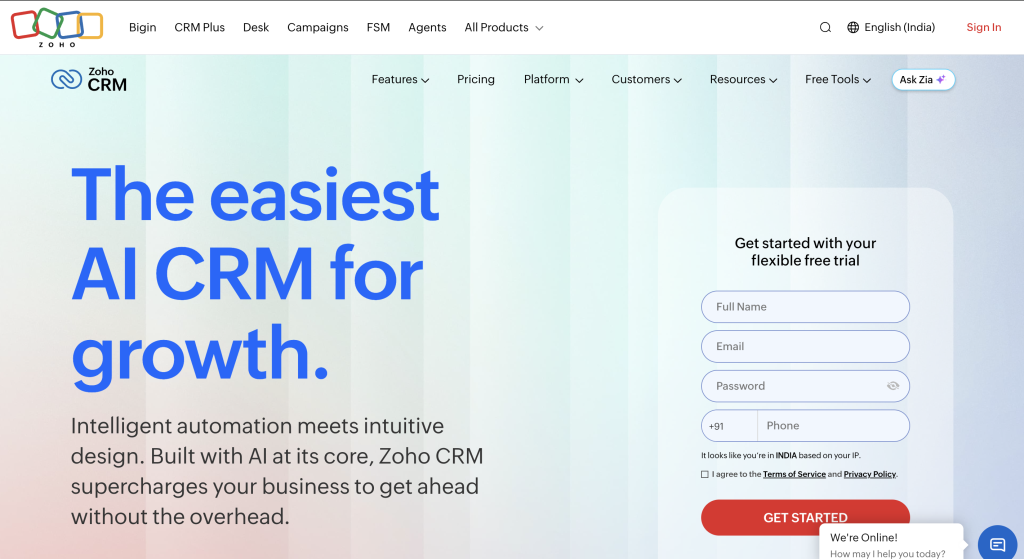
Zoho CRM is a full-featured CRM for SMBs and larger enterprises, covering contact management, sales funnel management, workflow automation, an AI-powered assistant, forecasting, and support, with integrations across several hundred common business applications. As part of the broader Zoho software ecosystem, it also connects natively with Zoho’s own finance, HR, and marketing products for teams already standardized on that suite.
Key features: AI-powered sales assistant (Zia) for predictions and anomaly detection, multichannel engagement (email, phone, chat, social), sales forecasting and territory management, extensive third-party and native Zoho ecosystem integrations, customizable workflows and blueprints.
Best for: SMBs and mid-market teams wanting a comprehensive, affordable CRM, especially those already using other Zoho products.
8. Zendesk Sell
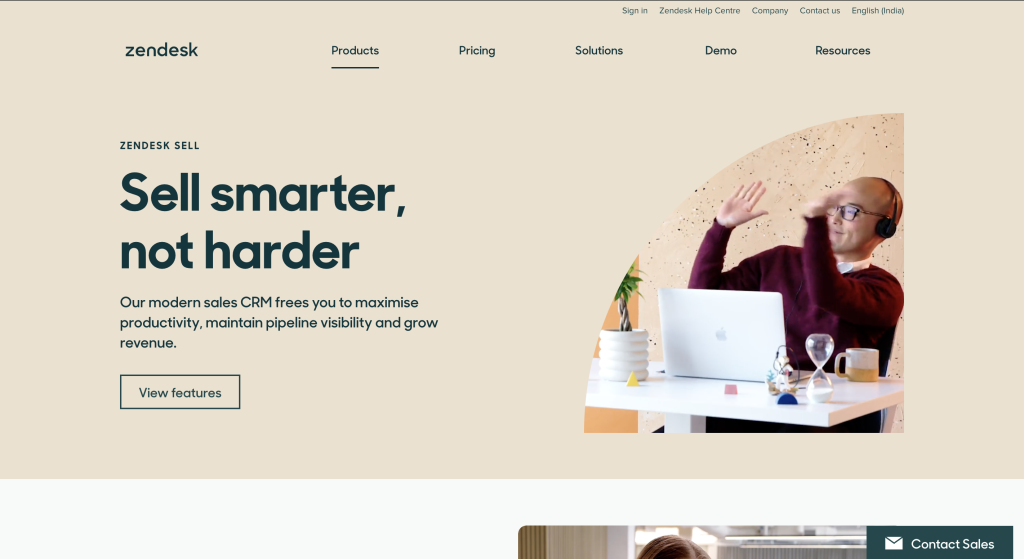
Zendesk Sell is a modern, easy-to-configure sales CRM built to make hitting targets easier without sacrificing customer experience, with productivity features, analytics, and a unified customer view across sales and service. Being part of the broader Zendesk product family means it shares data natively with Zendesk’s support tools, useful for teams where sales and support need visibility into the same account history.
Key features: unified sales and support customer view, mobile-first CRM with offline access, sales analytics and pipeline reporting, email and call tracking, integration with the broader Zendesk support suite.
Best for: Teams already on Zendesk for support who want sales and service working from one shared customer record.
9. SugarAI (formerly SugarCRM)
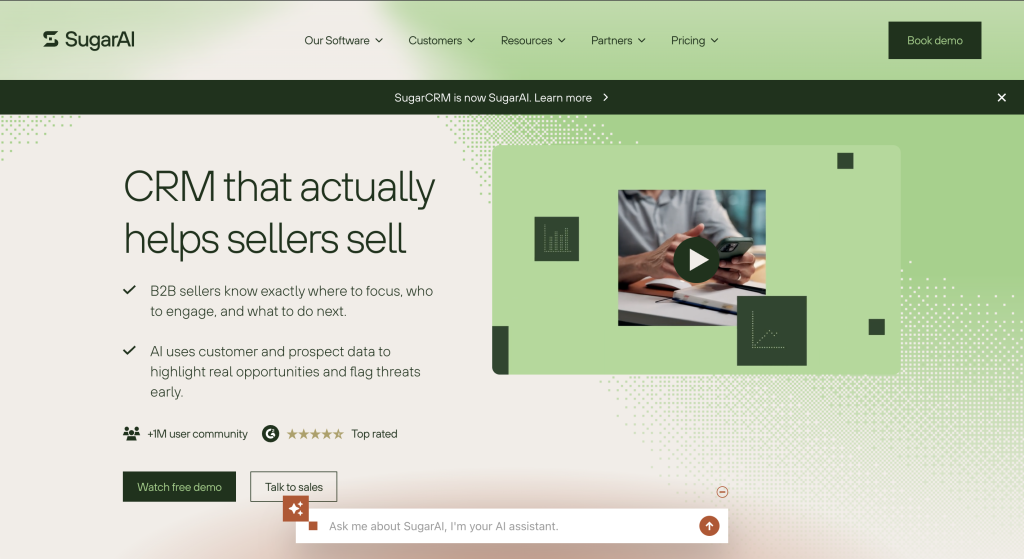
SugarCRM rebranded fully to SugarAI in April 2026, retiring a 22-year-old brand name and repositioning around what it calls precision selling, transforming CRM from a system of record into a system of proactive sales guidance. Its standout feature, Sugar sales-i, pulls ERP order data directly into the CRM to surface cross-sell opportunities and buying-pattern changes without a separate BI tool, with 180+ ERP integrations. It’s recognized as a Nucleus Research Leader for six consecutive years, but pricing starts with a 15-user minimum (roughly $885/month floor), which makes it a poor fit for smaller teams.
Key features: Sugar sales-i ERP-to-CRM data integration for cross-sell and churn signals, AI-driven proactive account and opportunity guidance, 180+ ERP integrations (SAP, Oracle, NetSuite, Epicor), customizable workflows and reporting, mobile access (though reviewers consistently flag it as slow).
Best for: Mid-market to enterprise B2B companies in manufacturing, wholesale, or distribution that need ERP data connected directly to CRM insight, and can absorb the 15-user pricing floor.
10. Highspot
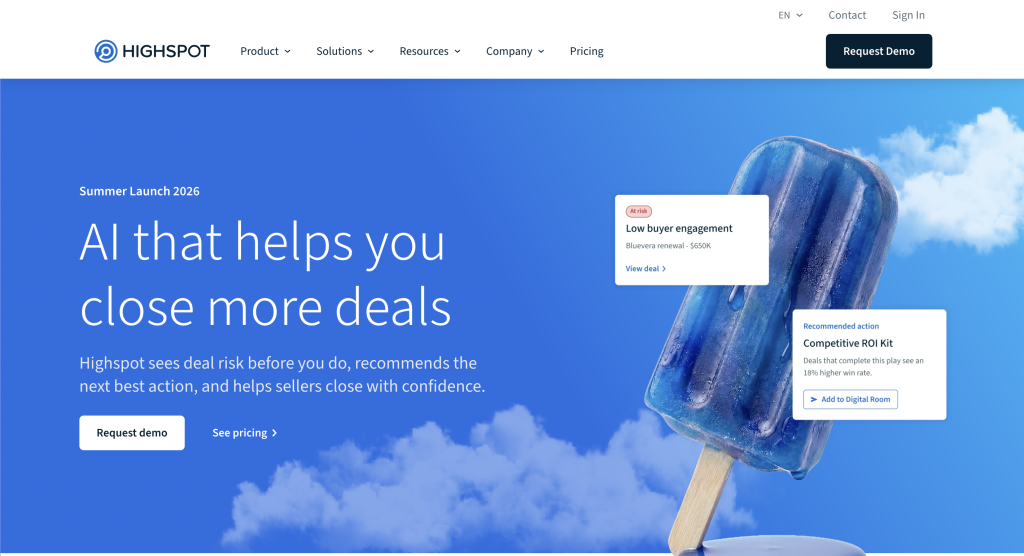
Highspot is one of the category’s most established sales enablement platforms, combining AI-guided content recommendations, structured sales plays, and built-in coaching analytics that surface which content actually correlates with deals closing. Highspot and Seismic announced a merger in February 2026, with the combined company expected to operate under the Seismic brand over time, worth knowing if you’re evaluating either as a long-term platform decision.
Key features: AI-guided content recommendations tied to deal stage and buyer persona, structured sales plays encoding a defined methodology, built-in coaching and call analytics, enterprise-grade content governance.
Best for: Enterprise teams needing AI-driven content guidance and coaching analytics at scale, with the caveat that the product is currently integrating with its former competitor’s stack.
11. Mindtickle
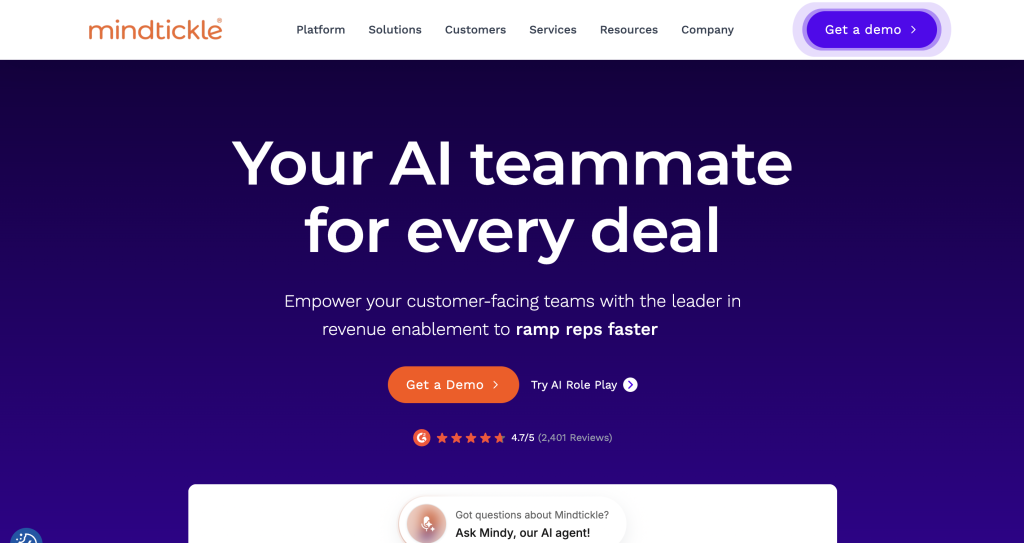
Mindtickle is a sales readiness platform built around AI role-play simulations that respond dynamically to a rep’s input, scoring how they actually handled a specific objection rather than just tracking training completion. Its ElevateOS layer adds live deal-risk flagging on top of the readiness foundation, connecting coaching directly to real pipeline outcomes.
Key features: AI role-play simulations with dynamic buyer personas, readiness scoring tied to actual competency, live deal-risk flagging via ElevateOS, adaptive coaching paths per rep.
Best for: Large sales organizations wanting structured readiness combined with live, deal-specific AI coaching, rather than a static training library.
12. Revenue.io
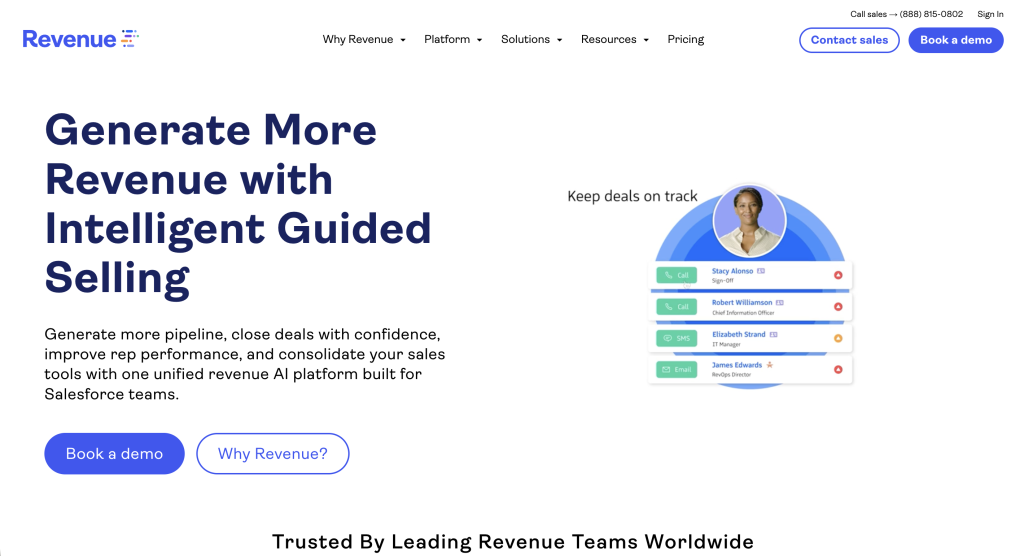
Revenue.io (formerly ringDNA) uses AI to guide reps toward the most effective approach for a given deal in real time, automating playbook enforcement and surfacing what a rep and prospect need at the exact right moment in a live call rather than after the fact.
Key features: real-time conversation guidance during live calls, automated playbook enforcement tied to deal stage, AI-generated coaching notes based on what actually happened on a call, forecasting and pipeline visibility layered on top.
Best for: Teams wanting live, in-the-moment guidance during calls, not just pre-call prep or post-call analysis.
13. 6sense
6sense is a predictive, AI-driven account intelligence platform that identifies accounts already showing buying intent and predicts where they sit in the buyer journey, so sales and marketing can engage at the right moment with the right message rather than working a flat account list.
Key features: intent monitoring across the web and third-party data sources, predictive account scoring based on likelihood to convert, personalized, account-specific engagement recommendations, revenue analytics tying campaign activity to pipeline movement.
Best for: Teams running ABM at scale who want predictive scoring to prioritize which accounts to engage first.
14. Cien
Cien analyzes sales performance data to identify what’s actually driving, or blocking, quota attainment, factoring in behavioral and human elements alongside raw activity metrics rather than treating every rep’s numbers the same way.
Key features: sales performance dashboards, rep scorecards benchmarked against team performance, deal prioritization based on fit and engagement signals, AI-driven coaching intelligence.
Best for: Sales leaders wanting a diagnostic layer on top of existing CRM data to understand why performance varies across the team.
15. Pipedrive
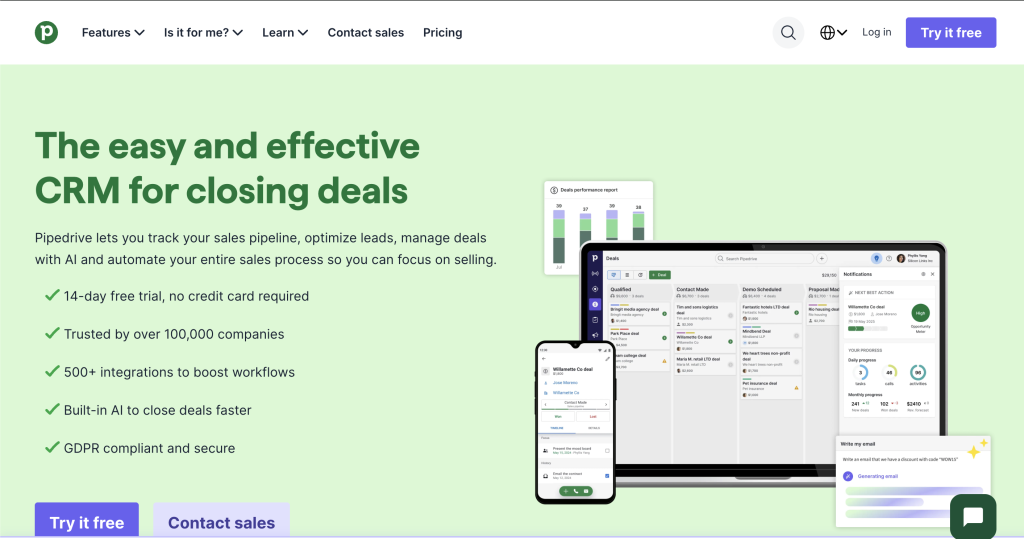
Pipedrive is a visual, pipeline-first CRM built around making deal stages and next actions immediately obvious, rather than burying the pipeline under a broader feature set. It’s consistently one of the most-recommended CRMs specifically for smaller sales teams that want something they can set up and start using the same day.
Key features: visual, drag-and-drop pipeline management, customizable deal stages, AI-assisted lead prioritization, built-in email sync and activity reminders, mobile app with full pipeline access.
Best for: Small and mid-market sales teams wanting a fast-to-adopt, visually driven pipeline without a lengthy setup process.
Frequently Asked Questions
Q. What's the difference between a CRM and a sales optimization tool?
A CRM stores and manages customer and deal records. A sales optimization tool goes further, actively surfacing insight (buying-group coverage, deal risk, engagement patterns) that helps a rep or manager improve the sales process itself, not just track it. Many modern CRMs now bundle both functions.
Q. How do I choose the right sales optimization tool for my business?
Start with the specific bottleneck you're trying to solve, lead generation, buying-group visibility, pipeline tracking, or data capture, rather than picking the tool with the longest feature list. Budget and team size matter too; several tools on this list are built specifically for small businesses, while others are built for enterprise-scale complexity.
Where Nektar Fits Alongside a CRM
Every tool on this list is, at its core, a CRM, a system for storing and managing contacts, deals, and pipeline. Picking the right one comes down to your specific budget, team size, and requirements.
Nektar is the layer that makes sure whichever CRM you choose is actually working from complete, accurate data. Nektar’s Data Foundation automatically captures email, meeting, call, and calendar activity and writes it natively into Salesforce, HubSpot, or Dynamics, with zero rep effort required, so contacts, deals, and buying-group data reflect what’s actually happening rather than what a rep remembered to log. Daisy AI then surfaces deal risk flags, buying-group coverage, and engagement scoring directly on top of that clean data.


Tim Seamans
VP, AI Acceleration & Transformation
With Nektar, we unlocked GTM context for our AI apps, driving $2M in directly attributed expansion revenue and uncovering $80M+ in additional pipeline by unifying previously siloed signals and engagement data.
If your sales optimization problem is really a data completeness problem, incomplete contacts, missing activity, a pipeline that doesn’t reflect reality, that’s a gap no CRM on this list fixes on its own.
Get a free CRM scan to see how complete your own pipeline data actually is, whichever CRM above you end up choosing.
Enjoyed our content? Follow Nektar on LinkedIn