5 Revenue Operations Tools to Consider in 2026
- RevOps
- 10 min
- July 20, 2026
Revenue operations exists to make sales, marketing, and customer success run as one connected system instead of three teams working off different numbers. The software behind that job has to do two things well: give the team accurate, complete data, and turn that data into action without adding more manual work.
A growing share of RevOps tooling now includes AI agents that don’t just surface an insight for a person to act on, but they act directly, updating fields, flagging risk, or triggering workflows inside the CRM.
Gartner projects 40% of enterprise applications will include task-specific AI agents by the end of 2026. That raises the bar for what “revenue operations software” needs to guarantee: not just visibility, but data clean enough for both a human and an agent to trust.
Get our latest insights into your inbox

What is Revenue Operations?
Revenue operations, or RevOps, is the function that aligns sales, marketing, and customer success around shared data, shared process, and a shared revenue goal, instead of each team optimizing its own metrics in isolation. Done well, it removes the guesswork from forecasting, shortens the gap between a problem showing up in the data and someone acting on it, and gives leadership one trustworthy view of the business instead of three conflicting ones.
5 Revenue Operations Tools to Consider in 2026
- Nektar: GTM data foundation and AI signal layer
- Backstory (formerly People.ai): AI-driven activity capture and revenue answers
- SalesDirector.ai (a Bigtincan company): Automated activity capture and revenue insights
- HubSpot Data Hub (formerly Operations Hub): Data sync and hygiene automation
- Aviso AI: Agentic forecasting and revenue execution
Overview: 5 Tools to Consider for Revenue Operations
1. Nektar
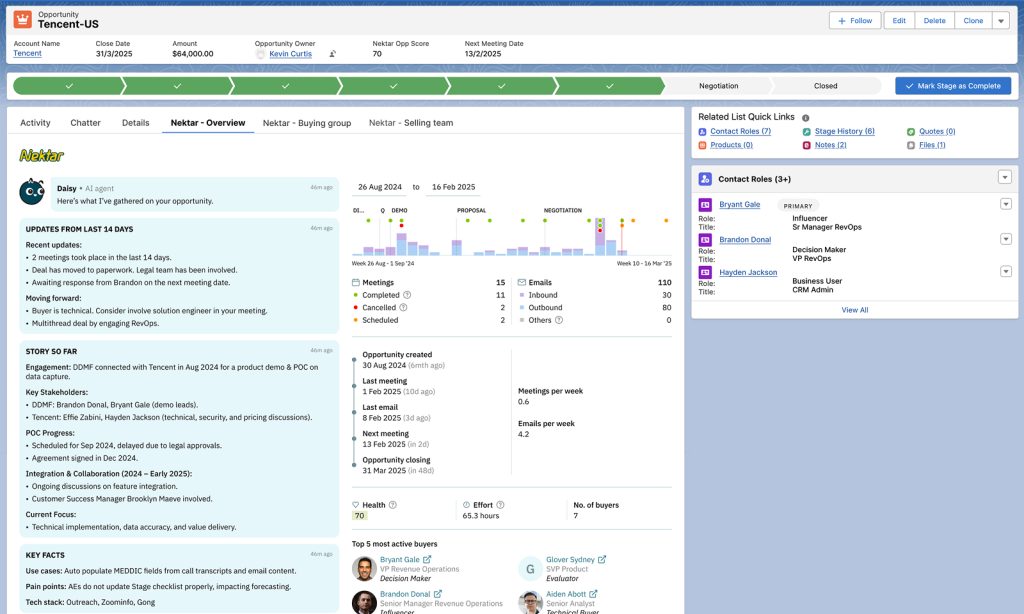
Nektar is a GTM telemetry platform that automatically captures every customer interaction like emails, meetings, calls, and Slack, and delivers structured, clean data to your CRM, data warehouse, and AI applications. This requires zero manual entry from sales reps.
Nektar ensures that what actually happens across your deals gets recorded. Most CRMs reflect only what reps remember to log. Nektar captures the rest, mapping interactions to the right accounts, contacts, and opportunities, then writing that data natively into Salesforce and Snowflake without any behavior change from the team.
For revenue organizations adopting AI, this matters more than ever. AI agents act on CRM data. When that data is incomplete or stale, agents make wrong decisions at machine speed with no human in the loop. Nektar acts as the data foundation that makes AI-driven forecasting, deal intelligence, and agent workflows trustworthy.
The platform also surfaces complete buying committees by identifying every stakeholder involved in a deal across email and calendar signals, not just the contacts a rep manually added. This gives RevOps and sales leaders a full picture of deal engagement, not fragments.
Pricing: Nektar is priced based on team size and scope rather than a flat per-seat rate. A free, no-obligation CRM scan will show you how much of your own pipeline data is currently missing before you commit to anything.
2. Backstory (formerly People.ai)
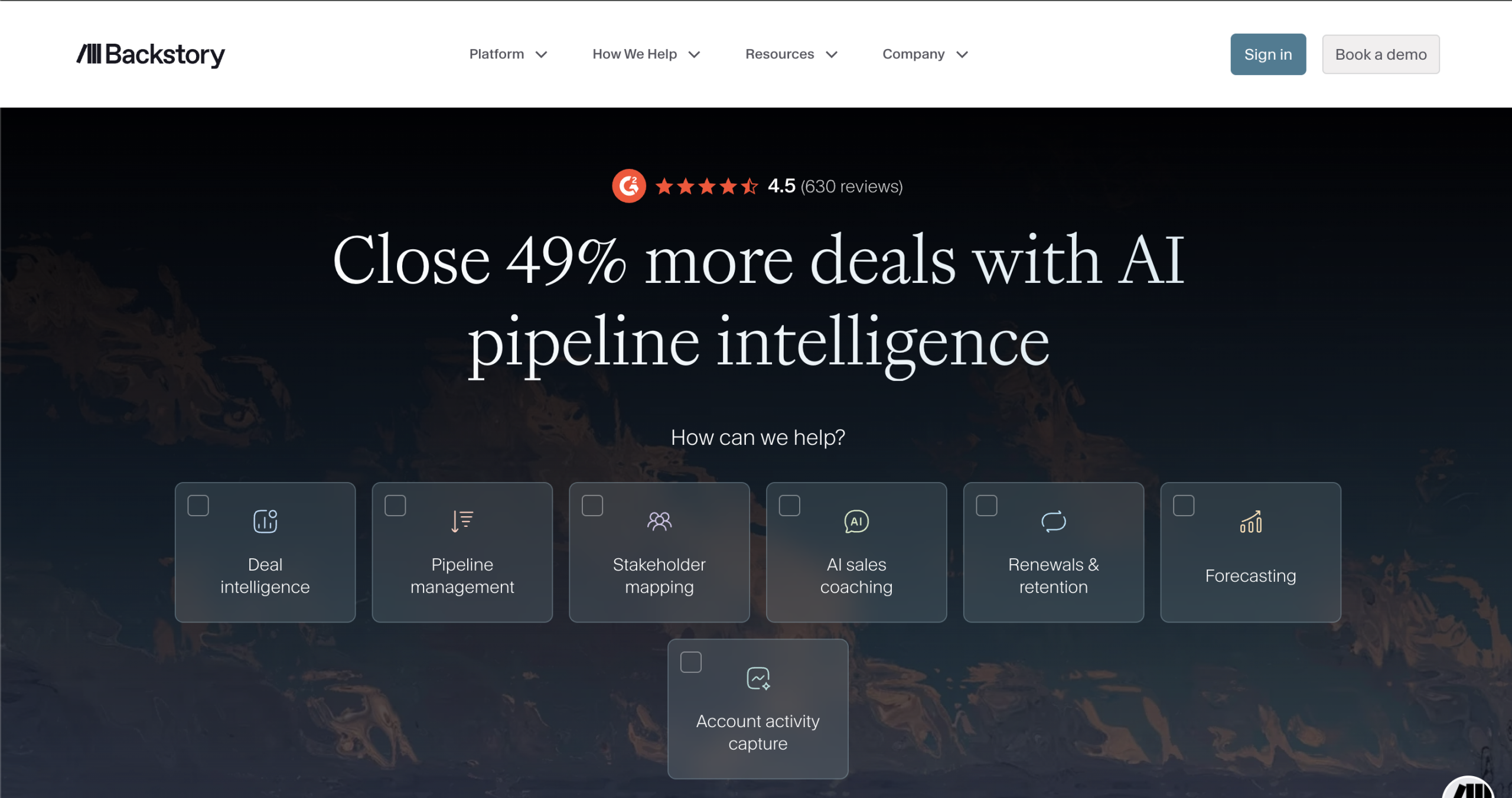
People.ai rebranded to Backstory in April 2026, repositioning itself as a “Revenue Answers Platform” — reasoning over activity data captured from email, meetings, and calls to answer natural-language questions about deal and account health. The rebrand adds a more conversational interface on top of the same underlying activity-capture approach of the product.
Pricing: Not publicly listed as a simple rate card; contact the vendor for a quote.
3. SalesDirector.ai (a Bigtincan company)
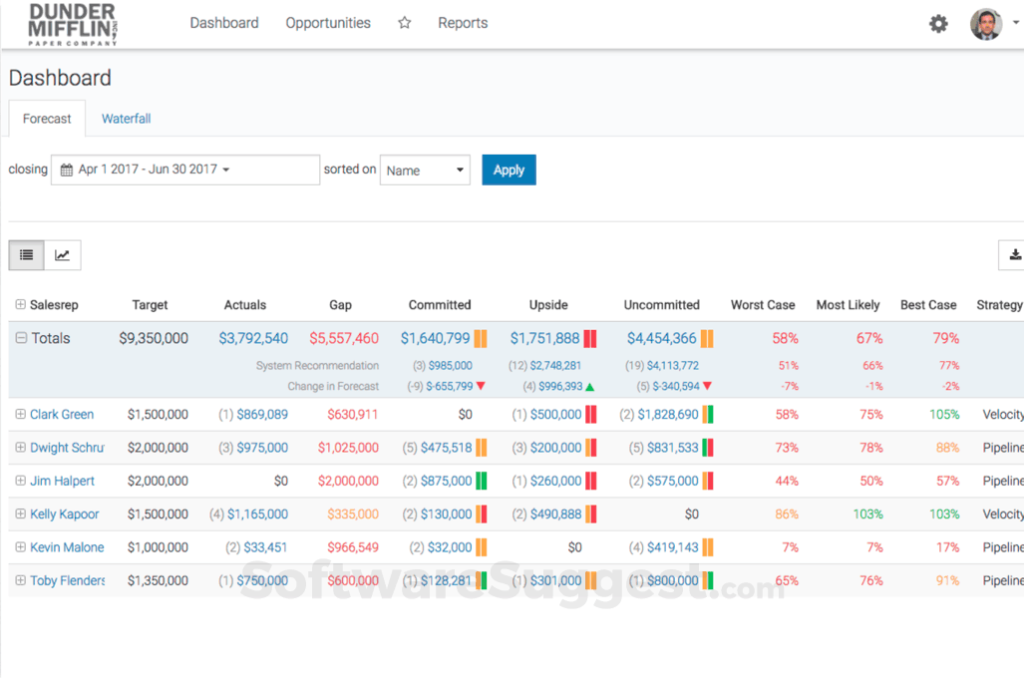
SalesDirector.ai automates capture of email and calendar activity between reps and buyers, layering on account-health scoring and stakeholder analysis. It’s operated as part of Bigtincan’s sales-enablement suite since a 2023 acquisition, and remains a reasonable fit for teams that want activity capture bundled with broader sales-enablement content and coaching tools.
Pricing: Historically started around $29/month per user for the base activity-capture tier; confirm current pricing directly with Bigtincan, since packaging has shifted since the 2023 acquisition
4. HubSpot Data Hub (formerly Operations Hub)
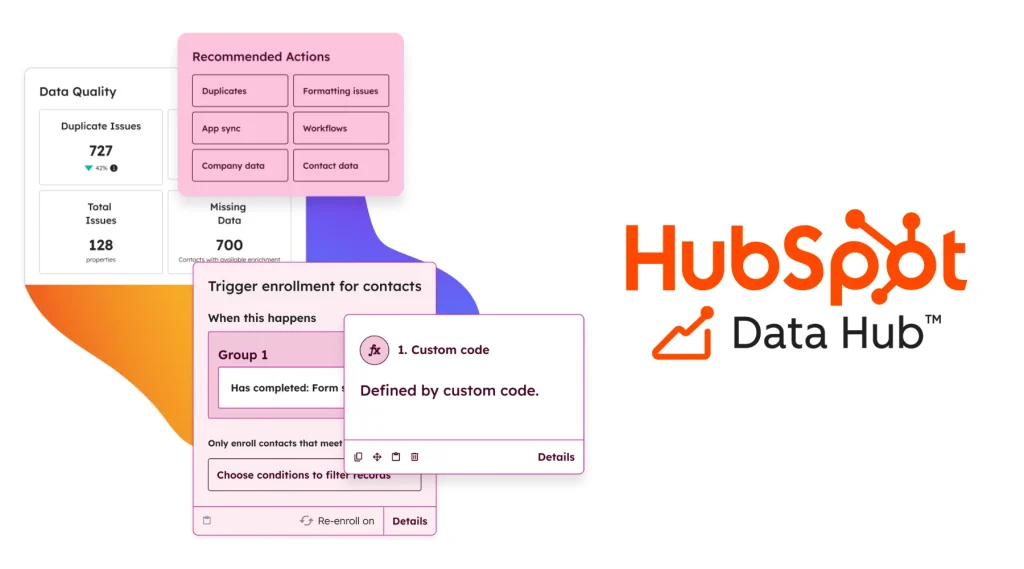
HubSpot renamed Operations Hub to Data Hub in 2026 as part of a broader push into data quality and AI-readiness — syncing, cleaning, and standardizing customer data across connected systems for teams running on HubSpot. It remains a strong fit for HubSpot-native RevOps teams and a weaker fit for anyone on Salesforce or a multi-CRM stack, since it’s built to serve HubSpot as the system of record.
Pricing: HubSpot’s pricing structure changes often enough that a static table goes stale within months — current tiers run from a free entry point through Professional and Enterprise plans priced in the hundreds to low thousands per month, plus mandatory onboarding fees at the higher tiers. Check HubSpot’s official pricing page for current numbers before budgeting.
5. Aviso ai
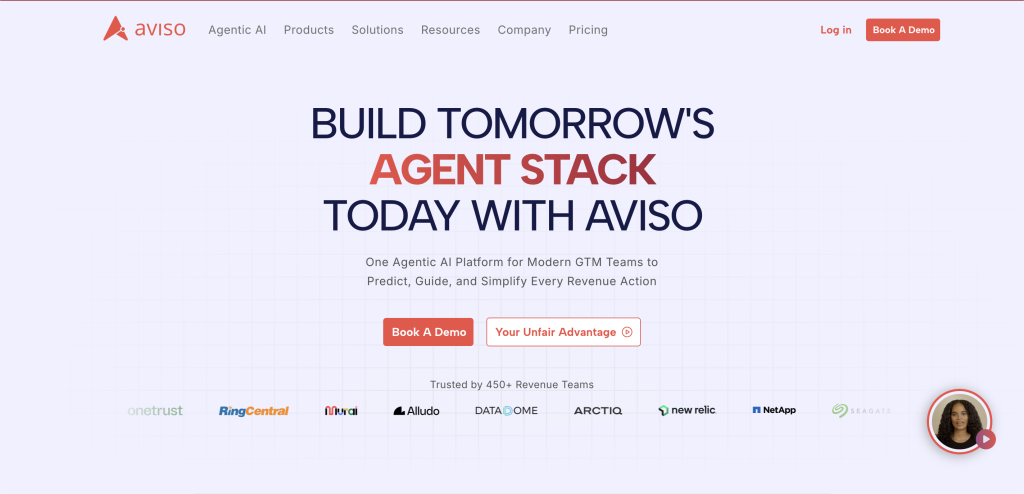
Aviso has repositioned from a pure forecasting tool into an agentic RevOps platform built around MIKI, a conversational orchestrator that can query pipeline data and trigger CRM updates directly, alongside a library of 50+ pre-built revenue agents and a no-code studio for building custom agent workflows.
Pricing: Quote-based; contact Aviso directly.
RevOps Tools Compared
Why Use Revenue Operations Software
The case for RevOps tooling hasn’t changed much in substance, even as the tools themselves have:
- More revenue. Companies with a dedicated RevOps function report meaningful revenue gains, largely from removing the friction between what sales, marketing, and CS each know about an account.
- Less manual work. Automating data capture and hygiene frees reps and RevOps analysts from reconciling spreadsheets and chasing missing CRM fields.
- Real visibility. Centralized, complete data lets teams spot problems — a declining conversion rate, a stalling deal, a churn risk — before they show up in a quarterly report.
- Better cross-functional alignment. Shared data removes the arguments about whose numbers are right, which is usually the real blocker to sales and marketing working well together.
Frequently Asked Questions
Q. What’s the difference between RevOps software and a CRM?
A CRM stores contact and deal records that a rep or marketer enters. RevOps software sits on top of (or alongside) the CRM, automating data capture, cleaning and structuring that data, and surfacing cross-functional insights — closing gaps a CRM alone leaves open.
Q. Is People.ai still a company, or did it become Backstory?
People.ai rebranded to Backstory in April 2026. Same underlying company and activity-capture technology, repositioned as a “Revenue Answers Platform” with a more conversational interface.
Q. How much does RevOps software typically cost?
It varies enormously by category. Data-hygiene and activity-capture tools often start in the low hundreds of dollars per month and scale with team size or usage; full platforms with forecasting and agentic features are typically quote-based. Most vendors don’t publish enterprise pricing, so a demo or trial is usually the fastest way to get a real number.
Q. Does Nektar replace HubSpot Data Hub or Backstory?
No, not directly. Nektar focuses on capturing complete activity data and structuring it inside your existing CRM. HubSpot Data Hub is built specifically for teams running HubSpot as their system of record; Backstory focuses on conversational querying over captured activity. Teams sometimes run more than one of these depending on which CRM they’re on and what layer of the problem they’re solving.
Choose the Tool That Fits Where You Actually Are
The right RevOps tool depends more on your existing stack than on any ranking. A HubSpot-only team should look at Data Hub first. A team already deep in Bigtincan’s enablement suite has a reasonable case for SalesDirector.ai. A team wanting a conversational interface over deal data might prefer Backstory. But for Salesforce-first teams whose actual problem is that the CRM doesn’t reflect what’s happening in their deals — the problem every AI initiative eventually runs into — that’s the gap Nektar is built to close.
See how complete your own CRM data actually is with a free CRM scan, or explore Nektar’s Daisy AI and GTM Telemetry product pages for the full picture.
Enjoyed our content? Follow Nektar on LinkedIn