
Best Revenue Operations Software for 2026
- RevOps
- 12 min
- Updated: July 15, 2026
Revenue operations exists to make sales, marketing, and customer success run as one connected system instead of three departments passing spreadsheets back and forth. The software behind that job has consolidated hard over the past two years. Several of the platforms on the 2025 version of this list don’t exist anymore in the form it described them, and the ones that remain independent are increasingly competing against combined entities with a lot more scale.
That consolidation is worth understanding before you evaluate anything on this list, because it changes the buying question. It used to be “which point solution fits my stack.” Increasingly it’s “which of these platforms actually get maintained and improved after their acquisition, and which of them are the foundation the others depend on.”
Get our latest insights into your inbox

What is Revenue Operations?
Revenue operations, or RevOps, is the operating model that runs sales, marketing, and customer success as one interconnected system instead of three functions working in silos. Done well, it drives visibility, accountability, and predictable revenue across the entire funnel.
RevOps has always cared about data quality. What’s new is that AI agents inside Salesforce, your sales engagement platform, or whatever custom tooling your team builds, are now reading that same CRM data and acting on it directly, without a human checking the work first.
When a human RevOps analyst worked from messy data, they applied judgment and caught the obvious errors. An agent doesn’t pause to sanity-check; it executes. That turned “Is our CRM data clean?” from a hygiene question into a governance question. And it’s reshaping what RevOps software actually needs to do.
10 Best Revenue Operations Software for 2026
- Nektar – GTM data foundation and AI signal layer
- Gong – conversation intelligence and deal risk
- Groove, now part of Clari + Salesloft – sales engagement and revenue orchestration
- HubSpot Operations Hub – data sync and hygiene automation for HubSpot-native teams
- Aviso AI – agentic forecasting and revenue execution
- Kluster – forecasting and pipeline process automation
- Fullcast – territory, quota, and capacity planning
- Mediafly Intelligence360, formerly InsightSquared – revenue analytics and guided selling
- Breadcrumbs, now part of MadKudu – predictive lead scoring
- ZoomInfo Chorus – conversation intelligence backed by ZoomInfo’s B2B data
Overview of the 10 Best Revenue Operations Software
1. Nektar
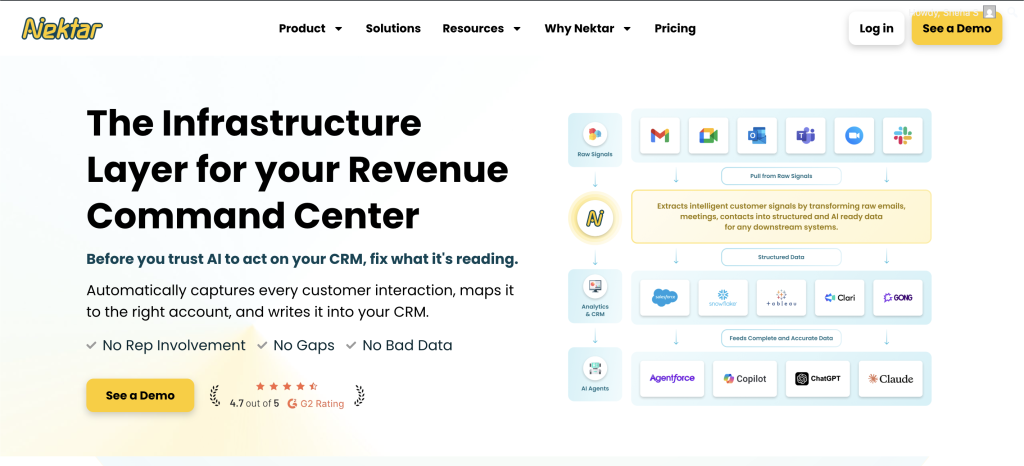
Nektar the GTM telemetry platform that automatically captures every customer interaction and delivers clean data to your CRM, data warehouse, and AI applications. It does so with zero manual entry or adoption friction.
As more of your GTM stack starts executing autonomously (Agentforce, your own AI agents, a forecasting model, anything reading CRM data and acting on it), the CRM has to be complete and correct continuously, or every agent built on top of it inherits the error.
Nektar does this in two layers. Data Foundation captures every email, meeting, call, and calendar event across your team automatically and writes it natively into Salesforce, HubSpot, or Dynamics. Daisy AI sits on top of that foundation, surfacing revenue signals across multiple categories (buyer visibility, deal velocity, churn risk, marketing impact, and more) and putting a live engagement canvas directly on the Salesforce Opportunity tab.
Nektar is vendor-neutral by design. It sits alongside Gong, Outreach, or Salesloft rather than replacing them, making sure the CRM data those tools depend on is actually complete.
Unlike tools that lock your data in proprietary interfaces, Nektar acts as revenue signals infrastructure: capturing emails, meetings, calls, and Slack, then piping structured intelligence into Salesforce, Snowflake, Claude, and your entire stack.
Enterprises & AI focused companies rely on Nektar to see complete buying committees (not the incomplete fragments in most CRMs), power AI systems with trustworthy data, and preserve institutional knowledge when people leave.
In production: Mimecast identified $80M in pipeline and $2M in incremental expansion revenue within 80 days using Nektar’s telemetry. Chainguard’s CRO credits Nektar with the data foundation behind a 5x team scale-up. Brex built Nektar data into daily CRO reviews across sales, CS, and presales.
Key features:
- Zero-rep-effort activity capture across email, calendar, meetings, and calls
- Time Travel retroactive data correction up to 12 months of historical backfill
- Daisy AI: 39 revenue signals across buyer visibility, deal risk, churn, and rep performance
- Vendor-neutral: works alongside Gong, Outreach, Salesloft, and Clari rather than replacing them
Best for: Salesforce-first revenue teams, typically 800–5,000 employees, running a multi-threaded enterprise motion who need CRM data reliable enough for both reps and AI agents to act on.
2. Gong
Gong built its category on conversation intelligence: recording, transcribing, and analyzing sales calls, and has extended into deal-risk scoring and forecasting. It gives RevOps teams a strong view of what happened on recorded calls, though its visibility stops at the edge of what Gong itself records; email and calendar activity outside a call require a separate capture layer. In 2026, Gong has pushed further into AI-native forecasting and coaching.
Key features: call recording and transcription, deal risk warnings, closed-lost analysis, AI-assisted coaching.
Evaluating Nektar against other platforms?
Explore our in-depth comparisons with leading alternatives across features, data quality, AI readiness, and implementation.
3. HubSpot Operations Hub
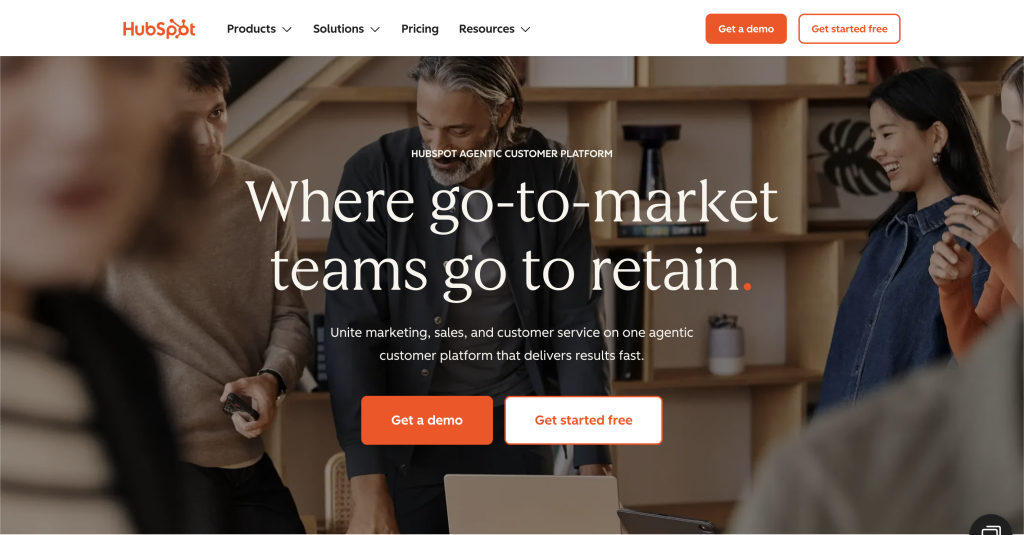
HubSpot Operations Hub keeps customer data synced and clean across connected systems for teams running on HubSpot. Its data-quality automation and sync tooling remain a strong fit for HubSpot-native RevOps teams; it’s not built to serve as a data layer for teams on Salesforce or a multi-CRM stack.
Key features: Bi-directional data sync, automated data-quality rules, programmable automation.
4. Aviso AI
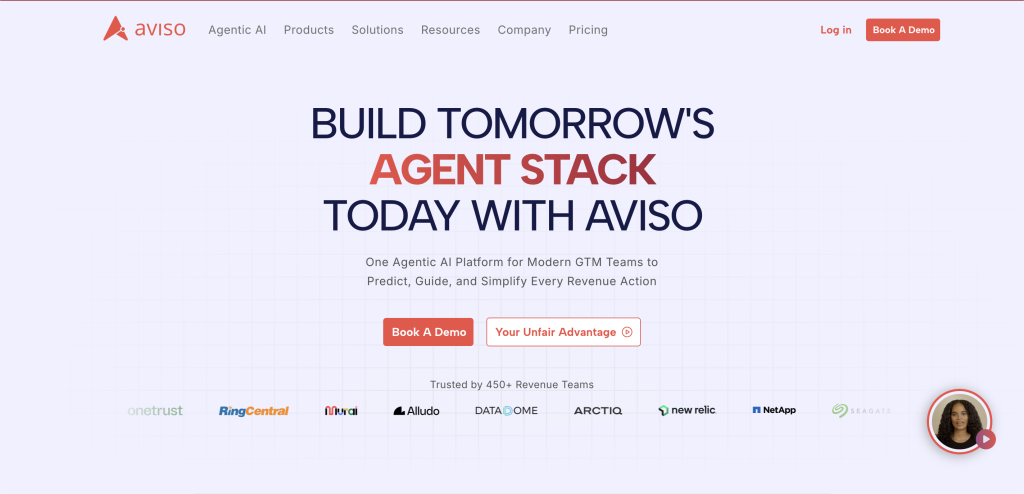
Aviso has repositioned itself as an agentic AI platform for GTM teams, built around an orchestrator called MIKI that accepts natural-language queries and executes CRM updates directly, alongside a library of 50+ task-based revenue agents and a no-code GTM Agent Studio for teams to build their own agent workflows. Its forecasting engine still anchors the platform, now paired with real-time AI avatars for role-specific coaching and deal guidance.
Key features: MIKI conversational AI orchestrator, 50+ pre-built revenue agents, no-code agent studio, predictive forecasting.
5. Kluster
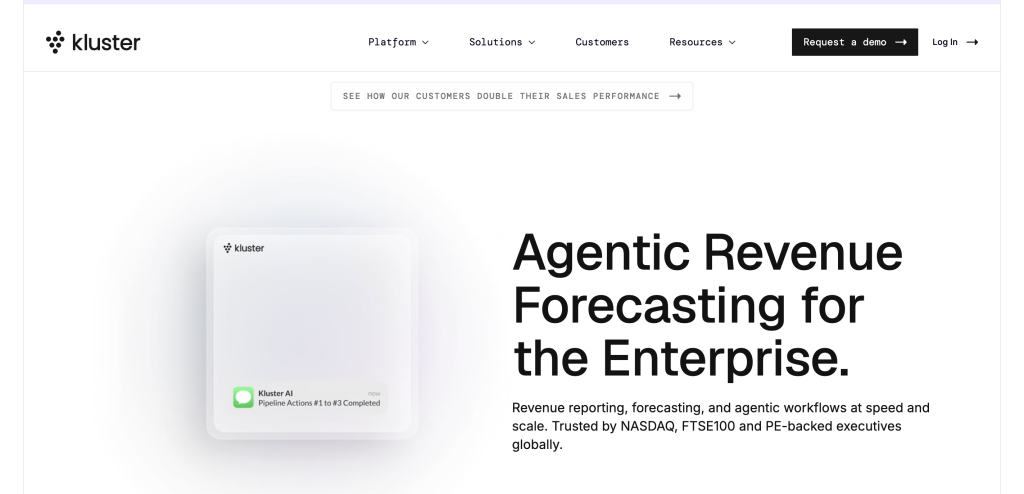
Kluster helps RevOps teams build repeatable forecasting and pipeline-review processes without relying on spreadsheets, standardizing how deals move through the funnel and how reports get delivered on a consistent cadence.
Key features: standardized forecasting workflows, pipeline funnel tracking, automated reporting cadence.
6. Fullcast
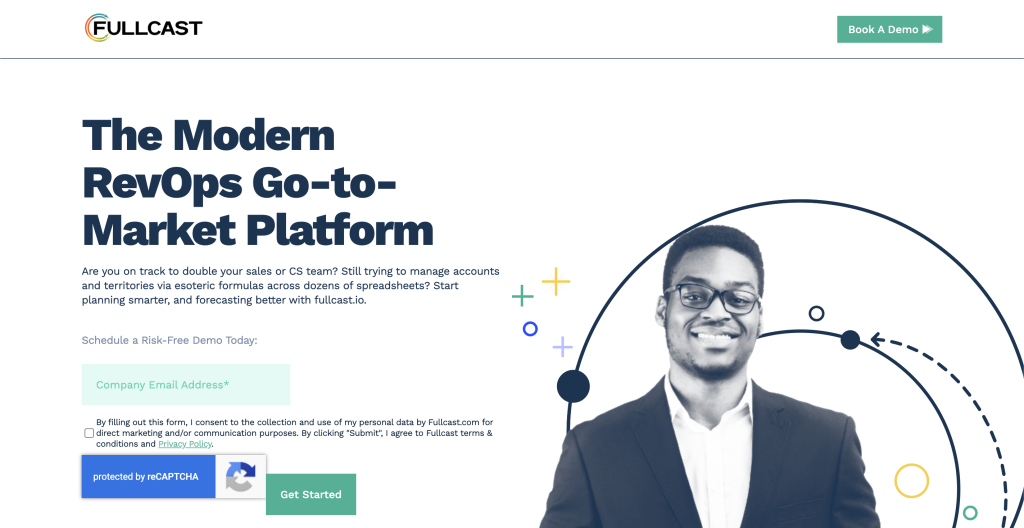
Fullcast focuses on the planning side of RevOps: territory design, quota setting, and capacity planning, letting teams model GTM scenarios and deploy resources without building it all in spreadsheets from scratch.
Key features: territory and quota planning, capacity modeling, GTM plan scenario testing.
7. Mediafly Intelligence360 (formerly InsightSquared)
InsightSquared’s standalone product doesn’t exist anymore — Mediafly acquired the company in late 2021, and the legacy InsightSquared Sales Analytics product was formally retired in January 2023, with its forecasting, pipeline analytics, and RevOps dashboard capabilities absorbed into Mediafly Intelligence360 (branded internally as Revenue360). If your team evaluated InsightSquared a few years ago, this is the product you’d actually be buying today.
Key features: AI-powered forecasting, full-funnel RevOps dashboards, guided-selling and next-best-action tooling (via the Olono acquisition).
8. Breadcrumbs, now part of MadKudu
Breadcrumbs remains an active, independently branded predictive lead-scoring tool following its 2024 acquisition by MadKudu — dynamic, co-built scoring models across acquisition, upsell, and retention use cases, with time-decay weighting so a six-month-old signal doesn’t score the same as a fresh one.
Key features: co-dynamic lead and account scoring, time-decay behavioral weighting, native HubSpot integration.
9. ZoomInfo Chorus
Chorus has been part of ZoomInfo since 2021 and now runs on top of ZoomInfo’s broader B2B data layer — the GTM Context Graph — giving it a data-enrichment advantage most standalone conversation-intelligence tools don’t have. It captures calls, meetings, and emails and ties them back to CRM records, with ZoomInfo positioning it as one piece of a full-funnel AI GTM platform rather than a point tool.
Key features: conversation intelligence backed by ZoomInfo B2B data, momentum/deal-risk alerts, GTM Context Graph integration.
RevOps Software Compared
Frequently Asked Questions
Q. What is revenue operations software?
Revenue operations software helps businesses align sales, marketing, and customer success around a shared set of data and processes, giving RevOps teams visibility into pipeline health, forecast accuracy, and where deals are actually at risk — rather than relying on each function’s own disconnected view.
Q. What is the difference between revenue operations software and revenue intelligence software?
Revenue operations software is the broader category — planning, process, forecasting, and data hygiene across the GTM org. Revenue intelligence software is a subset focused specifically on analyzing customer interaction data (calls, emails, meetings) to surface deal risk and buyer engagement signals. Most RevOps stacks include at least one revenue intelligence tool as a component.
Q. What are the four pillars of RevOps?
Strategy and planning, process optimization, data and technology, and cross-functional collaboration. Data and technology has become the pillar under the most pressure in 2026, since it’s now the foundation AI agents act on, not just what humans check in a weekly pipeline review.
Q. Is InsightSquared still available as a standalone product?
No. InsightSquared was acquired by Mediafly in late 2021, and the standalone product was retired in January 2023. Its capabilities are now part of Mediafly Intelligence360.
Q. Does Nektar replace tools like Gong or Clari + Salesloft?
No. Nektar is built to be vendor-neutral and sits alongside conversation-intelligence and sales-engagement platforms, capturing the email and calendar activity those tools don’t see and making sure the underlying CRM data both humans and AI agents rely on is complete.
The Bottom Line
The RevOps software category consolidated hard over the last two years, and several tools worth evaluating in 2025 are now features inside a larger platform rather than standalone products. The more durable question in 2026 isn’t which point solution fits your stack. It’s which platform is the foundation the rest of your stack, and increasingly your AI agents, can actually trust.
Enjoyed our content? Follow Nektar on LinkedIn