The AI-Native Marketing Organization: From Leads to Buying Groups
Insights from Christine Royston, former CMO at Wrike, on The Revenue Lounge podcast
TL;DR
Short on time? We've distilled this conversation into a one-page summary. Get it in your inbox.
Executive Summary
Buyers now do most of their research before they speak to anyone at your company. They ask AI tools instead of search engines, they bring a growing committee into the decision, and many of the people who shape a deal never fill out a form. A marketing organization built around the MQL and the monthly campaign was not designed for this.
Christine Royston, former CMO at Wrike, has spent her career treating marketing as a revenue function. She has worked at companies through two IPOs, at Dropbox and Udemy, and has led marketing at Bitly, Udemy, and Wrike. In this episode of The Revenue Lounge, she explains what an AI-native marketing organization needs from its customer data, why campaigns need to become always-on, how to market to a buying group you cannot fully see, how to make the case to your CFO during planning season, and how to organize marketing teams around outcomes instead of functions.
Christine started her career in sales, then moved into marketing as a way to gain international experience while staying close to revenue and the customer. She built her foundation at large companies, learning what great looks like from experienced leaders, then moved to smaller ones for broader impact. Dropbox and Udemy both involved pivoting from consumer to B2B and preparing for the public markets. At Wrike, she rebuilt the marketing function and modernized the team with AI. One thread runs through all of it.

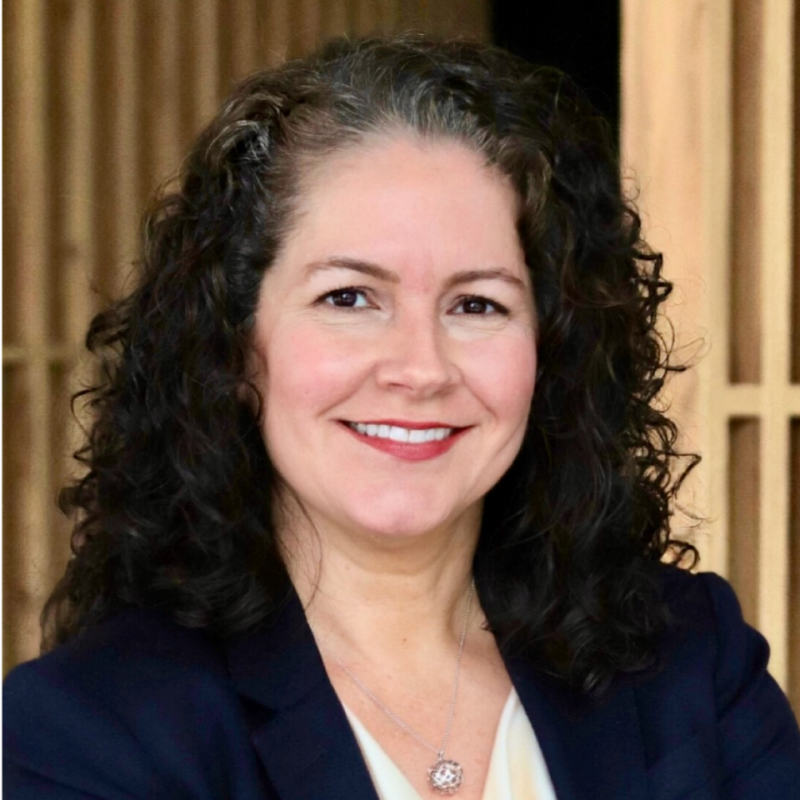
Christine Royston
Former CMO, Wrike
I really consider marketing a revenue function. Marketing should be looking at how close they can get to revenue. We should always be thinking about how are we driving revenue and how are we driving bookings.
Marketing Is a Revenue Function, and That Includes Retention
Christine does not dismiss leading indicators. MQLs and cost per lead still matter. But she is firm that the work has to connect back to revenue, and that revenue does not only come from new logos.
Many of the companies she has worked at run a land and expand model, which means marketing has a role well after the contract is signed. That role is building relationships with existing customers so they add users or adopt new products. Over the past couple of years, she has put growing weight on advocacy and retention, and on partnering closely with the customer success team that touches those customers every day.
It is much easier to retain your customers than acquire a new one. You want to make sure that marketing has a role in that.
Christine Royston
Former CMO, Wrike
What to do: Look at your marketing plan and ask where marketing shows up after the deal closes. If the answer is “nowhere,” start with a joint advocacy and retention goal shared with customer success.
What Still Holds in the Playbook, and What Gets More Weight
Randy asked how much of the traditional funnel playbook survives when buyers research on their own and engage vendors late. Christine’s answer is that the emphasis has shifted rather than the fundamentals.
Brand and awareness matter more, because customers are no longer only looking for you in traditional search. They are asking LLMs, and those engines do not return ten blue links. They return one answer, perhaps with a couple of recommendations. If your brand is not part of that answer, you are not in the conversation. That is why she has increased investment in social communities, user review sites, and PR over recent months, and why a consistent brand presence across many surfaces matters.
The second shift is what buyers already know when they reach you.
They have done research without ever talking to anyone at your company, without ever hitting your website.
Christine Royston
Former CMO, Wrike
Two things follow. The information about you that exists out in the world has to be accurate and easy to find, so buyers can research the way they prefer. And when they do arrive, your website, sales team, and customer success team need to meet them at the stage they are already in, rather than starting from the beginning.
Read the complete transcript for more insights.
From Campaigns to Always-On Orchestration
The old model was simple. Pick an audience, decide what they care about, build a campaign for the month, and move on. Christine argues this breaks down when buyers arrive at different phases of their research. Not everyone is at the awareness stage, and not everyone wants to be moved down a funnel you designed.
The shift is to keep campaigns always-on. Content should exist for every phase, be easy to discover, and ideally be ungated. Someone on your team should own the outcome for each audience you are targeting. If you want to reach product managers at manufacturing companies, you cannot run one campaign, move on, and hope your target found it during the month it ran.
The reason is timing. Christine notes that the large majority of buyers are not in the market for your product when you would like them to be. They will find the page that has not been refreshed in six months at the exact moment they are ready to buy. Constant, useful content is how you are present when that moment arrives.
On the gating question she asks marketers about often, her answer is to un-gate, and then work out how to understand what is working without a form in the way.
Context Engineering Starts With Customer Conversations
Randy raised Christine’s recent writing on context engineering, the idea that AI is a strong thought partner but lacks nuanced judgment, so the context you give it matters enormously. Her practical answer to how you build that context starts with something no data pipeline replaces: talking to customers.
Sometimes what you uncover in a conversation might give you a new insight, a new unmet need.
Christine Royston
Former CMO, Wrike
She talks to a handful of customers a week, which is not enough on its own. So the second source is the conversations your sales and customer success teams are already having. Mined well, they surface threads you can act on: a new trend that is missing from your messaging, or a product launch that is not landing the way you expected. Those insights can flow back into messaging and into the product roadmap. The third source is campaign performance. If nobody signed up for a webinar, the cause might be how you positioned the topic, or the topic may simply matter less to people now.
The data model underneath is a single source of truth. Data that lives in disparate systems has to come together in one place, including the sales conversations that rarely make it into the CRM. Only then can you put agents on top of it.
Teams can make decisions based on the full picture, not just, well, this is the tool that I log into every day.
Christine Royston
Former CMO, Wrike
From MQLs to Buying Groups
Randy asked what needs to change for buying group marketing to work at scale. Christine starts from a simple observation: the buying committee is getting larger, and you may never know exactly who is on it.
It's not just the one person that you're talking to or the one person that filled out a form and became an MQL on your website.
Christine Royston
Former CMO, Wrike
Great sales teams already probe for this by asking who else needs to be part of the discussion, and whether anyone else needs information before the deal can move. That data can be pulled and used. But the broader point for marketing is that other people will find you on their own. Christine’s example is vivid: a CFO sees a large contract come through for signature and starts asking questions.
They might ping me on Slack. They might also just do a quick search and say, what is this vendor? Why is Christine asking for this much money?
Christine Royston
Former CMO, Wrike
Your content, your reputation, and your website all have to hold up for the person who was never on a call with you. Each buying center needs something relevant to find.
This changes how marketing proves its impact. The ideal is to say a deal closed because the first person who filled out a form was sourced by marketing. The reality is that someone else may have attended an event, seen your brand, or watched a podcast with your CEO. Christine’s challenge is to get more sophisticated about influence.
Where are people finding you, even though you can't exactly track it? And where are you influencing people that had to sign on the dotted line but are not engaging with you?
Christine Royston
Former CMO, Wrike
Measuring What You Cannot Fully Track
Randy named the dangerous word, attribution, and Christine’s view in the lightning round is blunt. She calls marketing attribution fiction.
I can see the math behind it, but I think it's telling the wrong story. It's telling a really narrow, incomplete story.
Christine Royston
Former CMO, Wrike
Her proposed direction has two parts. The first is a genuine application for AI. Rather than relying on simple multi-touch models, use AI on top of your centralized warehouse to look at what actually causes a deal to continue or stall. The cause does not have to be a marketing touch. It could be something like pulling an executive into the conversation at a particular point, which tends to drive deals of a certain size with a certain kind of buying group. Christine is upfront that she has not done this herself yet. She sees it as a strong use case, and she notes that some off-the-shelf tools already offer pieces of it.
The second part is much simpler, and you can start this week. Ask people how they heard about you. Add the question to your trial signup or demo request form. Ask sellers to include it in their talk tracks. It will not be perfect, because some people skip it and others pick the first option on the list, but it gives you a directional signal. If several prospects mention a blog post your CEO wrote, that is worth more of the same.
Planning Season: Making the Case to Your CFO
Companies with calendar fiscal years are entering planning mode, and conversations between CMOs and CFOs about what was delivered and what comes next are happening now.
Christine’s first principle is to lead with outcomes. Her second is realism. Many CMOs she talks to expect the same budget with higher expectations, which means growth has to come from a different mix, not a bigger one. If a channel is showing diminishing returns, that is the argument for moving money out of it. But the move still needs a business case.
Just saying, well, I'm just gonna try a couple of things and hopefully it works is not what you wanna walk into your CFO with.
Christine Royston
Former CMO, Wrike
What works instead is evidence. Three other companies you know are using a particular vendor and seeing specific results, so you propose a small pilot and shift budget there. If you can get an incremental budget for experimentation, you still need the case. And standing still carries its own risk.
If you're not changing up your mix, if you are not changing your strategy given how much is happening in the market, I think you're gonna get questions on whether you're actually staying current.
Silvana Bacigalupo
Former Head of Internal AI transformation, Asana
When Randy asked where she would test with incremental budget, she named two.
Communities. Find an existing community where your audience already gathers, or create one that provides real value. You may be a vendor, but people are more likely to take your call or talk to you when they are in market if you have been useful to them.
Social, with your people as the face of the company. Startups have long put a founder front and center. Christine’s point is that any company can do this, and it does not need to be the CEO. It could be a product manager who loves the product and is dynamic on camera, sharing short recorded snippets.
Organizing Around Outcomes: The Pod Model
Randy asked what Christine would keep and what she would change if she built a marketing organization from scratch. Her answer is that you still need functional experts in design, writing, and brand. But she expects a shift toward marketing generalists who can do far more to reach an audience, create a campaign, and execute, and she says AI is what is giving them that capability.
At her last company, she began putting this into practice by creating pods focused on specific outcomes, without changing formal reporting lines. A pod might be built around a key audience, such as manufacturing companies. It still carries a marketing pipeline target, because the business has to hit its overall numbers. But it also partners across the organization with the product team designing for that audience and with the sales specialists who talk to those large customers. The pod itself includes a product marketer, a campaign manager, a designer, and a content creator.
We created these pods that were focused on driving specific outcomes.
Christine Royston
Former CMO, Wrike
She has spoken with other CMOs weighing whether to make this a formal reporting structure, with pod leaders. She is realistic about the pace. Smaller companies building from the ground up can move quickly, while a single sweeping change is a lot to digest in mid-sized and larger ones, and she has not yet heard of a large company doing it. The couple of CMOs she has heard of moving to a pod model keep the functional home, so designers still report into the head of design but are distributed across the pods.
She adds two practical points. First, this is the year when AI has to move from experimentation into production, and org design will follow. Second, when someone leaves, treat the vacancy as a chance to rethink the role instead of backfilling it directly.
Hire for AI Fluency, Whatever the Role
When Randy asked what he had not covered, Christine raised hiring. If AI matters to your marketing team, job descriptions and interview processes should say so, for every role. New hires are one of the fastest ways to bring in additional technical expertise, and an AI-forward colleague can help teammates who are less used to working this way. Randy noted that AI fluency is increasingly becoming a requirement for new talent.
Final Takeaway
Christine Royston’s framework starts with a reframe that is easy to say and hard to practice: marketing is a revenue function, which means it owns retention and advocacy as much as acquisition. From there, nearly everything she describes follows from the fact that buyers have changed. They research through AI, they involve people you will never meet, and they arrive further along than your funnel assumes. The response is always-on content that meets people at any stage, a single source of truth that gives agents the full picture, influence measurement that is honest about what it cannot see, and teams organized around outcomes instead of functions.
She is just as clear about what remains unsolved. Nobody has all of this figured out, and the pod model, AI-driven deal analysis, and influence measurement are all still evolving. The leaders who will be ahead are the ones who experiment now, make the business case as they go, and keep the customer at the center of every workflow they automate.
For a look at how a customer data foundation like this works in practice, see how Mimecast built one. Read the Mimecast case study – Nektar.ai →
Know a marketing leader, CMO, or go-to-market practitioner with a real point of view?
We’re looking for practitioners with genuine experience.
Christine Royston is the former Chief Marketing Officer at Wrike. Connect with her on LinkedIn.
This post is based on her conversation with Randy Likas on The Revenue Lounge, Nektar’s podcast on the future of go-to-market.
Never miss an episode! Subscribe to The Revenue Buzz newsletter to get weekly episode updates.
If you liked what you read, please share it with your peeps.
In this blog
Get the Revenue Lounge Brief
3 takeaways from every new episode, straight to your inbox.
Episode Transcript
[00:00:00] Randy Likas: As marketing expands beyond acquisition to engage customers across the full journey, one challenge becomes increasingly important: having the data and the context to actually understand what is happening across the journey. The tr- traditional MQL-centric model often captures individual interactions, while enterprise buying involves multiple stakeholders, multiple touch points, and increasingly, discovery happening through AI-powered channels.
[00:00:24] Randy Likas: So what does an AI-native marketing organization need from its customer data foundation? And how does marketing move from tracking individual leads to understanding the broader buying groups and customer journeys that ultimately drive revenue? Hello, everyone. Welcome to another episode of the Revenue Lounge.
Read Full Transcript
[00:00:38] Randy Likas: I am your host, Randy Likas, and today we’re exploring how AI, customer data, and buying groups are reshaping the way modern marketing teams operate. And joining me today is Christine Royston, former chief marketing officer at Wrike. Christine has extensive experience driving growth for B2B technology companies and has created and led company and marketing strategies that transition companies from customer to B2B, including two IPOs at Dropbox and Udemy.
[00:01:03] Randy Likas: She is adept at building high-performance teams, transforming and scaling organizations, influencing, across functions, and, communicating with internal and external stakeholders. Christine, thank you so much for joining us today.
[00:01:15] Christine Royston: Thank you for having me, Randy.
[00:01:18] Randy Likas: So Christine, I usually like to start these episodes by having you, give us a little bit about your background, maybe your career journey and what led you to, where you are today.
[00:01:25] Christine Royston: Sure. , So I actually started my career in sales, which is a great foundation for any marketer. And I really moved into marketing as a way to get early international experience. Also staying close to revenue and the customer, had a chance to live abroad, and, you know, really come back to the US and bring that global experience and weave that into my career.
[00:01:46] Christine Royston: I am based in California. I’m originally from the East Coast. And I would say I got my foundation in marketing at big companies. What does great look like? Learned from, professional leaders. And I started to move to smaller companies to get broader experience, being able to see broader impact to my work.
[00:02:02] Christine Royston: So started to lead teams, then lead larger teams. Worked , in companies, like Dropbox, , so helping them pivot, , from consumer to B2B, helping them through their IPO. , And my last few roles have been leading the entire marketing function., started off at Bitly, , leading the organization there.
[00:02:20] Christine Royston: Moved on to Udemy, that was my second stop in terms , of positioning a company from consumer to B2B. Also, saw them through their IPO, , so a couple experiences there of kind of what it takes to operate in a public market, how do you get ready.
[00:02:34] Christine Royston: And then most recently at Wrike, where again, rebuilding the marketing function, looking at how do we transition and modernize the team with AI and helping the organization grow. So, I’d say one consistent thing throughout my career has been that I really consider marketing a revenue function.
[00:02:51] Christine Royston: Marketing should be looking at how close can they get to revenue. We should always be thinking about , how are we driving revenue, how are we driving bookings.
[00:02:59] Randy Likas: Say it louder for those in the back, right? So , you’ve been, , a part of some pretty big, , significant, transformations at the companies that you’ve worked at.
[00:03:07] Randy Likas: And when you look at those experiences, how has your thinking about what marketing is actually responsible for changed? Sure, sure. You know, I think that, coming back to the focus on revenue, yes, you do need to look at leading indicators, , like MQLs, cost per lead, et cetera.
[00:03:25] Christine Royston: But ultimately, you’ve gotta connect the work that you’re doing back to revenue. So how is , it driving revenue? , And I’ve worked at a number of companies that have, , a land and expand model. So it’s not just about acquiring new business, but it is about how do you build relationships with the customers that you have so that you’re driving increased revenue, whether that’s adding new users, whether you’re introducing new products and solutions that can benefit them that you would like them to spend money on.
[00:03:51] Christine Royston: But I think something that has become even more important,, I’ll say over the past couple years, it’s always been important, but I think marketing really has to focus on how do you drive the advocacy and help to drive retention of the customers that you have. We’ve all heard it, you know, it’s,, much easier to retain your customers than acquire a new one.
[00:04:10] Christine Royston: And so you wanna make sure that marketing has a role in that and is partnering with your customer success team, the teams that are touching those customers every day once they have committed to a relationship with you. Yep.
[00:04:23] Randy Likas: I have a question. So we’ve spent decades, , building marketing organizations typically around the funnel, right?
[00:04:28] Randy Likas: Generating leads, nurturing them, passing them over to sales. But what’s changing now is buyers are increasingly doing their own research, right? They’re using AI, , they’re engaging with vendors much later in the process. How much of the traditional marketing playbook do you think still holds up , and what changes?
[00:04:43] Christine Royston: Sure. Sure. I think that the emphasis on certain elements of marketing has changed, increased. If you think about building brand, driving awareness, that is really very important as you think about making sure you’re showing up when customers are looking for you, not on traditional search engines, but in, in LLM engines.
[00:05:05] Christine Royston: You’ve gotta make sure that you’ve got a consistent brand presence across a lot of different surfaces, and so I think that that investment in brand is important. If I think about some of the places that I’ve put more investment over the past several months, it’s been social communities, user review sites, certainly PR.
[00:05:26] Christine Royston: As you look at what is showing up , in the LLM engines, you used to get a list of answers, you know, it was 10 blue links or whatever fit on that first page. Now, users get one answer with, , maybe there are a couple of recommendations, but you need to make sure your brand is showing up there, , because that’s the first place that people are going.
[00:05:45] Christine Royston: I think another key piece is that when users are coming to you and talking to a salesperson or even coming to your website, they already know a lot about you. They have done research without ever talking to anyone at your company, without ever hitting your website, and so you have to make sure that the information that is out there about you is accurate, , and present so that people can do their research in their preferred way.
[00:06:08] Christine Royston: And that when they do come to you, you are able, to have a conversation at the stage that they’re at, whether it’s providing, deeper content on your website or making sure your sales and CS teams, , are able to dive right into whatever stage of the decision-making process that customer or prospect is at.
[00:06:26] Randy Likas: Yeah. And speaking about AI, I read your article that you posted not so long ago, , “We’re moving traditional campaign planning to, like, always-on, orchestration.” It was great, by the way. , What caught my attention was the idea that AI changes how marketing operates, right?
[00:06:41] Randy Likas: Not just how quickly we can produce content, but what does that look like in practice? What’s maybe an example , or a workflow that you’ve fundamentally redesigned rather than just simply automated?
[00:06:51] Christine Royston: Sure, sure. , I think one example of that is When you think about running campaigns, , in the past, people would say, “Hey,” maybe if you’re operating, at an earlier stage company, it’s, “We’re gonna run a campaign for the next month, and let’s pull it together.
[00:07:07] Christine Royston: Let’s figure out what that looks like.” All the usual typical target audience, what do they care about? What content can I get in front of them? What response do I want from them? I think because, , people are coming to you at different phases of their research, you can’t assume that it is a funnel, and everybody is coming to you is at the awareness stage, and they don’t know anything about you, and they wanna move d- down.
[00:07:29] Christine Royston: You’ve gotta make sure that you are providing information for people wherever they are, in that phase, and that it’s easily discoverable, , ideally ungated. , I talk to Mark Harris about quite frequently is to gate or not to gate. Right. And, how do you make sure that you can still track and understand what’s working if you’re not putting a form , in front of a piece of content?
[00:07:49] Christine Royston: But I think that as you think about campaigns now, it really does need to be always on, and you need to think about who on your team is responsible for driving the outcome, that you’re trying to deliver. So maybe it is looking at, we wanna target manufacturing companies, and we want to target somebody in the product management group.
[00:08:09] Christine Royston: Well, you can’t just run one campaign and then move on and do something else and hope that the person you were looking to engage found everything in the month that was driving, that they’ll find the page, that hasn’t been refreshed , in the past six months when they are ready to buy. Because we all know, , I think, what is the stat?
[00:08:28] Christine Royston: 93% of the people, , out there are not in market for your product at the time that you would like them to be. Right. So you’ve gotta make sure that you’re constantly providing this value and giving them content that meets them at whatever stage they’re in.
[00:08:42] Randy Likas: Yeah. , And to build on that, and I think you also talked about this in your article, which was, the one thing, that really caught my attention because it’s so hot right now , is the idea of context engineering and how context is really the most important asset, right?
[00:08:55] Randy Likas: Yeah. , And we must constantly, be curating that and engineering that context because AI is, , a fantastic thought partner, but it lacks that nuanced judgment of what- you described, I think as, the soul, right? Right. Is what you called it.
[00:09:07] Randy Likas: And I think you made a really important, point , on making sure that , in providing that context, we’re always putting the customer, as the north star and making sure that whatever it is that we automate and whatever it is , we build these complex workflows are really delivering value for the customer.
[00:09:22] Randy Likas: I think we’ve got so much different customer data available to us today, , but how do you think about, the context engineering, part of that and how do you make sure that you’re, that you are putting the soul into that content? ,
[00:09:33] Christine Royston: I think one of the most important things is to make sure that you are actually talking to customers, and you’re staying at the top of what they really care about.
[00:09:45] Christine Royston: Yes We can get a lot from the data, but sometimes what you uncover in a conversation might give you a new insight, a new sort of unmet need that you wanna think about, “Okay, how do I integrate that?” And then I think that there are signals that you pull from all the conversations that your sales teams are having.
[00:10:01] Christine Royston: Yes, I would love , to talk to more customers, but in reality, I’m talking to a handful a week. Depending on the size of your sales team and your CS team, if you can mine all that data for these commonalities, these threads that are popping up, and either it’s a new trend that we are not talking about, that we’re not incorporating into our messaging.
[00:10:20] Christine Royston: Maybe it is something that, new product launch is not, quite hitting the mark. How do we take that, incorporate that back in terms of, product roadmap and partnering with product? So I think that being able to take a look at that real time, “Hey I’m talking to a person, I’ve heard from them what their pain points are, along with all the data that AI helps us to digest and manage.
[00:10:40] Christine Royston: That’s the key part. .. And then outside of those conversations, certainly the data and the performance of your campaigns. Hey, we launched this, nobody signed up for this webinar. Is there something about the way we positioned the topic, or was the topic not as important to people now?
[00:10:54] Randy Likas: Yeah. , So what has to change , in the data model for you to be able to understand that?
[00:10:58] Christine Royston: Sure. So I think it is what is your single source of truth? How do you really get the data, all these data points that really live or lived in disparate systems, into one place? And, we’re all using tools like Salesforce.
[00:11:15] Christine Royston: Many of us are using tools like Marketo. How do you make sure that the conversations that your sales teams are having are also being pulled into this one warehouse, you know, whatever tool you are ending up using- Yeah . In order to get all the data in one place, so that when you are rolling out AI, either for your workflows or using it in order, to analyze results, and insights, you’re looking at all the data pieces, not just, one part, one conversation that is being had.
[00:11:44] Christine Royston: , Data’s always been key, , but I think we have so much data now and context, we’ve gotta make sure- Yeah … we’re getting it all in there together so that then we can apply our agents on top of that, and teams can make decisions based on the full picture, not just, “Well, this is the tool that I log into every day.”
[00:12:00] Randy Likas: Yeah. 100%. I wanted to – pull a thread, , that you hint at, a little bit earlier, which is, multiple stakeholders that are involved in buying decisions. Um, sometimes they’re in market, 95% of the time they’re out of market. I think, you know, traditionally so much of our marketing infrastructure and measurement has revolved around individual leads and, MQLs.
[00:12:22] Randy Likas: And we’ve all heard, Forrester , and Sixth Sense and everyone’s talking about, , the need to move to maybe a buying group type of motion. So moving from MQLs to, a systematic way in terms of how do we enga-engage the buying group., I think that, it’s really logical in theory, but it’s pretty much a pretty big fundamental shift- Mm-hmm
[00:12:39] Randy Likas: in like how marketing operates. What do you think needs to change to make buying group marketing work at scale? , And what do you think maybe is holding backs organizations from making that move today? Or do you think, I don’t wanna lead the witness. Maybe
[00:12:51] Randy Likas: you think the MQL engine , is, it works really great. So just love to get , your thoughts on that.
[00:12:55] Christine Royston: Yeah, I think, I do think, , the buying committee , is getting larger. More people are involved with the decision. You may never know who those people exactly are- Yeah … or talk to those people.
[00:13:08] Christine Royston: So you have to recognize that it’s not just the one person that you’re talking to or the one person that filled out a form and became an MQL on your website. And so I think that the key is, making sure that you understand the buying process has changed. You are really checking for that in conversations.
[00:13:28] Christine Royston: I think, great sales teams do this already. They’re talking about, “Hey, who else needs to be part of this discussion?” Or, “Is there anyone else that you need , to provide information to in order to move forward with this?” So I think you can pull that data. But I think those people they’re gonna end up, coming to your website or, as an example, your CFO sees a big contract coming through that they, are being asked , to sign, , that’s a big chunk of your budget.
[00:13:53] Christine Royston: They might ping me on Slack. They might also just do a quick search and say, , what is this vendor? , Why is Christine asking for this much money?” Mm-hmm. And so you’ve gotta make sure that you’re appealing to all of these different buying centers. And I think then it’s also impacting sort of how you’re measuring the impact of marketing because yes- Ideally, I can track that this deal closed because the first person that came to our website and filled out a form was sourced by marketing.
[00:14:21] Christine Royston: But maybe the person that came to the website went to an event and saw our brand, or they watched a podcast, from our CEO, , and all of that marketing helped to drive and to deliver results. , So I do think you’ve got to figure out, , how do you start to get more sophisticated with looking at influence?
[00:14:37] Christine Royston: How do you start looking at where are people finding you even though you can’t exactly track it? And where are you influencing people that you know had to sign on the dotted line, but are not, , engaging with you?
[00:14:47] Randy Likas: Yeah. We’re going, flirting with that dangerous topic of attribution, right?
[00:14:51] Randy Likas: Everyone’s got an opinion on it. It reminds me of a conversation I had with someone recently where they said, , “Marketing’s job is not just to produce leads, right?” “Our job is to produce engaged buyers, on opportunities.” Right. “And when we can deliver, , X percent of engaged buyers and we see win rates go up, that’s really how , we should think about – measurement and influence.”
[00:15:09] Randy Likas: So I would love to hear your perspective and you talked about a little bit earlier, like people are popping up the website or people are maybe seeing a contract. But in that spirit of trying to deliver engaged buyers that maybe sales hasn’t gotten to yet-
[00:15:20] Randy Likas: What’s your perspective on that and where do you think AI might have a role in that? .
[00:15:24] Christine Royston: So I think that’s super interesting because I do think we’ve had these really simple attribution models in the past. Yeah. Even if you say I’m doing multi-touch or, I’m able to take a look at this with, my data sciences team has pulled something together, that helps to provide more input.
[00:15:39] Christine Royston: I have not done this, myself, , and it’s something that I think is a great application for AI is, how could you use AI on top of all that data that you’ve got in that centralized, data warehouse or data lake?
[00:15:50] Christine Royston: How could you use AI to start to look at what is actually causing a deal to close? Is there some pattern that you’re seeing where, at a certain point, like this is what causes it to continue, and this is what causes it to stop. And it doesn’t have to be a marketing touch, you know?
[00:16:07] Christine Royston: Could be like, did we actually pull in an executive at this point in the conversation, and that is what tends to drive deals of this size with this particular buying audience. Yes. , I do think- there are tools out there that are , off the shelf that can give you some of those insights, but there’s also, , I think probably some use cases where you might say, “Hey, how could we use AI to look at our data and start to give us some view into what is not as easily trackable as we would like it to be?”
[00:16:35] Randy Likas: Yeah. , And how do you think that changes, the measurement side of things? Because it’s so new and , we have to justify our investments, but these new channels, these new ways customers are finding us, it’s not easily measurable. So how do you adapt the organization to maybe embrace a new way of doing things that maybe we can’t measure it yet today-
[00:16:53] Randy Likas: but we know instinctively, delivers value?
[00:16:55] Christine Royston: Right. So, I think an initial way to think about this is to really make sure that you’re asking the questions during the process of, “Hey, how did you hear about us?” “What is it that brought you to the site today?” , It’s basic.
[00:17:10] Christine Royston: I think, adding a field in maybe your trial sign-up form or a form- a demo request form of like, “Hey, how did you hear- first hear about us?” Starting to give you some signals. Now, it’s not gonna be 100%. People are gonna skip that, or they’re gonna pick the first thing on the list, but it does start to give you some indications of, “Oh, okay, they heard us- about us on this podcast.”
[00:17:31] Christine Royston: . Or if you can, , have the sales teams include that as per their talk tracks, and you say, “Oh, wow, , they saw this blog post that the CEO wrote. , Maybe we should have him write more of these, him or her write more of these.” , So I think there is a certain amount of, making sure you’re asking the questions.
[00:17:46] Christine Royston: , And as we get to the point where you can measure it a little bit more easily, , or, get more, I’ll say, concrete data, and those leading indicators help you start , to see a direction that you can go in.
[00:17:58] Randy Likas: Yeah. So I wanna ask you, , a bit of a timely question right now, which is we’re mid-October, right?
[00:18:04] Randy Likas: And I think most companies that have a either fiscal or a calendar year-end or a January 31st fiscal year-end are right now in planning mode. And I think most marketing teams are pulling together, their plans and their asks for next year. , A lot of dialogue happening between, CMOs and CFOs in terms of, well, where have we delivered and what have we delivered?
[00:18:25] Randy Likas: So I would love to get your perspective , and for people , that are entering into this planning cycle right now, what advice might you give them , as they, think about the, planning , and asks with their CFO?
[00:18:34] Christine Royston: So definitely focusing on what outcomes you’re hoping to deliver.
[00:18:40] Christine Royston: I think many of us would like to see increase in resources, increase in budgets. Some CMOs I talk to are saying, “Hey, , I think I’m gonna get the same level, and I’m gonna have even more expectations to deliver.” Yeah. “So I’ve gotta drive growth with the same resources.” Right. , And so maybe that is a shift in where you’re putting the money, and CFO , or CEO or sales is used to you spending a lot in this channel, and you’re saying diminishing returns, it is not gonna provide us the same ROI.
[00:19:08] Christine Royston: I want To take some of this money and start to experiment in a couple different places. But you still have to be able to show the expected ROI. And, you can pull together the business case, but just saying, “Well, I’m just gonna try a couple things and hopefully it works,” is not what you wanna walk into your CFO with.
[00:19:24] Christine Royston: I think you’ve gotta go in with the, like, “Hey, you know, three other companies I know are using this vendor. They’re seeing these types of results. I’m gonna do a small pilot with them, and I’m gonna shift budget there.” Now, if you can get incremental budget for experimentation, great. , You’re still gonna need the business case, but I think even with shifting budgets, you are going to need to make that case.
[00:19:44] Christine Royston: And honestly I think boards and, CFOs and CEOs, if you’re not changing up your mix, if you are not changing your strategy given how much is happening in the market, I think you’re gonna get questions on whether you’re actually staying current with what’s happening. So- I think even if maybe things are working out great today, the market is moving so quickly, the impact of AI on the buyer’s journey, , on your business is constantly changing.
[00:20:10] Christine Royston: You’ve gotta make sure you’re kinda setting yourself up for what’s the next, what’s the next change I need to make, and I should experiment now so that I know where I can invest later.
[00:20:19] Randy Likas: Are there any particular, channels, or areas that you think,, are interesting right now that if you had that incremental budget that you’d wanna go test or, play around with?
[00:20:29] Christine Royston: Oh,, I think communities are super interesting right now. If you can find an existing community, , where your target audience is, or if you can create a community and provide value that way, , I think that is a great way to start to influence audiences, be seen as a thought leader who provides value.
[00:20:48] Christine Royston: Yes, you might be a vendor, but people are gonna be more likely to take your call or chat with you when they are in market for a solution. So I think communities are one. I do think that social is another one that using that as a platform to get your message out in a much different way and making your employees, your executives kind of the face of the company, I think that’s another one, that people should be investing more in.
[00:21:14] Christine Royston: I feel like startups have always done a great job of, , putting their founder front and center- Yeah … and making them the face of the company. But I think any company can, and it doesn’t have to be, your founder or your CEO. It could be you’ve got a product manager who loves the product and is super dynamic, and you’re putting, that person, out there and recording snippets , and putting it out on social.
[00:21:34] Randy Likas: Yeah.
[00:21:34] Christine Royston: I think those are two that are top of mind, , to me.
[00:21:38] Randy Likas: So maybe an extension on the question, , if you were, , maybe – building a marketing organization from scratch today, would you… w- how would you organize differently than maybe we have in the past? Would you still organize it around the funnel?
[00:21:51] Randy Likas: , Would you do things differently, given what we’ve discussed today around- buying groups and multiple stakeholders that we can’t see. , what would you keep the same and what would you change? .
[00:22:00] Christine Royston: Oh, I am talking about this a lot with other CMOs.
[00:22:03] Christine Royston: It is definitely a hot topic and related to that kind of fiscal year planning and how do you think about, , org design. So I think you still need, , functional experts, subject matter experts, , you know, people , who are experts in design, – experts in writing. They’re experts in brand.
[00:22:22] Christine Royston: But I think that we are going to move to a world where you have, I’ll call marketing generalists who can do a lot more to touch an audience to create a campaign to execute. And AI is what’s driving that. I believe, what’s giving us that capability. And so, , I started to do this at my last company.
[00:22:43] Christine Royston: I didn’t change , the actual reporting lines, but we created these pods that were focused on driving specific outcomes., And just as an example, we had pods that were focused on key audiences and said, “Look, we are trying to drive revenue from this audience.” “Yes, we will have a marketing pipeline target in here because we still have to, , make sure as a business , we’re hitting the overall pipeline numbers, but ultimately you’re gonna partner across the organization in order to help us get in front of a manufacturing audience.”
[00:23:14] Christine Royston: “And, you’ll partner with the product team that’s designing product for them. You’ll partner with, sales specialists who are talking to these big customers. You’ll have a PMM, you’ll have a campaign manager, you’ll have a designer, you’ll have a content creator who are part of this pod and are focused on driving this work and getting that done.”
[00:23:34] Christine Royston: , So I think that, I have talked , to CMOs who are thinking about, okay, how do you actually make that a, a reporting decision, and you have leaders of those pods. , And maybe there are different people in those pods because AI has given one person the ability to do a lot more , across an organization, to drive outcomes.
[00:23:53] Randy Likas: So what’s been the consensus? Like what… Have you spoke with other leaders? , What have they said the best way to do it?
[00:23:58] Christine Royston: So, , I think that we’re all… Well, I don’t wanna say all, , because I think if you’re a smaller organization, you can probably be more nimble and make these changes quickly.
[00:24:07] Christine Royston: But in, mid-size, larger companies, I think the idea of making one big sweeping change like that is a lot to digest.
[00:24:15] Randy Likas: Yeah. ,
[00:24:15] Christine Royston: And so I haven’t heard of any companies who are doing it quite yet at the large company side. I think smaller companies when they’re building from the ground up, they’re able to operate this way.
[00:24:26] Christine Royston: But I think what, I have heard of a couple other CMOs moving to this pod model. Yes, I still have, a design team with all the designers reporting into head of design, but they’re distributing them across these pods. Yeah. I think it’ll be interesting to see, because this year has really been the point where people have to move past AI experimentation and- 100%
[00:24:48] Christine Royston: actually put it into production. Yeah. And so I’ll be interested to see as, as this starts to go more into production, like how does that actually change the org design, and do people Start to look at, function by function, how do we start to distribute work? , Maybe when you look at,, people who are leaving the organization, I’m not gonna do a direct backfill.
[00:25:07] Christine Royston: I’m gonna think about a different type of role- Yep … that is needed now because the organization has changed, and that was something that I was looking at, in my last role, was just when someone decides to leave, it’s an opportunity to try something new and change the structure a bit.
[00:25:20] Randy Likas: Yeah. I think that’s also what we’re seeing as well, , and you’re almost kind of productizing within the organization, right?
[00:25:25] Randy Likas: Bringing different functional stakeholders together and, – being more, , agile, right- in terms of , how we work. So yeah, it’s just a trend that we’re seeing as well. , Before we move into, what we call the lightning round, which is a little bit more fun, lighthearted, off the cuff, I’d love to just, , ask,, is there anything that I haven’t asked you about today that maybe you think would be, important for leaders to hear?
[00:25:45] Christine Royston: Oh. I think one thing to consider if you, are not doing it already is as you think about the importance of AI in your marketing team, make sure that job descriptions, interview processes are actually talking about that, no matter the role. I think it’s important , as you’re bringing in new talent, how do you inject some additional expertise, maybe more technical background into your organization?
[00:26:13] Christine Royston: And new hires are a great way to do that, to be able to say- Yeah … “Want somebody who’s, AI forward and can bring this and help people who maybe aren’t as used to operating with AI as, as they might be used to.”
[00:26:24] Randy Likas: Yeah. Yeah., I think AI fluency, is going to be something we’re seeing more and more, as the requirement
[00:26:30] Randy Likas: bringing in – new talent, . Okay, so let’s go lightning round. So I’m gonna ask you a set of questions,, first thing that kinda comes to your mind, , when I ask them. So, , most, , overrated marketing trend right now.
[00:26:41] Christine Royston: Oh
[00:26:46] Christine Royston: It’s probably not a trend, but I’m gonna say, gated content. Putting forms in front of content that everybody should be able to have access to.
[00:26:53] Randy Likas: Let’s unpack that a little bit ’cause I completely agree with you. I think that, when we’re trying to deliver value, right, we shouldn’t ask them to give us information, right?
[00:27:02] Randy Likas: So, , tell me more about your feelings , on ungated.
[00:27:05] Christine Royston: Sure. I think that , in a world where people are turning to, LLMs to find information, they’re asking the questions there, if you’re gating your content, it’s not gonna be found. And so if you wanna demonstrate that you’re a thought leader, if you want to demonstrate that you really understand a particular business problem, you’ve got to have that ungated to show up and start to have the proof points that the LLMs need to say, “All right, you should show up when someone is querying this particular business problem.”
[00:27:36] Randy Likas: Yeah. Brand or demand gen, if you only had to pick one?
[00:27:41] Christine Royston: Oh. Oh, that is hard. And , I started my career, in demand gen, but I’m gonna say brand. Yeah. Because I think if you’re only doing demand gen, it’s more expensive and it has to work way harder than if you had brand.
[00:27:58] Randy Likas: Yeah. Marketing attribution, , science or fiction?
[00:28:04] Christine Royston: These are good. , Let’s see.
[00:28:06] Christine Royston: I’m gonna say fiction.
[00:28:08] Randy Likas: Yeah, tell me more about that.
[00:28:10] Christine Royston: I can see the math behind it, but I think it’s telling the wrong story. It’s telling a really narrow, incomplete story.
[00:28:17] Randy Likas: Yeah. , What is the one thing that you think, , CMO– CEOs, consistently, misunderstand about marketing?
[00:28:30] Christine Royston: I won’t say this is all CEOs, but I think, , they misunderstand , the diversity or the complexity of marketing. It is such a broad function, and there’s so many different workflows and levers and processes and data points. It’s complex to manage. You know? Yeah. Again, this is not every CEO. No, of
[00:28:52] Randy Likas: course.
[00:28:52] Christine Royston: Of course. But, I do think, sometimes that they ask you a question, I’m supposed to know exactly, where that is. It’s at the bottom of, , this chart on page five of my board- report. I think that’s probably it.
[00:29:04] Randy Likas: Yeah. What’s harder, , to do: building a great marketing strategy or getting sales to buy into it?
[00:29:13] Christine Royston: Ooh. , I’m gonna say building a great marketing strategy, because if I have not engaged sales before I’m doing that, while I’m doing that, , There’s no way , it’s gonna be successful. So, I’ve gotta build a great strategy, and sales should be part of that discussion, , Yeah
[00:29:34] Christine Royston: so they’re buying in before I come with them with everything tied up in a , nice neat bow.
[00:29:38] Randy Likas: Yeah. I think all that, just how you led things off when you said, , you always look at things in terms of how do I tie things to revenue, like instinctively you get, you, you’re looking at that first.
[00:29:46] Randy Likas: You’re not just building it in isolation. What the favorite part, about being – a CMO?
[00:29:51] Christine Royston: Ooh. I’m gonna go back to the thing that the CEO may misunderstand, and it’s the diversity of it. I love the complexity. I love the fact that every meeting I have during the day , is gonna be totally different and flex different parts of my brain.
[00:30:05] Christine Royston: That’s the piece I love. Yep. What about, the flip side of that question? What’s your least favorite part of your job?
[00:30:09] Christine Royston: I would say, and I have said this to other people before, I think a lot of people have opinions on marketing because they see the output and they consume marketing.
[00:30:23] Christine Royston: And so, it’s not that I don’t want suggestions, but I think sometimes the suggestions come as, “Why aren’t we doing this?” “I see another company doing it. Why aren’t we doing it?” And I think just , making sure you’ve got the patience to have those conversations- … and making sure, you’re open to new ideas as well.
[00:30:40] Christine Royston: I, I- Yeah … am completely open to new ideas, and if I’ve missed a fantastic ad campaign, bring it to me and I wanna see what we could potentially do.
[00:30:48] Randy Likas: Yeah. , What’s one piece of advice that you’d give your younger self, , thinking about your current role?
[00:30:58] Christine Royston: I would say
[00:31:03] Christine Royston: , As you’re thinking about the next step in your career, focus on the manager who you’re gonna be working for versus maybe the brand or the role. I think your manager makes or breaks your career, and you can learn so much from them, and they can put you in the right next position, that is probably what I should have led with,, earlier in my career
[00:31:27] Randy Likas: there’s so much that’s changing , in the marketplace and in, the marketing function or the marketing world itself.
[00:31:32] Randy Likas: Where do you turn, for inspiration and ideas?
[00:31:35] Christine Royston: So there are definitely communities that I lean on where I say, “Hey, I can find a group of people that are having the same, , conversations that I’m having in their own companies. They’re dealing with the same issues that I am.” And so finding those communities where you can have open conversations and really understand, am I thinking about it the right way?
[00:31:58] Christine Royston: Is my company dealing it with the right way? I think , that’s one. And then I think because there’s so much news, , about AI, and I think at least 85% of my LinkedIn feed is all about AI, I think you’ve gotta find a couple of key thought leaders or experts that you can follow, subscribe to
[00:32:19] Christine Royston: their Substack, follow them on LinkedIn. But don’t get overwhelmed. It’s really easy to just scroll through everything and realize you’ve spent half the day scrolling. Just find a couple people that are gonna give you their perspective on the market, and that’s what it is, it’s their perspective.
[00:32:34] Christine Royston: But at least it helps you digest all the other news that’s out there.
[00:32:38] Randy Likas: Yeah. Okay, last question. , More on a personal level, , what do you do to decompress, – away from work?
[00:32:44] Christine Royston: Oh. Let’s see. I love running. , I love running outside, no headphones. I just wanna use that time to decompress and maybe work through some problems, but ideally, it is just enjoying whatever the environment is out there.
[00:32:59] Randy Likas: , Is running something you’ve picked up recently, or have you done it for , a long time?
[00:33:02] Christine Royston: No, I have done it for a very, very long time. It has always been part of my life. And one of the things I love about it is when I travel, which is another thing I do to kind of relax, I just have to bring a pair of running shoes with me, and I can get out and explore a new city.
[00:33:18] Christine Royston: I can, , exercise if my hotel doesn’t have a gym. But it’s just been something that I’ve been able to carry throughout , my life.
[00:33:24] Randy Likas: Yeah. That’s wonderful. Well, listen, Christine, I really appreciate your time today and the insights that you’ve shared. , If anyone wants to reach out to you, what’s the best way to do that?
[00:33:33] Christine Royston: Find me on LinkedIn. Follow me, send me a note. , Always happy to trade ideas, or bounce ideas off of each other.
[00:33:39] Randy Likas: Yeah, wonderful. Great. Well, thank you again for your time. That’s another episode of the “Revenue Lounge.” Thank you, everybody,, for listening. Take care.