
RevOps

gtm tech stack
GTM, RevOps

Building a Dynamic GTM Tech Stack: Foundations, Adoption & Cross-Functional Alignment

Building a Dynamic GTM Tech Stack A conversation with Jamie Edwards, Former Head of GTM Operations & Tools at Gusto. Executive summary This blog distills Jamie Edwards’ playbook for building a go-to-market stack that delivers measurable impact. You will learn how to organize sales, marketing, and customer success operations under a single RevOps structure, evaluate software by fit to process rather than hype, and design systems that seasoned enterprise sellers will actually use. Jamie explains what belongs in the CRM versus the data warehouse, how to tag buying roles for cleaner handoffs, and why perfect attribution remains unsolved but manageable with clear context. A Gusto routing case illustrates time returned to ops as valid ROI. Practical takeaways include a vendor scorecard, adoption guardrails, a write-back policy, an AI use-case matrix with human checkpoints, and a 90-day rollout plan that moves from strategy baseline to AI pilots. Facebook Twitter Youtube The Big Idea A durable GTM stack starts with a clear operating model, not with a shopping list. Integrate sales, marketing, and customer success operations under one roof, select tools to amplify what already works, design for frontline adoption, and centralize data with context so AI can enhance rather than replace human judgment.  “Start with a strategy that would still work if all the tools went dark. Then add software to amplify what already works.” Why RevOps is a Structure, Not a Label Jamie pushes back on the casual use of the term RevOps as a job title applied to everyone. In his view, only a handful of leaders truly run revenue operations end to end. Under them sit specific functions: sales operations, marketing operations, and CS operations. When these teams sit together, tool decisions get better, data flows improve, and handoffs tighten. What this looks like in practice: Marketing ops inside RevOps, not inside brand or demand teams CS ops aligned with sales ops, since account management and customer success motions mirror each other Shared system ownership and shared technical roadmap across the funnel https://www.youtube.com/watch?v=i5y4QS7qHVc Tool Evaluation: Popular Is Not a Strategy Jamie estimates only marginal capability differences among top tools within a category. The point is not to chase the flashiest features. The point is to choose the tool that strengthens your motion without breaking your ecosystem.  “There is maybe a one to two percent difference among the best tools. Buy the fit for your motion, not the sizzle.” A checklist for tool decisions: Start with your non-negotiables: which processes are proven and will not change Map the work, not the logos: define the seller or CSM job to be done step by step Score for integration first: how cleanly it writes to the CRM and to your warehouse Price the ops time: if a tool returns hours to ops and analytics, count that as ROI Decide the data home: CRM versus warehouse, avoid muddy write-backs Run a kill-switch test: if the tool disappeared, would the process still stand Creating a GTM Tech Stack From Scratch Jamie would anchor on a strong CRM, then add selectively. CRM as the operational hubThe place sellers organize their day, leaders inspect pipeline and activity, and ops runs hygiene and routing. Do not name-chase. Pick what your team can maintain. Cadence management depends on segment High velocity teams can often keep it simple in the CRM Enterprise motions benefit from cadence tools for multi-threaded, multi-meeting pursuits Delay heavy BI until the data merits itStart with CRM reporting. Add BI when cross-system analysis becomes essential. Adoption is a Product Problem Veteran enterprise sellers resist rigid sequences that ignore account nuance. Edwards’ advice is to treat sellers like artists and give them the right canvas with sensible guardrails.  “Let the artist be an artist. Provide the canvas and paint, then set guardrails.” Framework: Guardrails over Handcuffs Standardize: global steps, minimum activity baselines, shared libraries Personalize: allow custom sequences for named accounts, adjustable spacing, manual steps Instrument: capture step outcomes, replies, meetings set, conversion by step and persona Coach: use CI notes and call outcomes to tune personal cadences rather than force one pattern Checklist: Designing for Adoption Give tenured reps a custom sequence budget per quarter Add skip and pause controls tied to account context Track usage and results, then publish a quarterly “best of” library Connect sequences to calendar tasks and pipeline stages so reps do not tab-hop Avoid compliance traps that punish reasonable deviation Data Strategy: What Belongs in the CRM, What Belongs in the Warehouse Jamie cautions against dumping everything into the CRM. Storage and performance costs are real, and some AI use cases require a cleaner warehouse layer. Attribution and the “Billion Dollar” Problem Perfect attribution across MAP, ABM, cadence tools, CI, CS platforms, and CRM remains elusive. Jamie’s guidance is to be explicit about what you credit, be consistent, and document the context behind spikes and dips that models miss. Attribution Model Selector: Use last-touch for campaign optimization and in-period lift Use position-based for budget allocation across early nurture and late stage influence Use multi-touch custom for executive reporting where sales assists and partner referrals matter Always add a context note in the deck that explains macro events or GTM shifts Case Study: Dynamic Lead Routing That Paid for Itself Gusto faced complex routing logic for small businesses, with many edge cases and time-boxed SLAs. Manual bucketing by ops burned hours and slowed responses. A dynamic routing tool reclaimed that time.  “Freeing hours from sales and marketing ops is a valid ROI. Those teams are force multipliers.” ROI Calculator Template: Dynamic Routing Inputs Number of inbound leads per week Current manual triage time per lead in minutes Ops hourly fully loaded cost SLA breach rate, pre and post Outputs Hours returned to ops per week Cost saved per quarter Lift in SLA attainment and first-touch speed Expected impact on conversion to meeting The First 90 Days: A Practical Plan Week 1 to 3: Strategy and System Baseline Map current motions, identify three non-negotiable processes Inventory tools, owners, contracts, write-backs

revops playbook
RevOps, Sales

The RevOps Playbook for Mastering Sales Forecasting

The RevOps Playbook for Mastering Sales Forecasting A conversation with Navin Persaud, VP of RevOps at 1Password. Sales forecasting isn’t just about making numbers stretch. It’s about cultivating the insights and systems that make those numbers believable. And in the current hyper-competitive market, reliable sales forecasting can distinguish a thriving business from one that’s treading water. Navin Persaud, Vice President of Revenue Operations at 1Password, has navigated these challenges firsthand. With over 20 years of experience in sales, marketing, and operations, he shares how RevOps can transform forecasting into an engine for strategic advantage. Facebook Twitter Youtube From the Field to the Forecast: The Role of RevOps in Storytelling Picture a live sports broadcast. In that moment, you have the field (the systems and processes), the referee (enforcement and control), and the commentator (analysis and insights). Navin describes RevOps exactly this way: “We build the field of play, we referee what happens, and we provide commentary on the play-by-play.” This vivid analogy sets the tone for the rest of our deep dive: forecasting isn’t just data—it’s the dynamic interplay of infrastructure, discipline, and interpretation. The Forecasting Formula: Predictability vs. Accuracy Many teams chase predictable numbers, but accuracy is the real goal. Navin cautions: “Unless you have an agreed-upon process, reliable metrics, system controls, and CPQ in place, you can’t trust what’s being reported.” Without these, forecasts become little more than educated guesses. The Four Pillars of a Trustworthy Forecast: Standardized Sales Process – A clear methodology with defined stages. Reliable Metrics – Consistent data points that reflect real activity. System Control (CRM/CPQ) – Access restrictions to preserve data integrity. Cross-Functional Buy-In – Alignment among Sales, RevOps, and leadership. These ingredients form the backbone of a forecasting engine. Without any one of them, the forecast risks becoming chaotic rather than credible. https://www.youtube.com/watch?v=FNMSCBUVQuo&t=734s Building Credibility: Earning Street Cred from the Ground Up Forecasting isn’t just structural. It’s political. Navin explains that earning trust within the sales team is non-negotiable. He prefers a bottom-up approach: “If you’re struggling in ops because you can’t get alignment, it’s likely you don’t yet have the credibility with your sales process to guide and enforce change.” He starts by working closely with Business Development Reps (BDRs) and Account Executives (AEs), aligning on how the process impacts their day-to-day. This grassroots validation helps RevOps scale expectations upward without backlash, balancing collaboration with direction (“sometimes it’s a democracy… sometimes it’s ‘this is the way’”). Data Stewardship: Shared Responsibility, Shared Trust Clean data is the lifeblood of forecasting—but nobody owns it in isolation. Navin reframes “data ownership” into a more collaborative model: “I chafe at the word ownership. Data stewardship is shared. Marketing owns their set… but we all share responsibility to ensure it’s reliable and integrated.” Who Stewards What Data: Marketing: Lead and demand data Sales Ops (RevOps): Pipeline and forecast data Finance: Revenue recognition and margin metrics Customer Success: Renewal, retention, and expansion insights This distributed model ensures coherence across the Revenue Operations lifecycle, breaking down siloes and enhancing trust. Technology and AI: Elevating, Not Replacing, Process Forecasting flourishes on the foundation of good process—not glossy tech. Navin emphasizes: “Your CRM must remain the system of record.” Yet, modern advancements like AI add powerful enhancements—real-time pipeline alerts, context-aware insights, and automation of routine tasks: “I don’t need to bug reps anymore. I can now see real-time deal movement and build automation around it.” CRM vs. AI in Forecasting: CRM = structured inputs, stage control, unified pipeline. AI = signal detection, behavioral insights, proactive alerts. Together, they transform forecasting from reactive to predictive. Taming Data Chaos: The CRM Cleanup Checklist Even with systems in place, messy data can derail forecasts. Navin highlights the common pitfalls: Noisy activity capture from multiple systems feeding into CRM (calls, emails, engagement tools). Methodology misalignment, where reps interpret sales stages differently. Forecast Data Cleanliness Checklist: Are opportunity stages standardized and unambiguous? Is every feeder system integrated with clean deduplication? Do reps understand how their entries affect forecasting? Are renewals, expansions, and new business tracked distinctly? This fairness to data clarity is non-negotiable. The Back Door to Forecasting: Don’t Ignore Renewals In tight markets, chasing new pipeline is often harder. That’s why Navin champions the importance of existing customer retention: “Too often companies focus on the front door and ignore the back. Strong companies know growing and sustaining existing customers is the lifeblood of business.” He advocates for early preparation—tracking onboarding health, usage metrics, and expanding mindset long before renewal deadlines: Day 1: Capture analytics on onboarding and early adoption. 6 Months In: Proactively assess health and risks. 90 Days Pre-Renewal: Forecast renewal and surface growth opportunities. Forecasting Culture: Agile, Data-Driven, Evergreen Navin suggests RevOps adopt the rhythm of software teams: plan in sprints, release updates, gather feedback, repeat. “Strong RevOps teams should run like dev teams. Use Agile, release in sprints, test, deploy, monitor.” This continuous-improvement mindset fuels a forecasting culture centered on data—not chatter—and long-term credibility over quick wins. The Forecasting Flywheel: From Clean Data to Predictive Power Putting it all together, we arrive at a virtuous cycle: The Forecasting Flywheel: Clean, trusted data → 2. Reliable forecasting → 3. Leadership alignment → 4. Better planning & execution → 5. Process improvements → 1. Back to cleaner data Each loop reinforces the next, turning forecasting from an internal tool into a growth catalyst. Final Thoughts: Forecasting as Strategic Trust Forecasting isn’t just a report. It’s a signal of organizational maturity. Navin’s insights remind us that: You need process clarity before predictability. Credibility is built through empathy and collaboration with sales. Data cleanliness must be everyone’s responsibility. Technology empowers, but can’t compensate for human alignment. Renewals are not afterthoughts—they’re forecasting opportunities. Change management requires agile methodology and discipline. “Forecasting is the field we play on. If the rules aren’t clear and the commentary isn’t trusted, the game falls apart.” — Navin Persaud Want to hear more stories from revenue leaders? Subscribe to The Revenue Lounge podcast to never miss an episode! More Resources

revops strategy
RevOps

Raising the Bar for RevOps Strategy & Planning

Raising the Bar for RevOps Strategy & Planning A conversation with Dana Therrien, VP of Sales Performance Management & RevOps at Anaplan. We’ve all seen high-performing companies in action. They aren’t just efficient—they’re unified. Dana Therrien opens with simple clarity: “High-performing organizations share a vision, and everyone is aligned and committed to making it real.” But vision flies only as far as shared execution allows. Too often, organizations lack uniform standards for strategy and planning excellence—standards that would transform mere vision into operational reality. In today’s volatile market, RevOps leaders must not just facilitate plans, they must architect pathways. This blog unpacks how to raise the bar and why it matters. With real dialogue, frameworks, and practical tools for leaders aiming to elevate their strategic impact. Facebook Twitter Youtube Breaking Down Silos: Redefining RevOps’ Purpose Dana’s definition of Revenue Operations is rooted in years of observation and design. What began as a vision in his 2015 SiriusDecisions research—consolidating operations across sales, marketing, and customer success—has now become the cornerstone definition of RevOps. “I define RevOps as combining operations resources across go-to-customer functions—marketing, sales, customer success—and now HR, legal, finance—to eliminate silos, reduce friction, and deliver a single view from lead to renewal.” What’s changed is not just organizational charts, but how strategy flows across them—starting from how teams hypothesize, plan, and measure. That seamless line of sight from demand planning to renewal isn’t an abstract efficiency; it’s a competitive advantage.   Planning Isn’t Optional—It’s the New Execution LinkedIn recently ranked RevOps as one of the fastest-growing professions. Many leaders, Piper-like, focus on execution—but Dana urges a shift: planning is the frontier of competitive advantage. Consider these jarring data points: 60% of companies guess quotas, territories, and plans. 90% of those plans are revised after they launch. A large Silicon Valley telecom found that on-time comp delivery leads to 20% better annual performance. These aren’t numbers—they’re symptoms. Guessing plans isn’t strategic—it’s loaded dice. https://www.youtube.com/watch?v=WvA3U7Ikzto Define “Best.” Not “Better.” Dana’s challenge to the RevOps community is fundamental and psychological. “Better” is nebulous; “best” is directional. Without high standards, the brain stalls. He offers standards anchored in clarity: Timeliness: Deliver quotas and comp plans before or at sales kickoff. Accuracy: Keep redos below 5%—far better than the norm. Ownership: Clearly document dependencies—product, brand, demand, renewals. Collaboration: Build plans with marketing, CS—not after them. RevOps Planning Scorecard Template: Attribute Poor (Red) Average (Yellow) Best-in-Class (Green) Our Status Timeliness 1–3 months late Delivered but delayed Delivered at or before SKO   Accuracy >25% adjusted Some post-launch corrections <5% redo rate   Ownership Sales only Shared with Finance Fully cross-functional   Collaboration Siloed Limited alignment Fully joint GTM planning   This transforms strategic ambition into a practical dashboard, usable by teams and leaders alike. Dynamic Planning: The New Rhythm Static annual planning doesn’t fly in today’s environment. Organizations Dana works with at Anaplan choose agility: A SaaS firm revises GTM strategy and comp plans twice per year. A telecom company does it four times a year, adapting territory and quotas to market shifts in almost real time. “The most successful companies have instituted dynamic sales planning… modifying compensation and territories multiple times a year without disrupting the sales force.” Static vs. Dynamic Planning:  Static: One-time, lagging, rigid → RiskyDynamic: Quarterly or biannual adjustments → Strategic resilience From Insight to Automation: Analytics Maturity in RevOps Dana introduces a four-stage analytics maturity model (via Dr. Michael Wu, PROS): Descriptive: What happened? Predictive: What is likely to happen? Prescriptive: What should we do about it? AI-Driven: The system executes—no need for prompts. “Think of moving from Waze to self-driving cars. In RevOps, AI should reduce repetitive tasks, freeing leaders for strategic insight.” Yet he adds a critical caveat: automation should empower, not micromanage. This reflects a modern tension: intelligence must not become surveillance. Change Management: The RevOps Leader’s X-Factor RevOps leaders today often bring sales ops experience, but Dana argues that tomorrow’s leaders will be cross-pollinators: fluent in sales, marketing, customer success—and adept at change leadership. He urges: Hiring from marketing ops to enrich RevOps’ breadth. Integrating CS Ops into the strategic fold. Embracing change frameworks to move teams, not just processes. Executive Alignment: The Reverse-Failure Exercise Inspired by Paul Rolkens, Dana outlines a simple but powerful workshop: Imagine the worst: the company missed growth targets by 8%. Ask executives to anonymously list why. Surface risks before they become reality. “It’s a non-threatening way to surface honest concerns. When the organization says ‘this might cause failure,’ that becomes a critical alignment moment.” Reverse-Failure Workshop Board: A Template Missed Target By… Concern Raised Preventive Action Owner Product delay CRO Align roadmap with GTM CPO Low demand CMO Unified segmentation strategy CMO/CRO Renewal shortfall CS Lead Renewal playbooks & process CS Ops Why We Still Tolerate Bad Planning Dana closes with a piercing observation: 74% of companies rate their planning as poor, yet most normalize it like a chronic headache. “Poor planning is the migraine we’ve learned to live with. But migraines are treatable once you name them.” Key Takeaways for Transformation Demand clarity: define “best,” not “better.” Prioritize timeliness and accuracy—essential for performance. Instill agility: dynamic planning is a competitive must. Mature your analytics from descriptive to AI-automation. Lead change: integrate ops across functions and drive teams forward. Align leadership early via structured exercises. By treating planning as a strategic product—one that’s measured, iterated, and aligned, RevOps leaders move from enablers to architects of performance. Dana’s insights offer more than a playbook. They light a path away from opacity and inertia, toward clarity, precision, and competitive growth. Want to hear more stories from revenue leaders? Subscribe to The Revenue Lounge podcast to never miss an episode! More Resources

data governance framework
RevOps

Crafting an Effective Governance Framework for Business Applications

Crafting an Effective Governance Framework for Business Applications A conversation with Bill Vanderwall, VP of Business Applications at Cision. In the SaaS-driven world, businesses rely on dozens, sometimes hundreds, of applications to run sales, marketing, finance, HR, and customer success. From forecasting platforms to customer success dashboards, SaaS powers every corner of go-to-market. But there’s a hidden cost: sprawl. Too many tools. Too many overlapping features. Too many silos. Bill Vanderwall, former VP of Business Applications at Cision, has seen this story unfold at companies like Netscape, Marketo, and Malwarebytes. He’s helped organizations tame chaotic tech stacks, rationalize spend, and align SaaS with business outcomes. In this episode of The Revenue Lounge, Bill breaks down what a SaaS governance framework really looks like, why companies need one, and how to make it stick. Facebook Twitter Youtube Why Governance is No Longer Optional Bill recalls a time when business units could buy tools without involving IT. Sales teams bought engagement platforms. Marketing bought automation. Customer success bought onboarding solutions. Each tool solved a problem, but together, they created a fragmented landscape. “At Marketo and Malwarebytes, I walked into companies where SaaS applications were being managed by the business. Data didn’t flow. Processes broke down. IT had to step in to bring some order.” Governance, Bill explains, isn’t about slowing people down. It’s about creating balance. A good framework ensures: Tools align with business strategy. Data flows across departments. Costs are rationalized. Priorities are set at the right level. The Two-Tier Governance Model The heart of Bill’s playbook lies in a two-level governance structure — one that balances strategy with execution. 1. C-Level Steering Committee (Quarterly) At the top, governance happens at the C-suite. This steering committee meets quarterly to set priorities and allocate IT resources. Bill recalls his time at Malwarebytes, where the CFO drove discipline with a three-year plan: “We’d identify the company’s top goals for the year — say, improving retention — and then align technology investments to achieve them. The C-level team agreed on the priorities, which eliminated politics and kept us focused.” Governance Flow: Company Strategy → Annual Operating Plan → C-Level Priorities → IT & SaaS Execution 2. Operational Committee (Monthly) Beneath the steering committee sits a monthly operational group. This team handles smaller projects, integrations, and SaaS purchases that don’t require C-suite oversight. Example: When a business unit wanted to adopt Gong, the committee vetted it to ensure fit with Salesforce architecture and estimated IT effort. Once approved, the business team owned administration while IT ensured smooth integration. This layered approach creates agility without losing alignment. Buy vs. Build: Choosing the Right Path For years, companies wrestled with the “buy vs. build” debate. Bill says the equation has shifted: “With so many best-of-breed solutions available today, buying is usually smarter — unless the capability is core to your product strategy.” Buy vs. Build Decision Matrix Criteria Buy Build Speed to Value ✅ ❌ Cost Efficiency ✅ ❌ Strategic Differentiator ❌ ✅ Core Business Function ❌ ✅ Maintenance Burden ✅ ❌ Taming SaaS Sprawl: Rationalization in Action When Bill joined Marketo, he discovered four separate survey tools in use. Governance turned that chaos into a deliberate choice: one enterprise-grade tool, better aligned with business needs. “Having a lot of applications isn’t automatically bad. But you need to ask: who’s using it, what’s it costing, and is there overlap? Rationalization is about making those calls — ideally before renewal cycles.” Best Practices for Rationalization: Inventory applications bi-annually. Track usage vs. spend with monitoring tools. Consolidate overlapping tools. Align consolidation with strategic priorities. The SaaS Sprawl Funnel: 270 Requests → Group by Themes → Prioritize by Impact → Approve via Governance → Rationalized Roadmap Measuring ROI: Beyond Vendor Claims Every SaaS vendor promises sky-high ROI. Bill is skeptical. “Vendor ROI models are fine directionally, but they’re packed with soft dollars. You need to separate hard savings from fuzzy benefits — and focus on time-to-value.” Key ROI Factors: Hard Dollars: License savings, reduced churn, FTE efficiency. Soft Dollars: Productivity gains, collaboration, user satisfaction. Time-to-Value: How quickly can benefits show up? “A little revenue growth can cover a lot of expenses. Time-to-value often matters more than a perfect ROI model.” Data Quality: The Hidden Governance Layer Bad data is every company’s silent killer. Bill has seen organizations simply “live with it.” But governance frameworks can elevate data quality through: Preventing duplicates at the source. Using enrichment vendors like ZoomInfo. Creating data lakes (Snowflake, Redshift) for cleansing and harmonization. Data Quality Levers: Front-End Governance → Enrichment Tools → Data Warehouse → Analytics → Business Impact Managing Change: From Chaos to Control Introducing governance to a free-for-all environment isn’t easy. Bill’s advice: Start with quick wins (fix broken data flows, automate manual processes). Build trust through partnership (don’t be draconian). Celebrate outcomes (show how governance accelerates, not blocks). “At Marketo, we allowed certain groups autonomy as long as they communicated and aligned. Governance isn’t about control — it’s about achieving the same objectives together.” AI, Legal, and the Future of Governance AI adds a new dimension: vendors want access to customer data to train models. Legal wants to block everything. IT sits in the middle. Bill’s advice: Get legal, vendors, and engineers on the same call to negotiate. Clarify data usage rights, anonymization, and safeguards. Accept that not every situation is black and white. AI Vendor Risk Checklist: Will my data train your models? Is data anonymized? What security guarantees exist? Can we opt out? Best-of-Breed vs. Platforms: The Consolidation Tradeoff With budgets tightening, platform consolidation is tempting. But Bill is cautious: “Most companies are still best at the thing they started with. Platforms may catch up, but best-of-breed usually wins — unless platform efficiency outweighs the feature gap.” Template: Platform vs Best-of-Breed Scorecard Criteria Platform Best-of-Breed Cost Savings ✅ ❌ Feature Depth ❌ ✅ Integration Ease ✅ ✅ Scalability ✅ ✅ Innovation Pace ❌ ✅ Vendor Maturity: Balancing Risk and Innovation Should companies bet on a young, innovative vendor? Bill

forecasting strategies
RevOps

Forecasting Strategies at Different Company Sizes

Forecasting Strategies at Different Company Sizes A conversation with Keith Rabkin, Chief Revenue Officer at PandaDoc. Revenue leaders are constantly under pressure to deliver predictability despite economic headwinds, fluctuating buyer behavior, and increasingly complex deal cycles. In this episode of The Revenue Lounge, we sit down with Keith Rabkin, the Chief Revenue Officer at PandaDoc, to understand how he builds a forecasting engine rooted in operational excellence, strategic RevOps partnership, and deep customer-centricity. Keith’s journey spans two decades, including tenures at tech giants like Google and Adobe, where he mastered the intersection of data, GTM strategy, and customer satisfaction. At PandaDoc, he’s applying that same blend of analytical rigor and human insight to build predictable, scalable revenue engines. Facebook Twitter Youtube From Strategy & Ops to CRO: Keith’s Unique Journey “I think I’m a little bit of a non-traditional CRO.” Keith didn’t take the usual route into the CRO chair. Instead, he rose through strategy and operations roles at Google, where he honed his ability to use data as a decision-making compass. At Adobe, he led GTM strategy and operations for their $9B digital media business, where he first saw how customer-centric data patterns could be used to optimize every element of a go-to-market motion — from self-service sales to channel revenue. What hooked him? The satisfaction of being “obsessed with a number,” he says. Forecasting, for Keith, is a game of patterns and puzzle-solving — and the payoff is not just in numbers, but in the satisfaction of delivering a great customer experience. Public vs. Private Forecasting: Two Worlds, One Philosophy Forecasting at Adobe looked very different than forecasting at PandaDoc. Yet the underlying discipline — inspecting deals, applying data, and aligning cross-functional teams — remains the same. Forecasting Element Public Companies Private Companies Pressure Intense, stock-driven High, but more flexible Methodology Automated, bottoms-up, segmented Manual inspection, rep-specific Timeline Sensitivity Quarterly commitments drive urgency More customer-aligned pacing Discounting End-of-quarter incentives common Long-game view prioritized “At PandaDoc, I’d rather let a deal slip than pressure a customer to close just to hit a quarter.” This mindset allows PandaDoc to prioritize relationships over revenue timing — which, ironically, improves long-term deal value and trust. https://www.youtube.com/watch?v=1cqYn4a_nsU&t=1s The Forecasting Playbook: A Blend of Art and Science Keith emphasizes that while forecasting may appear like a data-driven function, it’s equally about human judgment. Here’s what his playbook looks like: Forecasting Component Description Deal-by-deal inspection Analyze every key opportunity through rep/manager reviews. Historical trends Weigh pipeline based on historical stage conversions, seasonal patterns, and rep accuracy. Manager alignment Collaborate with frontline managers and VPs to roll up forecasts with realism. Gut check Understand rep behavior: who’s conservative, who sandbags, who needs pushback. “You get to know who’s sandbagging and who’s just optimistic. That’s the art.” He holds weekly meetings with his GTM leaders to walk through the forecast. But it’s not a top-down call — it’s a collaborative build-up, followed by his own adjustment based on trend recognition and leader context. The Domino Effect of Dirty Data Bad Close Rate Data → Inaccurate Pipeline Weighting → Forecast MissesUnreliable Pipe Gen Tracking → Overconfidence → Poor CoverageLack of Stakeholder Mapping → Underestimated Risk → Deal Slippage “Bad data is a huge obstacle to an accurate forecast.” Keith’s solution? A world-class RevOps team and weekly “D-DOM” meetings (Data Driven Operating Model), where every GTM leader sees and aligns on the same datasets. This operational cadence makes data central to every action — not just a reporting afterthought. RevTech Isn’t the Answer. But It Helps. While Keith is bullish on RevTech, he’s also cautious. He notes that no tool can replace fundamentals like deal inspection, rep performance analysis, and buyer engagement tracking. That said, RevTech tools have made his life easier in the following ways: RevTech Function Forecasting Value Call & Email Data Reveals real engagement and momentum. PandaDoc Engagement Tracks opens, page views, and forwards. CI Tools Helps uncover true multi-threading. Forecast Software (Under evaluation) Competing tools for visibility and roll-up support. “Forecasting tools are helpful, but the magic is in the intersections — rep + stage + seasonality.” He predicts that AI will soon help revenue teams process these complex intersections more effectively. Deal Inspection Checklist for Complex Sales Champion Validated? Is it a true champion or just a coach? Economic Buyer Identified? Can they sign off? Discovery Depth: Have we uncovered real pain and urgency? Multi-threaded? Are 2–3 stakeholders from different teams engaged? Next Steps Documented? Is there clear mutual action? PandaDoc Activity? Has the proposal been opened and reviewed? “We’ve locked down our stages with no judgment calls — just concrete criteria.” If a deal regresses — for example, the buyer leaves or restarts the evaluation — Keith prefers to roll it back rather than falsely keep it in an advanced stage. Revenue Doesn’t Stop at Closed-Won: Expansion and Renewals PandaDoc’s post-sale strategy mirrors its new business motion — highly structured, data-backed, and RevOps-enabled. Function Role Customer Experience (CX) Drives adoption, feedback, early risk signals. Account Management (AM) Owns renewals, expansion, and commercial negotiations. “We separate value delivery from commercial transactions. That builds trust.” Forecasting on the renewal side follows the same rigor — stage tracking, risk reviews, and AM-manager forecasts. High-risk or high-value accounts get escalated for deeper review. Winback Motion: Closed-Lost ≠ Lost Forever Keith and team recently launched a Closed-Lost Nurture Program: Targeted drip campaigns Scheduled rep check-ins Competitor contract timeline tracking Stakeholder remarketing (when contacts weren’t captured in CRM) “Buyers come in 6–9 months before a competitor renewal. If we stay top-of-mind, we win the re-evaluation.” This motion ensures that timing—not interest—is the only reason a deal is lost. Killing the MQL Debate: Pipeline is the Real Metric Keith doesn’t ignore MQLs, but he’s shifted PandaDoc’s GTM model toward pipeline accountability. GTM Metric Marketing Role Sales Role Shared Outcome MQLs Generate quality leads Qualify accurately Feedback loop only Pipeline Source and nurture Accept and close Joint ownership “Both teams are goaled on pipeline — and both refuse to blame

revops reporting
RevOps

RevOps Reporting: From Strategy to Execution

RevOps Reporting: From Strategy to Execution A conversation with Tyler Will, VP of Revenue Operations at Intercom. Ever built a dashboard that no one ever looked at? You poured hours into it—cleaned the data, crafted the visuals, launched it with flair—and… crickets. We’ve all been there. But for Tyler Will, VP of Revenue Operations at Intercom, that moment of silence is a signal. It’s the difference between reporting for reporting’s sake and reporting that actually drives business action. In this episode of The Revenue Lounge, Tyler pulls back the curtain on how to transform data into compelling narratives that power decisions. From organizing your RevOps team to infusing business acumen into analytics, here’s your crash course in reporting that actually lands. Facebook Twitter Youtube Structuring RevOps for Impact, Not Chaos Tyler doesn’t treat RevOps as a reactive clean-up crew. At Intercom, he’s built a 30-person function intentionally divided into five tightly aligned pods: Core Ops, Planning & Comp, Go-to-Market Analytics, Strategy & Initiatives, and Systems. Each team plays a distinct role, but they’re united by a shared mission—to not just collect data, but to convert it into forward-looking decisions. This structure is what allows Tyler’s team to build reporting muscle across the GTM funnel. Sales planning? There’s a team for that. Forecasting? Covered. Marketing funnel analytics? Embedded. It’s a system designed for flow, not friction. Reporting Starts Long Before the Dashboard One of Tyler’s biggest lessons? Reporting should never be treated as an afterthought. Too often, teams invest months in strategic projects—new comp plans, revamped lead routing, or territory carving—without ever defining how success will be measured. Instead, Tyler’s team builds reporting into the project DNA from day one. That means defining business goals up front, assigning someone to own program execution (even unofficially), and scheduling reviews that extend beyond launch. Reporting, in this model, isn’t just a rearview mirror. It’s the GPS. “Too many projects end at go-live. We build to execute beyond the launch.” https://www.youtube.com/watch?v=GiTGr7rkFUk Dashboards Don’t Deliver Value—People Do Tyler acknowledges a universal RevOps pain: building dashboards that no one uses. The problem isn’t the tool—it’s the handoff. Sales leaders and frontline managers aren’t always trained to extract insight from data. So just delivering a dashboard isn’t enough. That’s why his team doesn’t just build tools. They teach people how to use them. They host sessions, create walkthroughs, and embed reports into the team’s operating cadence. And most importantly, they create accountability. If there’s a pipeline review next Tuesday, you’re expected to know your numbers. “If sales leaders aren’t using the data, that’s on us. We need to teach them how.” Turning Numbers into Narrative Data by itself doesn’t change behavior. What Tyler emphasizes is the need to translate data into a compelling story—one that informs, provokes, and leads to decisions. He uses a simple framework to coach his team: What? (The observation) So What? (Why it matters) What Now? (What we do about it) This isn’t about throwing more charts into a deck. It’s about surfacing meaning. If pipeline is down 30%, what does that mean for Q4 targets? What can the team do to close the gap? “Turning a table into bullet points doesn’t make it an insight.” Business Acumen: The Missing Link in Analytics Analytics teams often sit in their own world, crunching numbers without context. Tyler sees this as a major failure mode. His goal? Erase the line between analysts and operators. At Intercom, they’re embedding analysts directly into core GTM teams—whether that’s top-of-funnel, mid-pipeline, or renewals. He also encourages hiring people with hybrid skills—consultants who can pull data but also drive decisions. The ultimate goal is to stop treating analytics like an academic shop and start treating it like a business partner. “You can’t be stuck in an ivory tower. Analysts need a pulse on the business.” How Cadence Builds Proactivity Tyler’s approach to reporting isn’t ad hoc. It’s driven by a deliberate cadence that ensures his team is always a few steps ahead. Weeks before a quarter starts, his team is already deep diving into next quarter’s pipeline. Mid-quarter, they revisit forecasts and fine-tune outlooks. This cadence creates predictability. It gives leaders enough time to act—not react. Whether it’s campaign planning, resourcing, or sales execution, this forward-looking posture helps Intercom stay agile. “We’re not just reporters. We’re pattern recognizers surfacing risks before they explode.” Working Without Perfect Data Sometimes, you just don’t have the data you want. But that shouldn’t stall decision-making. Tyler leans on scenario modeling and sensitivity analysis to fill in the gaps. For example, what ROI would we get if we reduce churn by 2%? 4%? 6%? These projections give leaders a sense of risk and upside—even when certainty isn’t available. This is also where co-creation matters. Instead of building a theoretical case in isolation, Tyler’s team sits down with stakeholders and builds the assumptions together. That shared ownership leads to greater buy-in. “Even without clean data, we ask: What would we have to believe for this bet to pay off?” How Do You Know It’s Working? There’s no neat dashboard that measures the ROI of reporting. But Tyler looks for three signals: Are people using the dashboards? Are teams acting on the insights? Are results improving over time? It’s not just about engagement—it’s about impact. Did your QBR attendance go up? Did outbound volume increase after an insight was shared? Even if the RevOps team doesn’t get the credit, these shifts validate the value of your work. “If QBRs doubled after your analysis, the insight landed—even if someone else took the credit.” Where AI Fits In AI isn’t here to replace RevOps teams—it’s here to liberate them from the grunt work. Tyler believes AI can play a massive role in surfacing trends, anomalies, and summaries that would otherwise take days to prepare. That frees up analysts to do what they do best: interpret and act. The opportunity isn’t to automate insight, but to accelerate the journey to it. “AI should be the engine. Humans steer the

RevOps

Strategic RevOps: Harnessing Data for Maximum Impact

Strategic RevOps: Harnessing Data for Maximum Impact A conversation with Kelley Jarrett, SVP, Revenue Strategy, Operations & Enablement at ThoughtSpot. If you’ve worked in Revenue Operations over the past few years, you’ve likely felt the shift. The role that once focused on reports, dashboards, and process audits is rapidly evolving into something far more strategic. At the forefront of this evolution is Kelley Jarrett, SVP of Revenue Strategy, Operations & Enablement at ThoughtSpot—a company that lives and breathes data. Kelley isn’t just reacting to the changes in RevOps. She’s shaping them. In this episode of The Revenue Lounge, she offers a refreshingly practical perspective on what it means to drive revenue excellence in today’s go-to-market (GTM) world. Her story isn’t about abstract strategy or shiny dashboards—it’s about building a RevOps function that actually enables growth. One that doesn’t just collect data, but activates it. Let’s unpack how she’s doing that, and what it means for the future of RevOps. Facebook Twitter Youtube The Generalist’s Edge: A Career Built on Connecting the Dots Kelley never set out to be a RevOps leader. Like many of her peers, she entered through sales. Then post-sales. Then marketing. Her journey reads like a tour of the GTM ecosystem—intentionally so. Early on, a mentor advised her to choose between a specialist or generalist track. Kelley picked the latter. And that decision now powers the way she leads. “It’s a no-brainer for me. I’ve always been more interested in how all the pieces fit together.”— Kelley Jarrett, SVP of Revenue Excellence, ThoughtSpot This generalist mindset has made her exceptionally effective in aligning teams around revenue strategy. She doesn’t just understand how sales works—she knows how sales fits into a broader system that includes marketing, customer success, finance, and product. At ThoughtSpot, that mindset is critical. Because RevOps isn’t a back-office function anymore. It’s in the boardroom. Strategic RevOps Isn’t a Trend. It’s the New Default Kelley’s role today isn’t confined to building capacity models or distributing dashboards. She’s embedded in C-level conversations, helping shape the very goals that will drive boardroom outcomes. “We’re not just translating top-line goals into quotas anymore. We’re helping shape those goals—before they’re finalized.”— Kelley Jarrett That evolution isn’t just happening at ThoughtSpot. It’s an industry-wide shift. Titles now include “Strategy & Revenue Operations.” The bar for RevOps leadership is higher. And the best operators are becoming co-pilots to the CRO—not just order-takers. It’s also why Kelley believes RevOps should report into GTM, not finance. While financial alignment is crucial, having RevOps embedded in sales and marketing ensures that the function can reflect both the numbers and the nuance—the things that data alone can’t explain. https://www.youtube.com/watch?v=EfumXL1kkM8 Why Dashboards Aren’t Enough Anymore Despite the explosion of data tools in B2B, most companies still suffer from one pervasive problem: data lag. Kelley calls it “the data backlog.” And she’s lived it. In prior roles, RevOps teams built dashboard after dashboard, only to be asked for new filters, updated logic, or “one more cut” the moment a business user opened the file. “It slowed everyone down. RevOps became a ticketing system instead of a strategic partner.”— Kelley Jarrett To fix this, ThoughtSpot embraced what they’re best known for: self-serve analytics. Instead of centralizing all insights within RevOps, Kelley’s team created liveboards—interactive dashboards that empower GTM leaders to drill into pipeline, campaign performance, and conversion trends in real time. Not only did this remove bottlenecks—it restored RevOps to its rightful place as a strategic advisor, not just a data concierge. The Anatomy of a Strategic RevOps Function A modern RevOps team must evolve beyond reporting. Here’s what Kelley’s team looks like at ThoughtSpot: 🔎 Data Accessibility → Self-serve liveboards instead of static dashboards 📈 GTM Partnership → Active role in shaping quota, territory, and fiscal planning 🧪 Experimentation Culture → Campaign pilots to test what actually works 🔗 Functional Alignment → Embedded in sales, marketing, SDR, and partner teams 🧼 Data Strategy Ownership → A full-time team responsible for governance and hygiene From Static Planning to Dynamic Pipeline Execution The best part of Kelley’s approach? It’s not theoretical. She put it into action. When pipeline generation started to plateau across certain channels, Kelley didn’t call another meeting. She launched a cross-functional initiative called the Integrated Pipeline Plan (IPP)—a pilot designed to test whether tighter alignment between sales, marketing, SDR, and partner teams could move the needle. The team used ThoughtSpot’s liveboards to pinpoint gaps. Then they launched the pilot using a high-visibility moment: ThoughtSpot’s inclusion in the Gartner Magic Quadrant. The results? “Gartner told us it was the best-performing demand campaign for the Magic Quadrant they’d seen to date.”— Kelley Jarrett Even more impressively, sales became the fourth-highest source of qualified leads for the campaign—a clear sign that the integrated approach worked. Kelley’s 5-Step Integrated Pipeline Plan (IPP) Diagnose GapsUse liveboards to identify weak pipeline sources. Secure AlignmentGet sales, marketing, SDR, and partner heads to agree on the problem. Assign AccountabilityAppoint a cross-functional program owner (not RevOps) to run the play. Enable ExecutionArm teams with inspection reports, playbooks, and campaign materials. Measure, Learn, ScaleCompare baseline vs. campaign metrics. Repeat with pillar moments. Clean Data ≠ Perfect Data One of the most candid takeaways from Kelley? Every company—even data companies—struggles with data cleanliness. But rather than chase perfection, Kelley advocates for clarity and accountability. She believes every organization should have: A clearly documented data strategy A team (or individual) accountable for data health A feedback loop from real business execution back to the data team When data issues arise—say, sending invites to the wrong city due to HQ-based geo tagging—those learnings should be captured and fixed at the system level. “It’s not just about clean data. It’s about having a system to improve it over time.”— Kelley Jarrett The Buying Group Shift: Using History to Predict the Future Kelley has been a believer in buying group strategies long before it became a Forrester-fueled buzzword. But her approach is refreshingly grounded. She doesn’t rely solely on intent

RevOps

The Flywheel Approach to Driving Full-Funnel Revenue Impact

The Flywheel Approach to Driving Full-Funnel Revenue Impact A conversation with Anil Somaney, Worldwide Head of RevOps at Island. As go-to-market strategies become more complex, high-performing SaaS organizations are seeking ways to drive efficiency, alignment, and growth at scale. Enter the Flywheel Framework, a powerful operational philosophy championed by Anil Somaney, SVP of Revenue Operations at Island. In this episode of The Revenue Lounge, Anil shares a detailed blueprint of how he builds momentum in GTM systems using the flywheel model. From team structure and metric alignment to the role of AI and data hygiene, this blog explores every insight in depth. Facebook Twitter Youtube The Strategic Evolution of RevOps RevOps has evolved from being a siloed, tactical support function to a strategic leadership role. Anil believes that today’s RevOps leaders must be both: Tactical: Running forecast calls, managing CRM processes, and executing operational rigor. Strategic: Driving long-term GTM planning, scaling transformation programs, and aligning cross-functional teams. “The ability to oscillate between strategy and execution—without treating one as superior—is what defines impactful RevOps.” What’s Driving This Shift? Macroeconomic pressure on efficiency A premium on productivity and resource allocation The disruptive force of AI across GTM motions Where Should RevOps Sit in the Org? Anil has seen RevOps report into CEOs, CFOs, COOs, and CROs. His view? “It matters less where RevOps sits. What matters is whether the team can operate across the full GTM system and serve as an independent source of truth.” Misalignment often occurs when reporting lines influence data transparency. To avoid this, RevOps needs the autonomy to surface the truth—even when it’s uncomfortable. https://www.youtube.com/watch?v=p1a4_qfwcvc&t=6s Structuring the RevOps Organization Anil’s ideal RevOps structure is built on balance: functional expertise with centralized intelligence. Org Model: A. Field Operations (Function-Aligned) Marketing Ops Sales Ops CS Ops Partner Ops BDR/SDR Ops B. Center of Excellence (Centralized Ops) Sales Compensation Territory & Segmentation Insights & Analytics RevTech/Tooling C. Enablement & Transformation Field Enablement Business Transformation & GTM Strategy The Flywheel Framework: Explained The Flywheel is Anil’s mental model for scaling initiatives with compounding impact. It connects: Systems Tools Processes People Data Enablement “Think of it as levers and pulleys. If you align every component correctly, you get outsized output from reduced input.” What Problems Does the Flywheel Solve? Functional silos (marketing optimizing MQLs without NRR impact) Inconsistent KPIs across teams Misalignment of goals and incentives How the Flywheel Works: Start with a single initiative (e.g. new ICP campaign) Map downstream impact across functions Measure results consistently Systematize the process Let the momentum compound Metrics That Matter Rather than drowning in dashboards, Anil advises picking a “dirty dozen” metrics that the exec team reviews weekly. 3-Part Weekly Pipeline Meeting: What happened? (Metric review) Why did it happen? (Root cause analysis) What are we doing about it? (Accountability and action) “Too many metrics distract. Get aligned on a few that matter and meet weekly to interrogate them.” Operationalizing the Flywheel   When launching any new GTM initiative, Anil uses a repeatable checklist: Flywheel Launch Framework: Systems: Is the tech stack ready? Processes: Are SLAs and handoffs defined? People: Do we have the right roles in place? Enablement: Are frontline teams trained? Measurement: What success metrics are we tracking? Infographic Idea: Flywheel Initiative Checklist with the 5 components in a flow. “Every initiative must start with this checklist. It’s how we scale predictably.” The Data Challenge: Clean Enough to Decide Perfect data doesn’t exist. So what does Anil do? Uses 3-source validation for external data Customizes vendors by region (e.g. GDPR nuances) Simplifies internal workflows to reduce user fatigue Builds system-enforced hygiene (e.g. can’t move stage without deal value) “Explain the ‘why’ behind each CRM field. If AEs understand it, they’ll update it.” The Role of AI: Assist, Not Replace Anil shares a jaw-dropping AI demo: a bot that delivers MedPic pitches, builds decks, sends emails, and adapts to multi-threaded buying groups. “AI is evolving fast. But it won’t replace strategic selling. It’s about augmenting reps, not eliminating them.” Where AI Works: Auto-updating CRM fields Initial outbound emails Data enrichment Where AI Falls Short: Building trust with a buying committee Navigating internal conflicts Buying Groups and the End of the MQL “The buying committee is more hidden and complex than ever. The MQL is no longer enough.” Anil’s Take: Buying groups require early-stage opportunity containers SDRs should qualify committees, not just individuals Partnership between BDRs and AEs is critical On Attribution: Imperfect but Important “You’ll never capture the trade show hallway conversation. But you still need to measure.” Anil’s Attribution Principles: Use multi-touch models, even if flawed Apply the model consistently over time Watch for shifts in weighting after new investments Advice for Aspiring RevOps Leaders “Great RevOps isn’t about being a control tower. It’s about getting results through others.” His Guidance: Study strategy (e.g. Art of War for business) Master cross-functional influence Learn to articulate a shared vision Spend more time on upfront alignment   Conclusion Anil Somaney’s Flywheel Framework is more than an operational methodology—it’s a leadership mindset. By aligning systems, people, processes, and metrics into a compounding engine of value, RevOps can become the orchestrator of revenue acceleration. “I love this job. I love the people. And I love seeing my work directly impact the bottom line.” Want to hear more stories from revenue leaders? Subscribe to The Revenue Lounge podcast to never miss an episode! More Resources

RevOps

Orchestrating Siloed Data in RevOps to Drive Business Decisions

Orchestrating Siloed Data in RevOps to Drive Business Decisions A conversation with Mahesh Kumar, VP of RevOps at AppviewX. “The goal of RevOps is to remove the art from revenue generation—and bring in science.”— Mahesh Kumar, VP of Revenue Operations, AppViewX Go-to-market teams are facing a monumental challenge—data fragmentation. With siloed systems, disconnected tools, and inconsistent definitions, organizations struggle to form a cohesive view of their revenue engine. The result? Poor decisions, misaligned teams, and missed growth targets. In this in-depth conversation on The Revenue Lounge, Mahesh Kumar, VP of Revenue Operations at AppViewX, breaks down his playbook for navigating the messy world of siloed data. With more than 12 years of experience across sales, marketing, and operations, Mahesh offers real-world examples and strategies to help RevOps teams become not just operationally efficient—but strategically indispensable. Facebook Twitter Youtube The Problem: Data Silos and Misalignment Across Functions Mahesh began his career on the revenue side—as a pre-sales engineer, then moved to sales, built BDR/SDR teams, and later ran marketing. This 360-degree exposure gave him a unique lens into one of the most persistent challenges in GTM functions: siloed data. “Every department had its own version of the truth. Even basic definitions varied. It was impossible to align or make strategic decisions.” He recounted a particularly painful period where marketing believed it was generating high-quality leads, sales felt those leads were weak, and customer success struggled to understand what was promised to customers—because no one had a unified dataset or common definitions. This wasn’t a minor inconvenience. It was a strategic blocker. The Solution: Building a Unified, Orchestrated RevOps Engine To solve the fragmentation problem, Mahesh emphasized that the answer wasn’t just in tools—but in orchestration. “We can’t consolidate everything, and we shouldn’t try to. The key is orchestrating data across tools, teams, and processes.” Rather than force-fit every team into a single platform, Mahesh advocates for connecting tools via native integrations where possible and using custom scripts or internal workflows when necessary. At AppViewX, for example, Salesforce acts as the system of record, but data flows in from various tools—marketing automation, CS platforms, product usage systems, and internal scripts that clean and enrich records in real-time. The Orchestration Mindset Traditional Approach Orchestration Mindset Attempt to consolidate tools Embrace point solutions but integrate them One-size-fits-all reporting Custom dashboards by function Data owned by each team Centralized data strategy Ad hoc fixes Long-term scalable systems https://www.youtube.com/watch?v=4PIhMfv6j4E&t=198s Step-by-Step: Mahesh’s RevOps Orchestration Playbook Mahesh’s approach to breaking down data silos follows a deliberate, step-by-step method. Here’s how he tackled the challenge at AppViewX: 1. Secure Executive Buy-In Through Use Cases The first step is not technical—it’s cultural. Mahesh identified a few high-impact use cases where disconnected data caused pain, then presented them to executives. For example, onboarding delays were traced back to poor visibility into customer expectations during the sales cycle. By involving the CS team earlier in the sales process, the transition became seamless, resulting in faster time-to-value. “Start where the pain is loudest. When executives see the impact, they’ll back your strategy.” 2. Establish a Single System of Record One of the earliest wins came from establishing common data definitions across departments. Terms like “lead,” “MQL,” and “sales-qualified” had different meanings in different departments. “Without standard definitions and a shared system of record, you’re not speaking the same language—even if you’re in the same building.” Template: RevOps Data Dictionary Term Definition Source of Truth Owner MQL Lead with score > 70 and engaged in last 30 days HubSpot Marketing Ops Opp Stage 3 Proposal shared and scheduled for review Salesforce Sales Ops Time to First Value Days from deal close to initial onboarding value Gainsight CS Ops   3. Focus on Categorizing and Structuring the Data Once teams are aligned, the next challenge is data structuring. Mahesh’s team categorized data into four key buckets: Human-generated data (manual entry in CRM) System-to-human data (notifications, tasks, UI flows) System-to-system data (API transfers, integrations) External data (from customer intent tools, product signals) Each dataset was cleaned, normalized, and mapped to the CRM structure, making analysis and automation easier. “Every new field or process change is evaluated for its downstream data impact. It’s a data-first culture.” 4. Automate Integrations with Native Tools + Internal Scripts While AppViewX doesn’t use a classic ETL tool, Mahesh’s team built internal automation workflows using scripts to orchestrate data across systems. Whenever possible, they rely on native integrations—for example, syncing Salesforce with HubSpot, Gainsight, or internal product tools. But for more complex requirements, they’ve written scripts that move data based on business rules.   This flexibility ensures scalability without overengineering. From Tactical to Strategic: The Future of RevOps With orchestrated data in place, Mahesh believes RevOps can move beyond its reputation as a support function and become a strategic growth engine. “When you’re sitting on high-quality, unified data, you can test hypotheses, optimize processes, and influence revenue strategy directly.” Tactical vs. Strategic RevOps Tactical RevOps Strategic RevOps Report on pipeline and leads Advise GTM strategy using insights Fix sync issues in Salesforce Optimize funnel stages to reduce CAC Build dashboards on request Drive quarterly planning with data Reactive to requests Proactive in identifying GTM risks The Cultural Shift: Building a Data-First Organization One of Mahesh’s biggest insights wasn’t about tools or processes—it was about culture. Many teams look for a quick fix: “We have a problem—what tool can we buy to solve it?” But Mahesh believes success starts with a mindset shift. “Every change—whether it’s a new field, a process tweak, or a tech purchase—needs to be evaluated for its impact on data.” This long-term thinking is essential, especially in high-growth environments where new tools and processes are being adopted rapidly. Scaling for Tomorrow: How to Future-Proof Your RevOps Stack A recurring challenge in RevOps is building for now vs. building for scale. Many teams implement quick fixes that don’t scale—only to rip and replace them six months later. Mahesh recommends designing every system with scalability in mind. “Whatever you implement—ask

RevOps

The Ultimate Guide to Building a RevOps Roadmap

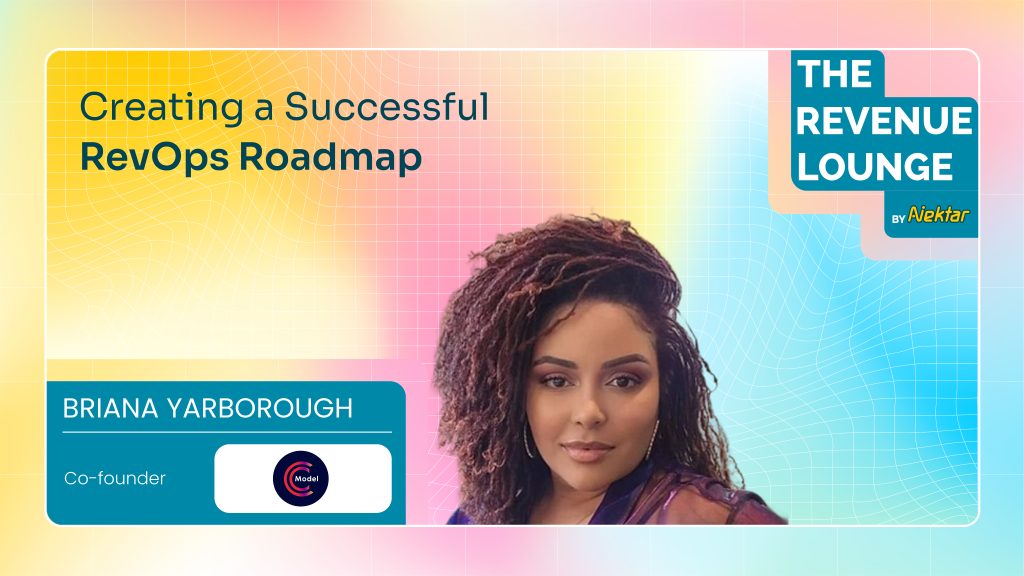
The Ultimate Guide to Building a RevOps Roadmap A conversation with Briana Yarborough, Co-founder at C-Model. The role of Revenue Operations (RevOps) has become non-negotiable for companies aiming to achieve sustainable, scalable growth. Yet, many leaders still grapple with one foundational question: How do you actually build a RevOps function from scratch? In this in-depth interview, we sat down with Briana Yarborough—a top RevOps leader and co-founder of CModel, a revenue intelligence platform—to understand the how, when, and why of RevOps. With over 15 years of experience across FP&A, strategy, tech stack augmentation, and GTM operations, Briana lays out a clear and actionable roadmap for building a high-impact RevOps engine. Facebook Twitter Youtube What is Revenue Operations? “Revenue Operations is about aligning the entire organization across the customer’s journey. We strategize, create processes, and surface insights that guide executive decisions.” According to Briana, RevOps is both an art and a science. It bridges the often-disconnected functions of sales, marketing, customer success, and finance. The goal? Unified execution and predictable revenue. Core Components of RevOps: Strategy & Planning Process Design & Optimization Tech Stack Management & Integration Data Architecture & Governance Reporting & Forecasting Cross-Functional Alignment When Should You Start RevOps? “Start as early as possible—even if it’s just one person. Otherwise, you’re left cleaning up a data mess by Series B.” Too often, companies delay implementing RevOps until they’re well into their growth journey. The result is fragmented data, misaligned teams, and inefficient processes. Briana recommends embedding a RevOps mindset early—even during the product-market fit stage. Early RevOps involvement leads to: Scalable GTM infrastructure Fewer downstream cleanup projects A culture of accountability across departments https://www.youtube.com/watch?v=CNHmq5wPP1g&t=197s How to Build RevOps in the First 90 Days Briana suggests starting with a structured 30-60-90 day plan. The focus? Understand the business, build trust, and design a scalable roadmap. Days 0-30: Discovery & Diagnosis Conduct a stakeholder roadshow Audit the current state of processes, data, and tech Identify “band-aid” fixes and their root causes Document strategic goals and operational pain points Days 31-60: Design & Roadmap Build a quarterly RevOps roadmap Prioritize based on business impact Create alignment with department heads Validate assumptions and historical pitfalls [Template: Quarterly RevOps Roadmap] Quarter Focus Area Initiative Metric Stakeholder Q1 Tech Integration CRM + ERP Data Sync Forecast Accuracy +15% Sales Ops Q2 Process SDR Handoff Optimization MQL-to-SQL Conversion Marketing Q3 Data Hygiene Account Matching Cleanup Reduced Duplicate Rate RevOps Days 61-90: Execute & Align Launch operational cadences (pipeline reviews, forecast calls, QBRs) Implement early wins Begin long-term enablement and reporting projects [Infographic Idea: Operational Cadence Calendar] A visual calendar showing strategic meetings throughout the quarter: forecast updates, planning cycles, enablement syncs, GTM kickoff, etc. Building a Strong Data Foundation “Integrated systems and unique identifiers are key. Without them, you can’t see the full customer journey.” Bad data is the silent killer of GTM productivity. Briana stresses the importance of connecting your tech stack early. Whether it’s your CRM, ERP, BI tools, or product data sources, everything must flow into a unified data warehouse. Steps to Achieve Clean Data: Connect CRM + ERP with APIs Implement Unique Customer Identifiers to link interactions across systems Define KPI Relevance by Business Model (e.g., SaaS vs. Marketplace) Align Contract Structures and SKUs   Metrics That Matter “RevOps should prioritize metrics that directly tie to business performance and revenue predictability.” Business Performance Metrics: ARR / MRR CAC / CLV Net Revenue Retention (NRR) Forecast Accuracy Sales Cycle Length GTM Effectiveness Metrics: Pipeline Coverage Ratio Opportunity Win Rate Sales Productivity Metrics Lead Conversion Rates Customer Metrics: Product Usage Trends Onboarding Time CSAT / NPS Scores   The Future of RevOps: What Lies Ahead “We’re heading toward full GTM Suites that replace 30+ tools with one revenue platform.” Briana envisions a world where RevOps is no longer stitched together with dozens of point solutions. Instead, we’ll see: All-in-one GTM operating systems AI-driven revenue intelligence Real-time strategic forecasting Higher C-level representation (CROO, SVP of Revenue Intelligence)   Advice for Aspiring RevOps Professionals “Join communities. Get certified. Be curious. Reach out to people who inspire you.” Communities to Join: Pavilion (RevOps School) RevOps Co-op RevGenius Certifications to Explore: Salesforce Trailhead (CRM Fundamentals) HubSpot RevOps Certification Pavilion Revenue Architecture Program Getting Started: Shadow a sales or marketing ops team Learn to use tools like Salesforce, HubSpot, Looker, and Clari Conduct informational interviews Traits That Make a Strong RevOps Leader: Strategic Thinking Adaptability Data Fluency Stakeholder Empathy Process-Driven Mindset Final Thoughts: RevOps as a Career Path “RevOps is as close as you can get to the front seat of revenue without carrying a quota.” RevOps offers a unique intersection of data, strategy, and operations. It’s the nerve center of the modern GTM team. Whether you’re looking to scale a function or step into the space yourself, Briana’s roadmap offers a powerful foundation to get started. Want to hear more stories from revenue leaders? Subscribe to The Revenue Lounge podcast to never miss an episode! More Resources

RevOps

Building and Scaling a High-Performing RevOps Team

Building & Scaling a High-Performing RevOps Team A conversation with Roman Gruhn, VP of RevOps at Multiverse. “You’re not hired to keep things the same. You’re hired to lead change—deliberate, strategic, and scalable change.”— Roman Gruhn, VP of Revenue Operations, Multiverse Revenue Operations (RevOps) has become more than a supporting function—it’s the strategic backbone of go-to-market (GTM) alignment. Yet, building and scaling a RevOps function at an enterprise level is a complex task, often underestimated. It requires more than just systems knowledge or analytical ability. It requires leadership, empathy, and adaptability. In this episode of The Revenue Lounge, we spoke with Roman Gruhn, VP of RevOps at Multiverse. With a background that spans computer science, management consulting, and GTM strategy at high-growth companies like MongoDB and Remote, Roman brings a rare mix of technical depth and business acumen. This blog distills his insights into a detailed, actionable guide for enterprise RevOps leaders navigating complexity, change management, cross-functional alignment, and AI integration. Facebook Twitter Youtube Roman’s Career Arc: From Code to CRO Support Roman began his journey in computer science but quickly realized his interests were broader. His transition into management consulting helped him develop an eye for process design and organizational effectiveness—skills that proved invaluable when he entered the SaaS world at MongoDB. “When I joined MongoDB, I didn’t know much about sales. But I brought a consultative mindset and a systems-thinking approach that helped me learn fast,” Roman recalls. At MongoDB, he moved through roles in strategic sales support, Chief of Staff for the CRO, and eventually into leading sales operations and sales tech—building operational infrastructure for a company in hypergrowth mode. Later, at Remote, he was tasked with rebuilding and maturing the RevOps function to support rapid scale. Now at Multiverse, Roman is applying those lessons in an exciting domain: upskilling the workforce for the AI age. Step 1: Understand Before You Act When stepping into a new RevOps leadership role, Roman’s first instinct is not to make immediate changes. “You have to sit on your hands at first. Don’t assume. Just listen. Every meeting is a puzzle piece.” He compares the early days to solving a 1,000-piece puzzle. You gather fragments through conversations, team meetings, and documentation, slowly forming a picture of how the GTM engine operates—and where it’s breaking down. 90-Day Discovery Framework Phase Key Actions Weeks 1–4 1:1s across GTM, product, finance, delivery. Map existing systems and flows. Weeks 5–8 Identify major friction points and redundancies. Use AI to theme-sort notes. Weeks 9–12 Validate hypotheses. Prioritize initiatives. Create early roadmap.   This structured discovery approach is critical—especially in enterprise environments where systems are deeply entangled and historical decisions carry invisible context. https://www.youtube.com/watch?v=FNiTIPxQ9vw What an Enterprise-Ready RevOps Function Looks Like Roman emphasizes that effective RevOps requires deliberate design—not just reactive firefighting. He breaks down the core pillars of a scalable RevOps framework into five focus areas:  5 Pillars of Scalable RevOps:   1. Strategy & Planning: Fiscal planning, territory modeling, quota grameworks. 2. Systems Architecture: CRM scalability, automation, permissioning, compliant. 3. Analytics & Insights: Forecasting, KPI dashboards, attribution modeling 4. Process Optimization: Deal desk operations, lead-to-revenue process, lifecycle automations 5. Project Delivery: Strategic rollouts, cross-functional projects, system launches “You’re not just building for today. You’re building for repeatability and future scale,” Roman notes. This framework helps RevOps leaders understand where to invest resources, hire talent, and measure impact. One of the most debated questions in RevOps is whether to hire generalists or specialists. Roman’s take? It depends on scale. “When you’ve got 20 sellers, you need utility players. When you’ve got 150+, you need dedicated owners across planning, systems, analytics, and more.” 📊 Org Design by Sales Team Size Sales Headcount RevOps Team Structure 10–30 1–2 Generalists handling all ops functions 30–80 Add dedicated owner for systems or analytics 80–150+ Specialists across strategy, data, systems, enablement 150–300+ Regional pods + Centers of Excellence (COEs)   Roman also encourages internal mobility within the team. For example, someone in a systems role might rotate into analytics or planning—ensuring talent remains agile and engaged. Hiring the Right People: It’s About Mindset Roman is clear: technical skills matter, but soft skills are non-negotiable. RevOps professionals operate in a dynamic environment where agility is a must. ✅ Must-Have Soft Skills in RevOps Curiosity: A hunger to explore new tools, processes, and possibilities. Coachability: Willingness to learn—and unlearn. Conviction with humility: Bring strong opinions, but adapt when data says otherwise. Energy & Drive: RevOps is high-volume, high-context. Grit matters. Pragmatism: Know when “good enough” is good enough. “You want people who can think big—but also say, here’s a V1 that gets us moving,” Roman explains. How Roman Measures RevOps Success Aligning Metrics Across GTM Unlike sales or marketing, RevOps doesn’t own a revenue number. But Roman has developed a layered KPI framework to track team performance and impact. Roman also looks at qualitative indicators, such as whether GTM leaders see RevOps as a blocker or enabler. “You don’t want to be the function of ‘No.’ You want to be the function of ‘Here’s how.’” One of the biggest pitfalls in enterprise GTM teams is siloed metrics. Marketing chases MQLs. Sales chases bookings. CS chases renewals. RevOps must drive shared understanding. “Everyone says they’re aligned. But when you peel back the onion—they’re not. They’re just measuring their own kingdoms.”   Roman recommends creating a centralized “metric dictionary” that includes definitions, owners, and dependencies to reduce ambiguity and finger-pointing.   AI in RevOps: From Doers to Conductors AI is no longer a nice-to-have. It’s central to the future of RevOps. Roman sees it transforming both how RevOps operates and how GTM teams execute. “We’re shifting from playing every instrument to being the conductors—coordinating systems, signals, and actions.” ⚙️ Where AI Can Help in RevOps Function AI Application Example Data Analysis Auto-detect patterns in territories, pipeline movement Forecasting Smart modeling using historical + third-party signals Dashboards AI-generated weekly insights: “These are the anomalies to review today” GTM Enablement AI assistants writing prospect research briefs

RevOps

Scaling Revenue Operations in High-Growth SaaS: A Strategic Playbook

Scaling Revenue Operations in High-Growth SaaS: A Strategic Playbook A conversation with Josh Pudnos, VP, Global Head of RevOps at Exiger. In the high-stakes world of SaaS, growth is no longer just a function of adding more sellers or increasing outreach volume—it’s about scaling smart, aligning teams, and building a RevOps foundation that enables profitable and predictable revenue. Josh Pudnos, former VP and Global Head of Revenue Operations at Exiger, knows this challenge intimately. Tasked with transforming Exiger from an advisory firm into a SaaS powerhouse, Josh architected a RevOps strategy from the ground up—rebuilding tech, redefining data, restructuring teams, and guiding the company through the messy middle of SaaS evolution. In this detailed blog, we explore Josh’s RevOps transformation playbook—anchored in data integrity, stakeholder psychology, and operational precision. Whether you’re a startup building RevOps from scratch or an enterprise scaling your GTM engine, this story is packed with practical strategies you can adapt to your own environment. Facebook Twitter Youtube From Advisory Firm to SaaS: The Mandate for Change When Josh joined Exiger, the company was in the middle of a strategic pivot. It had already seen success as an advisory services firm, but growing regulatory demand, supply chain risks, and the need for scalable solutions pointed toward a SaaS future. “We saw the signals—more regulation, more risk, more complexity. To meet that need, we had to mature and become a SaaS-first business.” This shift wasn’t just a marketing change. It required reimagining the entire go-to-market (GTM) motion, from how they sold and served customers to how they structured teams and measured success. Phase 1: Rebuilding the Foundation (and the Data) Josh’s first challenge? Data chaos. “Everything within Salesforce when I joined couldn’t be trusted. There was no standardization. We had to start from scratch.” The RevOps team conducted a comprehensive audit and rebuilt core processes—from lead lifecycle to opportunity stages and product taxonomy. 🔍 Data Cleanup Framework Lead > Contact > Opportunity Conversion: Unified and documented lifecycle stages Opportunity Stage Definitions: Standardized across business units Field-Level Governance: Required fields tailored by deal type (new vs. renewal vs. growth) Product Classification: Split recurring ARR vs. one-time services This clean-up wasn’t just cosmetic—it enabled a major win. During Exiger’s private equity exit, the improved data integrity played a crucial role in underwriting the deal. “We could finally speak confidently about our pipeline and customers. That was a huge turning point.” https://www.youtube.com/watch?v=YUwL4kuwg-k&t=3s Phase 2: Building the Right Tech Stack (Without Overbuilding) Armed with a healthy budget and a mandate to modernize, Josh moved quickly to implement a stack that could support outbound motions, deal structuring, and better forecasting. Tools included: Sales engagement platform CPQ implementation Marketing intent integrations CRM and funnel automation But with the benefit of hindsight, Josh realized he moved too fast. “I discounted the reps’ perspectives more than I should have. Some of those tools weren’t adopted. I won’t renew all of them.” 🧠 Key Lesson: Don’t Over-Index on Tech Instead, focus on: User-driven design: Understand how reps actually work Iterative rollout: Prove success with pilots Onboarding and enablement: Train consistently across roles Phase 3: Building a Lean, Impactful Team With only a handful of team members, Josh structured RevOps as a hybrid of technical systems ownership and strategic business partnering. 💼 RevOps Org Design at Exiger Function Focus Area Systems Ops (2 people) Salesforce, integrations, tech stack Sales Ops (2 people) Pipeline strategy, forecasting, top-of-funnel Enablement (1 person) Training, playbooks, seller onboarding Leadership (Josh) Strategy, executive alignment, roadmap ownership   Each RevOps member was aligned with GTM leaders—BDR, AE, AM, CS—to act as a strategic partner, not a ticket taker. “They need a business partner in RevOps. Someone who helps them solve real problems—not just run reports.” Phase 4: Evolving from MQLs to Buying Groups Josh acknowledges a major industry trend: the shift from individual lead tracking (MQLs) to understanding and activating entire buying groups. “There’s no such thing as a single buyer anymore. The committee is often 10–20 people—and each one needs to be engaged differently.” This required evolving both marketing and sales strategies. Exiger began layering intent data with what Josh calls a “surround-sound” approach. 📊 Buying Group GTM Framework Tactic Execution Layer Intent data Use 3rd party and web analytics to identify signals Surround-sound engagement Target decision-makers with tailored content Cross-functional plans Sync sales & marketing on buying group plays Deal acceleration Use buying signals mid-funnel to re-engage deals   Josh noted that even if Exiger isn’t at the fully orchestrated “trigger-based play” stage, they’ve already seen lift in stalled deals simply by getting the right content in front of the right people. Phase 5: Managing Ad Hoc Chaos While Staying Strategic Every RevOps leader has felt this tension: stakeholders want dashboards and ad hoc reports—while leadership wants strategic programs and scalable systems. “You have to empower your team to say no—or at least say ‘not right now.’ Tie everything back to your quarterly initiatives.” Josh and his team communicate their goals through quarterly newsletters, stakeholder syncs, and dashboards that guide self-service. Why Josh Reports into Finance, Not Sales Exiger chose to place RevOps under the CFO instead of the CRO. For Josh, this choice provided the objectivity and strategic alignment he needed. “You don’t want RevOps to become a propaganda arm of sales. With finance, we’re aligned to profitability and operational rigor.” It also helped the team focus not just on revenue goals but on sustainable growth and operational efficiency. The Most Underrated Skill in RevOps? Psychology. “So much about RevOps is understanding how people interpret data, process, and systems. It’s psychological.” Josh recalls debates not about tech or tactics—but about philosophical decisions like how to classify a deal type or when to progress a stage. Understanding stakeholder mental models, motivations, and friction points is what unlocks true cross-functional alignment. Josh’s Retrospective: What He’d Do Differently Move Slower at the StartBuild consensus before buying tech. Map out the rep workflow first. Involve Frontline Teams EarlyEven if they’re unfamiliar with SaaS tools, their

GTM, RevOps

A 30-60-90 Day Playbook for First-Time RevOps Leaders

A 30-60-90 Day Playbook for First-Time RevOps Leaders A conversation with Hassan Irshad, Director of RevOps at FEVTutor. Revenue Operations (RevOps) isn’t just a support function anymore. It’s the strategic engine that powers alignment, productivity, and visibility across the go-to-market (GTM) teams. And for first-time RevOps leaders stepping into the role, the first 90 days are absolutely critical. Your success depends on how well you can listen, diagnose, align, and act. In this deep-dive, Hassan Irshad—former Director of RevOps at FEVTutor and a veteran in building RevOps functions from the ground up across multiple B2B SaaS organizations—shares a tactical, proven playbook for the first 90 days in the job. Structured into three phases, this playbook helps new leaders set up a high-impact, scalable RevOps engine. Facebook Twitter Youtube Phase 1: The First 30 Days — Discovery and Trust-Building Hassan calls this the “Discovery Phase,” and it’s arguably the most important segment of your 90-day plan. Here, the goal isn’t to solve every problem. It’s to understand the lay of the land, build stakeholder trust, and uncover real pain points. “Think of yourself as a doctor. If you don’t listen well enough, you’ll misdiagnose the pain.” Start by meeting with stakeholders across departments: Sales, Marketing, Customer Success, Finance, Product, and HR. Identify their KPIs, their blockers, and their goals. Create a document that captures all your findings—Hassan refers to this as the “Lay of the Land” doc. At the same time, shadow end users. Sit with BDRs, AEs, and CSMs. Watch how they use tools. How do they enter data? Where do they get stuck? Walk through your CRM. Is reporting intuitive or a tangled mess? Don’t stop there. Run a detailed tech stack audit. Map every tool in the ecosystem. What integrates with CRM? What’s shelfware? What’s overused or underused? Hassan emphasizes talking to users, not just system owners. You should also: Immerse yourself in the product: attend demos, listen to sales calls. Map existing processes: selling, onboarding, renewals. Identify low-hanging fruit for early wins: improve field logic, add help text, or train users on hidden CRM features. Key Objectives: Establish trust Conduct a stakeholder audit Perform a tech and process audit Map current workflows Identify quick wins 💡 Action Items: Task Description Stakeholder Interviews Meet leaders from Sales, Marketing, CX, Finance, HR, and Product. Understand their KPIs, pain points, and top priorities. Create a “Lay of the Land” Document A central repository of org structure, current GTM processes, key workflows, and metrics. Shadow GTM Teams Sit with BDRs, AEs, and CSMs to understand how data is entered, how tools are used, and where bottlenecks occur. Tech Stack Audit List every tool in use, usage rates, integrations, costs, redundancies, and gaps. Process Mapping Map the end-to-end selling, marketing, and renewal processes. Identify handoffs, duplication, and inefficiencies. Product Immersion Attend a demo, listen to sales calls, and understand the sales pitch and product-market fit.   ✅ Quick Wins Template: Win Type Example Usability Fix Clarify error messages in CRM workflows Dashboard Build Build a simple commissions dashboard for reps Training Conduct a quick session on a misunderstood feature Phase 2: Days 31-60 — Alignment and Control This is the phase where you start “flexing your RevOps muscles,” as Hassan puts it. While discovery continues in some areas, you now begin putting controls and alignment mechanisms in place. Hassan calls this phase “Alignment and Control.” “You need to be the catalyst for cross-functional collaboration. Nobody else is connecting the dots across sales, marketing, and CX.” Start with KPI alignment. You’ll have already collected the individual KPIs in Phase 1. Now, assess whether those KPIs roll up into the broader company strategy. If they don’t, that’s a red flag—and your opportunity to bring the teams together. Hold cross-functional syncs to align Sales, Marketing, and CS around shared quarterly goals. Create dashboards and reporting frameworks that reflect this shared accountability. Also, start implementing operational controls: Are close dates in CRM accurate? Is forecasting behavior consistent? Are stage definitions clear? Don’t impose controls abruptly. Hassan suggests using logic and transparency. Example: If a rep uses spreadsheets to track deals, propose a CRM-based inline-editable report that feels like a spreadsheet but ensures visibility. And begin vetting your tools: Is a forecasting tool duplicating features available in Salesforce? Are reps logging into a tool? Can licenses be consolidated? Key Objectives: Improve GTM team collaboration Put control mechanisms in place Begin strategic alignment Validate process improvements 💡 Action Items: Task Description Cross-Functional Alignment Facilitate regular syncs between Sales, Marketing, and CX to align on quarterly goals. KPI Rationalization Align individual department KPIs with the company’s strategic objectives. Identify siloed or conflicting goals. Governance Setup Define request intake processes, project documentation standards, and response SLAs. Control Implementation Use logic and data to drive compliance (e.g., inline editable reports to update close dates instead of spreadsheets). Change Management Prep Identify stakeholders who will sponsor or resist change. Begin conversations to create buy-in. https://www.youtube.com/watch?v=sVDJ9KI1tGw&t=1343s Phase 3: Days 61-90 — Vision and Execution By now, you’ve earned trust, understood the landscape, and started building momentum. Phase three is about turning that momentum into long-term strategy and execution. Hassan calls this the “Vision and Execution” phase. “You’re now setting the foundation for your long-term roadmap. Think beyond tickets—think strategy.” At this point, you should be ready to publish a two-quarter RevOps roadmap. This roadmap includes: Strategic initiatives tied to revenue goals Operational improvements already underway Planned enhancements to the tech stack This is also the time to start tracking and showcasing impact. Go back to the baselines you gathered in Phase 1. Show how time-to-insight improved, or how a forecast accuracy initiative reduced missed commits. Make your work visible. Remember, this is also where change management becomes critical. Stakeholders may resist new processes. Hassan advises using your discovery-phase insights to preempt resistance. Understand their motivations and frame changes as value drivers. Key Objectives: Publish a roadmap Begin implementation Showcase wins Plan for continuous improvement 💡 Action Items: Task Description Publish a RevOps

10 Best Deal Tracking Software
RevOps, Sales

10 Best Deal Tracking Software for 2026

10 Best Deal Tracking Software for 2026 RevOps, Sales 10 min Updated: July 27, 2026 A sales team juggling multiple deals at once, meetings, follow-ups, and deadlines, can feel like it’s carrying more than any spreadsheet or memory can reliably hold. Deal tracking software exists to take that weight off, giving a team one place to see exactly where every deal actually stands instead of piecing it together from memory and a dozen open tabs. Get our latest insights into your inbox What Is Deal Tracking Software? Deal tracking software helps sales professionals manage their pipeline by keeping every deal’s status in one central place, from initial contact through to close. If you’ve got dozens of deals in flight, some small, some enterprise-scale, deal tracking software shows you at a glance which ones are in negotiation, which need a follow-up call, and which are genuinely on track to close, rather than requiring a rep or manager to reconstruct that picture from memory. 10 Best Deal Tracking Software for 2026 Nektar EngageBay Kapture CX Salesmate CRM Pipedrive Insightly Nutshell Salesflare BIGContacts Freshsales Suite Overview of the 10 Best Deal Tracking Software for 2026 1. Nektar Nektar makes sure the underlying activity data, every email, meeting, call, and calendar event, is actually captured and structured against the right deal before anything tries to track or score it.  Data Foundation does this automatically, with zero rep effort required, writing directly into Salesforce, HubSpot, or Dynamics. Time Travel retroactively corrects historical records as new context arrives, closing gaps a point-in-time capture tool can’t touch.  Daisy AI then surfaces the specific signals that matter for deal tracking: buyer engagement scoring, deal risk flags, buying-group coverage, and time-in-stage analysis, directly on the Opportunity tab rather than a separate dashboard nobody opens. Key features: Buyer-seller activity captured automatically as the leading indicator of real deal progression, not a rep’s memory Time-in-stage measurement to identify precisely where deals are stalling, not just that they are Deal risk flags and engagement scoring that surface high-priority opportunities before they go cold Time Travel™ retroactive correction, backfilling up to 12 months of historical activity as new context arrives Buying-group intelligence that auto-detects stakeholders from real email and meeting activity, rather than requiring a rep to log them Vendor-neutral integration, sits alongside Gong, Outreach, Salesloft, and other tools already in your stack rather than replacing them Best for: Salesforce-first, Salesforce, HubSpot, or Dynamics teams that need the underlying deal data trustworthy enough for both reps and any AI layer built on top of it. Pricing: Custom, based on team size and scope. A free CRM scan shows how much of your own pipeline activity is currently missing before you commit to anything. 2. EngageBay EngageBay is an all-in-one CRM and marketing automation platform aimed squarely at startups and small-to-midsize teams that want sales, marketing, and support tools bundled together rather than bought as separate point solutions. It’s trusted by over 150,000 companies, largely on the strength of its price-to-feature ratio relative to HubSpot or Salesforce, and it’s added AI features (email and campaign generation, deal scoring, smart insights) on top of its original bundle over the past couple of years. Key features: Unified sales lead information across marketing, sales, and support in one platform AI-powered deal scoring to prioritize which leads are actually worth a rep’s time Centralized client data with contact tagging, filtering, and custom fields Built-in email marketing, landing pages, live chat, and helpdesk/ticketing Estimated revenue generation forecasting tied to pipeline stage Over 30 native integrations, including Zapier, Mailchimp, Twilio, and Stripe Best for: Startups and small businesses wanting sales, marketing, and support consolidated into one affordable platform rather than stitched together from several point tools. Pricing: Free plan available for up to 15 users and 250 contacts. Paid tiers start around $15/user/month (Basic), scaling to roughly $65/user/month (Growth) and $120/user/month (Pro), with meaningful discounts on annual or biennial billing. Confirm current tiers directly, since EngageBay has adjusted contact limits and feature gating more than once in the past year. 3. Kapture CX Kapture CX (also marketed as Kapture CRM) bundles sales, marketing, operations, and customer service into one platform, with a particular strength in omnichannel support and enterprise-grade customization via 500+ APIs. It’s built for organizations that want centralized control over pre-sale activity and post-sale support from the same system, and it ships with industry-specific configurations for verticals like retail, hospitality, real estate, and healthcare rather than a one-size-fits-all template. Key features: Custom organizational hierarchies with sales performance data broken out by rep, team, or region Omnichannel support spanning email, chat, social, and direct campaigns from one dashboard Integrated sales monitoring with real-time KPI tracking (calls answered, response times, ticket resolution) 500+ pre-built integrations, including SAP, Oracle, Shopify, Dynamics 365, and Salesforce AI-powered live chat and self-service portal for both sales and support use cases Over 500 configurable reports for pipeline, agent, and campaign performance Best for: Mid-market to enterprise teams, especially in retail, hospitality, or field-sales-heavy industries, wanting sales and post-sale support unified in one heavily customizable platform. Pricing: Three tiers, Essential, Professional, and Enterprise, all custom-quoted based on team size and configuration. No published flat-rate pricing; request a demo for a specific quote. 4. Salesmate CRM Salesmate CRM pairs a built-in sales activity tracker with automation for repetitive tasks, follow-up emails, CRM field updates, so managers can monitor rep activity in real time without reps losing time to manual admin. It’s frequently cited by reviewers as delivering enterprise-level features at a noticeably lower price point than HubSpot, Salesforce, or Zoho, which is its clearest differentiator in a crowded category. Key features: Automated sales activities and multi-step playbooks triggered by deal stage or behavior Sales timeline view for tracking every touchpoint on a deal in chronological order Smart calendar view synced across team members for scheduling and follow-up visibility Built-in calling, texting, and email from directly within the CRM record Workflow automation for lead routing, task assignment, and stage progression Native integrations with Meta Lead Ads, Google

RevOps

Building a Unified Revenue Engine: How Druva Aligns GTM and RevOps for Growth

Building a Unified Revenue Engine: How Druva Aligns GTM and RevOps for Growth A conversation with John Hultman, Chief Revenue Officer at Druva. The path to revenue growth isn’t paved solely by sales excellence—it’s constructed through the strategic orchestration of all go-to-market (GTM) functions: sales, marketing, and customer success. John Hultman, CRO of Druva, shares his playbook for building a cohesive GTM engine by unifying data, engagement metrics, and operations under a single strategic vision. From tackling disjointed KPIs to uncovering hidden churn signals and designing intent-driven expansion plays, John offers a masterclass in what it means to lead with RevOps in the modern age. Facebook Twitter Youtube Why Alignment Across Revenue Teams is Non-Negotiable “Everybody looks at metrics vertically—‘I’m green’—but you’re still not hitting the goal. Flip it horizontally. Work backward from the outcome.”— John Hultman, CRO at Druva One of the biggest traps GTM organizations fall into is siloed success. Each team—marketing, SDRs, AEs, CS—operates in its own KPI bubble. While each may hit their own numbers, the company still misses revenue targets. John calls for a complete reorientation: from vertical success to horizontal alignment. Vertical vs. Horizontal KPI FocusBelow is an infographic that illustrates how traditional KPI silos compare to outcome-focused, horizontal alignment across GTM teams: Redefining Metrics: What Actually Moves the Needle Instead of tracking surface-level KPIs like MQLs or number of meetings, John aligns his teams around what truly impacts revenue: Metric Why It Matters Marketing-Generated Bookings Ties campaigns directly to revenue outcomes Lead Follow-Up Time Reveals AE responsiveness and SDR effectiveness Opportunity Stage Duration Detects pipeline friction points Expansion Rates Measures long-term account growth Churn Risk Scores Early indicators of customer dissatisfaction   By standardizing these metrics across departments, teams can see where things break down and act fast. “It’s not about the quantity of pipeline. It’s the quality and the conversion that matter.” https://www.youtube.com/watch?v=xQlouc3eOpw Breaking Through the Noise: New Realities in Prospecting Prospecting is harder than ever. According to industry data shared at B2BMX, first meetings are down 30–50% year-over-year. Buyers are overwhelmed by outreach—emails, cold calls, DMs—and are increasingly unresponsive. John’s solution? Shift the lens from quantity to cost-effectiveness: Analyze Customer Acquisition Cost (CAC) across different motions (MQLs vs OEM vs MSP vs Channel). Explore non-traditional channels that drive better ROI. Focus on signal-based marketing instead of shotgun-style outreach. “A traditional MQL model is expensive. Every touch—tools, SDR, data cleansing—adds up.” The Power of Buying Groups and Intent Signals B2B buying is no longer a one-person show. Recent research from 6sense shows the average buying group includes 11 stakeholders. But traditional CRMs typically capture only one. “Buying signals help us understand if something’s heating up—or if churn is around the corner.” Druva uses platforms like ZoomInfo and 6sense to: Detect intent across personas Identify expansion opportunities Predict churn within current accounts These platforms provide visibility not just into net-new accounts, but also within existing customers—surfacing signs of disengagement or interest in new products. Scaling Expansion with Dedicated Teams Druva’s go-to-market strategy separates new logo acquisition from expansion: Team Focus Area Hunters Land new accounts and manage first renewal Farmers (Expansion AEs) Drive adoption across additional workloads   Expansion AEs work closely with CSMs, partners, SEs, and TAMs to ensure full account penetration post-sale. “I was unsure about the split at first—but now I’m a believer. The expansion team builds deep relationships that unlock full value.” Retention is a Science: Detecting Risk Before It’s Too Late John outlines a multi-layered approach to protect recurring revenue: Risk Signals Druva Tracks: Decline in product usage Surge in support tickets Large-scale data exports (potential migration) Absence from events and webinars Lower NPS or QBR engagement Cadence by Segment: Customer Tier Engagement Model Enterprise Quarterly QBRs, 6-month renewal prep Mid-Market Biannual reviews SMB/Long-Tail 120-day renewal triggers via AE or renewals rep   “We built AI propensity models to flag expansion and churn risks. These are crucial for staying ahead.” Data Without Insight Is Just Noise “Salesforce is our source of truth—but it’s not about the data. It’s about how you simplify and standardize it.” Druva pulls data from multiple sources—Salesforce, Sigma, Clari, Atrium—and aggregates it into simplified dashboards. Standardization ensures teams debate strategy, not whose numbers are right. John’s RevOps team is tasked not just with collecting data—but surfacing actionable insights. Pipeline Visibility: A Continuous Feedback Loop John’s pipeline framework includes three lenses: Lens Use Case In-Quarter Pipeline Immediate revenue forecasting Next-Quarter Pipeline Forward visibility to avoid chase mode Source Breakdown Channel health by OEM, Direct, Partner   The RevOps team cuts data by geo, function, and team to uncover root causes of pipeline issues—before they impact revenue. Strategic Account Planning and Re-engagement Expansion depends on reaching beyond the initial champions. Druva ensures sellers don’t just rely on admins or tool users—they map out all key stakeholders and re-engage them as new opportunities emerge. “They may have disengaged—but they’ll re-engage when the right workload comes up. That’s where good account planning pays off.” Managing Change Across GTM Functions Unifying teams under one strategy isn’t just a data challenge—it’s a people challenge. “You can’t just communicate once. You need continuous communication with context—why we’re doing this, why now, and how it helps them.” John emphasizes: Setting a shared North Star Explaining the “why” behind every change Making everyone feel part of the journey The New Buyer Journey: Less Time with Sales, More Time in Research “Buyers spend 9 out of 12 months doing research—without ever talking to your sales team.” This shift forces GTM teams to: Use intent data to intercept buyers early Provide helpful content during research Equip sellers with consultative tools—not just decks   Golf outings and 5-hour lunches are over. Buyers want speed, value, and insight. Final Thoughts: Strategic Growth in a Changing World “You get pulled into the day-to-day. You have to fight for time to think strategically.” For John, success as a CRO means balancing operational excellence with long-term vision—aligning every function under one strategy, and enabling teams with the right data,

strategic action
RevOps

Bridging the Gap Between Data and Action: A Strategic Guide for GTM and RevOps Leaders

Bridging the Gap Between Data and Action: A Strategic Guide for GTM and RevOps Leaders A conversation with Sarah Flaccavento, SVP Strategic Initiatives at Alphasense. “Data is only as good as the insights it drives.” – Sarah Flaccavento In an age where data flows through every department, dashboard, and decision, organizations still struggle to turn that abundance into action. While most teams claim to be data-driven, the truth is that data often ends up siloed, unused, or misunderstood. Sarah Flaccavento, SVP of Strategic Initiatives at AlphaSense, believes that the ability to translate data into actionable insight is what separates good companies from great ones. In this detailed guide, drawn from her episode on The Revenue Lounge, we unpack the frameworks, prioritization techniques, and change management strategies she uses to create force-multiplying change in complex organizations. Facebook Twitter Youtube Section 1: From Gut Instinct to Insight-Driven Execution “Insight is the answer to a question—and it’s actionable.” – Sarah Flaccavento Data by itself is just noise. The real magic happens when teams identify patterns, contextualize them, and act on them. Sarah defines an insight as something that not only tells you what is happening but also guides what to do next. Data Insight Raw numbers, metrics, activity logs Meaningful answers to questions Requires interpretation Tells you what to do next Often siloed and overwhelming Cross-functional and directional Measures what happened Predicts or influences what will happen Key takeaway: Without connecting data to context and action, teams risk analysis paralysis. Real transformation starts when leaders ask better questions and turn patterns into priorities. Section 2: Prioritization Framework – WSJF (Weighted Shortest Job First) One of the core methodologies Sarah uses is WSJF—a prioritization framework from Agile’s Scaled Agile Framework (SAFe). It helps identify high-impact projects based not only on ROI but also on urgency and effort. “The most important piece WSJF adds is time criticality. ROI alone isn’t enough.” – Sarah Flaccavento How WSJF Works: WSJF = (Size of Prize / Difficulty) x Time Criticality Component Explanation Size of Prize What’s the potential upside (revenue, customers, impact)? Difficulty How complex is the execution? Time Criticality If you wait, does the opportunity disappear? Will competitors get there first? Example: Instead of targeting trillion-dollar law firm opportunities (high ROI, low urgency), Sarah’s team focused on launching generative AI search. Why? Because the need was immediate, the pain was clear, and nobody else was solving it yet. Sarah asks her team to independently score initiatives using the Fibonacci sequence for each parameter. This fosters debate and forces thoughtful decision-making. https://www.youtube.com/watch?v=IRyreib4-TU&t=3278s Section 3: Strategic Planning in 3 Tiers “You should be planning for three horizons at any given time.” – Sarah Flaccavento Sarah outlines a three-level planning model that balances execution with vision: Infographic: Strategic Planning Tiers Horizon Focus Examples Quarterly Fully fixed execution plans Launch AI search, Expand into HK Biannual (6M) Defined problems, flexible on how Solve pricing friction, Partner launches 1-3-5 Year Big bets and long-term missions Become the insights platform of record She recommends: Locking in execution for 1 quarter Having flexible priorities for 6 months Planning vision 1, 3, and 5 years out Reviewing monthly, publishing quarterly To track this, Sarah uses an Excel-based WSJF matrix and hides past columns until it’s time to review. This avoids emotional decisions and encourages accountability through data. Section 4: Creating a Culture of Data Ownership “You should never walk into a meeting with a question. You walk in with a recommendation—based on data.” – Sarah Flaccavento Sarah has built a culture at AlphaSense where data ownership is democratized, not centralized. Everyone—from reps to execs—is expected to: Bring hypotheses, not open questions Make recommendations, not just escalate problems Own inputs to company-wide decision-making The result? Data becomes everyone’s responsibility. People come prepared, speak with clarity, and decisions move faster. [Data Entry] → [Insight Generation] → [Recommendation] → [Execution] → [Feedback Loop] Sarah enforces this through: Visible use of rep-generated data in strategy meetings Celebrating usage of Salesforce notes and Gong insights Running pre-meetings with dissenters to ensure open discussion and buy-in Section 5: Salesforce: A Directional Input, Not the Whole Truth “Salesforce is a powerful, directionally accurate input to decision-making.” – Sarah Flaccavento Sarah acknowledges Salesforce as a valuable, but not infallible, data source. It excels at tracking pipeline stages and opportunity hygiene. But when it comes to customer segmentation or behavior, it often lacks nuance. Instead, her team triangulates insights from: Salesforce reports Gong transcripts Product usage data QBR feedback Pro Tip: Make the rep’s input meaningful by closing the loop. Highlight the impact of win/loss notes in company-wide decisions. Section 6: Case Study – Rethinking Pricing & Packaging AlphaSense’s pricing model originally reflected the cost of aggregating premium data. However, the market wanted flexibility—not rigid per-seat pricing. “Fear drives a lot of detraction. But data addresses that fear.” – Sarah Flaccavento Sarah’s team: Started with one FS customer segment Validated demand with usage and growth data Adjusted pricing to align with value delivered Result: AlphaSense closed the largest FS and corporate deals in company history. Each segment got a tailored model based on data-backed buying behavior. Section 7: Failing Fast in GTM “Failing fast is about making problems smaller and smaller.” – Sarah Flaccavento Instead of big bets that take quarters to prove, Sarah advocates: Breaking big hypotheses into tiny experiments Testing assumptions early (e.g. Do they have this problem? Will they pay to solve it?) Learning if it’s a true failure or just “not now” [Big Idea] → [Micro-Test] → [Data Validation] → [Fail / Scale / Postpone] This mindset saves time, protects resources, and keeps momentum high. Section 8: Data as a Cultural Operating System “If data isn’t in your company DNA, it will get in your way.” – Sarah Flaccavento Sarah closes with this imperative: data must be part of the cultural fabric. Not just a RevOps job. Not just a dashboard. But something that: Informs every strategic bet Validates every resource allocation Shapes every customer interaction Whether it’s pricing,

scaling revops
RevOps

Building & Scaling RevOps in an Enterprise

Building and Scaling RevOps in the Enterprise A conversation with Shantanu Mishra, SVP, Revenue Strategy & Operations at Pluralsight. As organizations scale and mature, the complexity of managing revenue processes across the customer lifecycle intensifies. Revenue Operations (RevOps) is emerging as the linchpin function to harmonize go-to-market strategy, unify cross-functional teams, and enable sustainable growth.  In a recent episode of The Revenue Lounge podcast, Shantanu Mishra, Senior Vice President of Revenue Strategy and Operations at Pluralsight, shared a deeply insightful and structured approach to building a high-performing RevOps organization at the enterprise level. With more than two decades of experience in leading sales operations, customer success, and strategic transformation, Shantanu provides a masterclass in RevOps design, execution, and evolution. Facebook Twitter Youtube Rethinking RevOps: The Bow-Tie Framework Traditional funnels end at the point of sale. But in SaaS businesses, revenue generation doesn’t stop once a customer signs the contract. Shantanu introduces the “bow-tie” framework—a more comprehensive visualization of the revenue journey. On the left side of the bow tie is the traditional funnel: lead generation, qualification, and closing. On the right is where the real value emerges: customer onboarding, product adoption, value realization, renewal, and expansion. “In a SaaS environment, you don’t stop at win. The second stage of the journey starts with onboarding, time-to-value, and finally renewal and expansion. That entire bow-tie has to be managed. That is what revenue operations is.” The bow-tie model reflects a strategic shift from one-time sales enablement to lifecycle value management. It forces RevOps leaders to look beyond pipeline metrics and build systems that sustain long-term customer value. Laying the Foundation: Designing for Scale Early Shantanu emphasizes that regardless of where your company is in its revenue maturity journey—whether you’re at $10M or $100M ARR—you must design for scale. Building RevOps without a long-term vision is like constructing a house without a blueprint. You need to plan for the 20-story skyscraper, even if you’re currently just laying the first floor. “Like building a house—you need the blueprint upfront. You have to know how big the foundation has to be, whether you’re building one story or twenty.” This means implementing systems for forecasting, compensation, territory design, and pipeline management that can evolve with the business. As the organization matures, RevOps must move from tactical firefighting to building scalable, repeatable systems with proactive strategy baked in.   https://www.youtube.com/watch?v=hzeZnRWTD8c&t=10s Defining the Metrics That Matter Effective RevOps is data-driven. But metrics can become noise if not structured properly. Shantanu outlines a comprehensive metric framework spanning the entire bow-tie lifecycle: Forecasting Accuracy: Strive for a forecast that is within +/- 2% accuracy by week 4 of the quarter. Pipeline Health: Track coverage ratios, opportunity hygiene, commit vs. forecast percentages. Velocity & Conversion: Measure deal velocity, stage-by-stage conversion rates, AOV, and win rates. Unit Economics: Key indicators like CAC:LTV, quota-to-OTE ratios, and bookings per rep. Customer Success Metrics: Monthly active users, license utilization, early renewal engagement. “If pipeline is clean, forecast is clean. But to scale, you need to ask—are we investing $1 and getting much more than $1 back?” This systematic approach ensures GTM teams are aligned on how success is measured across the lifecycle, and avoids the trap of siloed performance indicators. The Org Design Playbook: Horizontal vs Vertical Thinking RevOps leaders often struggle with structuring their teams. Shantanu proposes an elegant framework: differentiate between horizontal functions that span all GTM units and vertical functions tailored to specific departments. Horizontal Functions: Strategy and investment planning Data and analytics Enablement Compensation and deal desk Metrics and reporting Vertical Functions: Sales and success territory design Forecasting cadence Department-specific plays (e.g., sales sprints, CS engagements) “You don’t want sales to have one funnel and marketing to have another. You need a comprehensive view of the bow-tie.” This design allows centralized control over strategy and insights, while empowering functional leaders to adapt operations to their specific needs.   Finding the Right Talent: Beyond Ops Experts The complexity of RevOps demands a multidisciplinary team. Shantanu identifies three archetypes every RevOps team needs: Athletes: Generalists who can adapt and execute across roles. Builders: Detail-oriented executors who create infrastructure and processes. Strategists: Big-picture thinkers who drive alignment and long-term planning. He emphasizes EQ (emotional intelligence), adaptability, and complementary skill sets over pure technical expertise. “EQ is non-negotiable. The corporate world is faster now—you need stability, not just intelligence.” RevOps teams also benefit from hires with backgrounds in finance, consulting, IT/business analysis, and enablement. Data Infrastructure: From Chaos to Clarity Data can either be an asset or a liability. According to Shantanu, RevOps leaders must partner with data engineering teams early to establish clean, centralized, and accessible datasets. “Invest in data engineering early. Don’t let RevOps carry the burden of cleaning, merging, and reporting on messy datasets alone.” He suggests: Centralizing all GTM data sources (billing, product, usage, marketing automation, CRM, HR, enrichment) Building a cloud-based warehouse with proper schema design Defining KPIs before implementing tools or dashboards This strategy ensures that as tools evolve, the data structure remains robust and analytics-ready. Operating Rhythms That Drive Accountability An effective operating model is more than who reports to whom—it’s about cadence, communication, and culture. Shantanu recommends: Weekly: Forecasts, pipeline updates, hygiene checks Monthly: Reports (not meetings) summarizing key metrics Quarterly: Deep dives into KPIs, unit economics, and strategic planning He also emphasizes that metrics should be meaningful and contextualized, not just reported. RevOps should take ownership of making reporting useful for decision-making. Win-Loss Analysis: Real-Time Insights from the Field Too often, companies wait until end-of-quarter to analyze wins and losses. Shantanu recommends capturing this data continuously and cross-referencing it across sources: deal desk, CRM, sales team debriefs, and direct customer feedback. “Win-loss data should be captured daily. Don’t wait till the quarter ends to learn why you’re losing.” Understanding what’s working (or not) in pricing, positioning, or sales process enables faster course corrections and better enablement. The Future of RevOps: Powered by AI Shantanu sees artificial intelligence as a transformative force across the revenue engine.

Scroll to Top

Just one more step